
Published Aug 16, 2026 | 8:00 AM ⚊ Updated Aug 16, 2026 | 8:00 AM

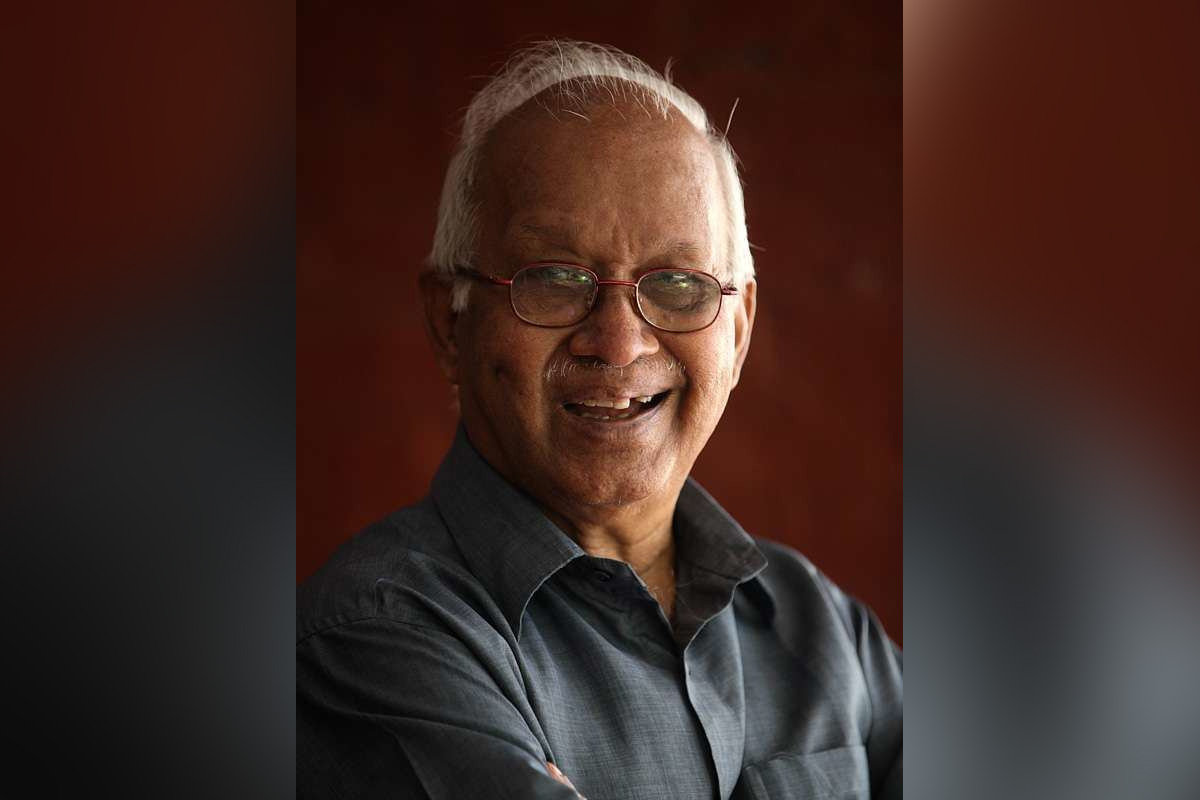
MP Parameswaran's Fourth World theory triggered intense discussions within the CPI(M) and in Kerala,

Synopsis: MP Parameswaran was never short of powerful alternative ideas that went against the grain of social and political thinking. Most famously, he developed his own vision of The Fourth World, a reimagining of socialism closely aligned with Gandhian thought.
MP Parameswaran—nuclear engineer, socio-political activist and one-time member of the CPM, who turned the Kerala Sastra Sahitya Parishad (KSSP) into a people’s science movement with the slogan ‘science for social revolution’—passed away recently in Kerala.
It was a great blessing to get to know MP Parameswaran in the 1970s, when I was working with small-scale fishers in Kerala and later as a researcher at the Centre for Development Studies (CDS) Thiruvananthapuram, which he often frequented. Short in stature, but large-hearted and with an open laugh, his thoughts were faster than his words. So, he often stuttered when he spoke, but he was never short of powerful alternative ideas that went against the grain of social and political thinking.
It is important to understand that the “Fourth World” concept did not originate with Parameswaran. It is said that the term was first coined by Mbutu Milando, a Tanzanian diplomat on a trip to Canada in 1971.
Milando was in conversations with Chief George Manuel, Head of the National Indian Brotherhood of Canada. Milando described the treatment and living conditions of Indigenous peoples in Canada, stating, “when native peoples come into their own, on the basis of their own cultures and traditions, that will be the fourth world.”
This 1971 dialogue and Manuel’s subsequent visits to Tanzania and discussions with then President Julius Nyerere directly shaped Manuel’s international outreach and his landmark 1974 book The Fourth World: An Indian Reality, co-authored with Michael Posluns. Here, George Manuel elucidated, for the first time to the wider world, the concept of a “fourth world” which would unite the peoples colonised within nation-states.
The word “Indian” refers to the indigenous communities of Canada. Manuel’s vision was fundamentally a political manifesto for all Indigenous peoples—a call to recognise that Indigenous nations existing within the borders of larger colonial states constituted a distinct “Fourth World.” For Manuel, this Fourth World was defined by a deep, spiritual connection to the land, cultures based on sharing, and the historical experience of colonisation, domination and attempted assimilation.
His vision was one of coexistence: a “nation state” where Indigenous and European peoples could live together without domination, built on mutual respect for their different ways of life. Manuel later formed the UN-affiliated World Council of Indigenous Peoples in 1975 and proposed drafting an international declaration on Indigenous rights, which would eventually become the UN Declaration on the Rights of Indigenous Peoples.
MP Parameswaran drew upon this global terminology but gave it a radically different meaning and application. His book Fourth World: Dream and Reality (or Naalaam Lokam–Swapnavum Yadharthyavum in Malayalam) presented the Fourth World not as a description of Indigenous marginalisation, but as an ideological proposal for a new, decentralised socialist society.
Following the collapse of the Soviet Union, Parameswaran sought an alternative to traditional socialist development models. His Fourth World envisaged a society based on decentralisation of power, environmental protection, local self-reliance, and opposition to consumerism. It sought to combine elements of Marxism, the green movement, human rights, people’s participatory democracy and Gandhian thought. It was a theory closely aligned with Mahatma Gandhi’s ideas of “Gram Swaraj” and “Swadeshi.”
The differences between Manuel’s and Parameswaran’s interpretations of the Fourth World are striking. Manuel’s vision was primarily a political reality for marginalised Indigenous nations, focusing on self-determination, cultural survival and challenging the authority of colonial nation-states. His core concern was the historical oppression of Indigenous peoples and the need for a new order of coexistence based on mutual respect.
Parameswaran, by contrast, used the Fourth World as an ideological proposal for a new, decentralised socialist society applicable far beyond any single community. His core concern was challenging orthodox Marxism and offering an alternative to consumerism and centralised power.
Where Manuel emphasised Indigenous rights and the specific historical experience of colonisation, Parameswaran emphasised decentralised democracy, environmental sustainability, local self-reliance and Gandhian thought. In essence, Manuel’s Fourth World describes a political reality for specific oppressed peoples, while Parameswaran’s Fourth World proposes a universal societal model—one he believed could be particularly relevant for Kerala.
Parameswaran’s Fourth World theory triggered intense discussions within the CPI(M) in Kerala, of which he had been an active member for about three decades. The controversy became intertwined with factional battles within the party. The theory faced resistance from orthodox Marxists over its questioning of concepts like class struggle and centralised “dictatorship of the proletariat.”
In February 2004, the CPI(M) expelled Parameswaran on charges of indiscipline for deviating from the party line. He did not rebel or complain, instead working tirelessly to publish books and articles on how to translate his vision of decentralised development for sustainable living.
Despite the political controversy, Parameswaran’s contributions were widely recognised. In 2022, the Kerala government honoured him with the Kerala Sree award. His demise is a major loss to the state’s scientific, cultural and social spheres, and in particular for the advocacy of decentralisation of power and taking authority to the grassroots.
Yet the question remains—as development economist KP Kannan reflected, despite impressive awareness about environmental sustainability and decentralised governance, Kerala remains “miles and miles away” from the dreams of the likes of MP Parameswaran. Perhaps the real value of his Fourth World vision lies not in its immediate implementation, but in its enduring provocation to think beyond orthodox frameworks and imagine a more just, sustainable and decentralised future.
Also Read:
Withdrawing consent: Gene Sharp and the Cockroach uprising
The timeless satire of C Northcote Parkinson and what it teaches about our work life today
(Edited by R Rajesh Kumar.)



