

Published Aug 15, 2026 | 7:00 AM ⚊ Updated Aug 15, 2026 | 7:00 AM

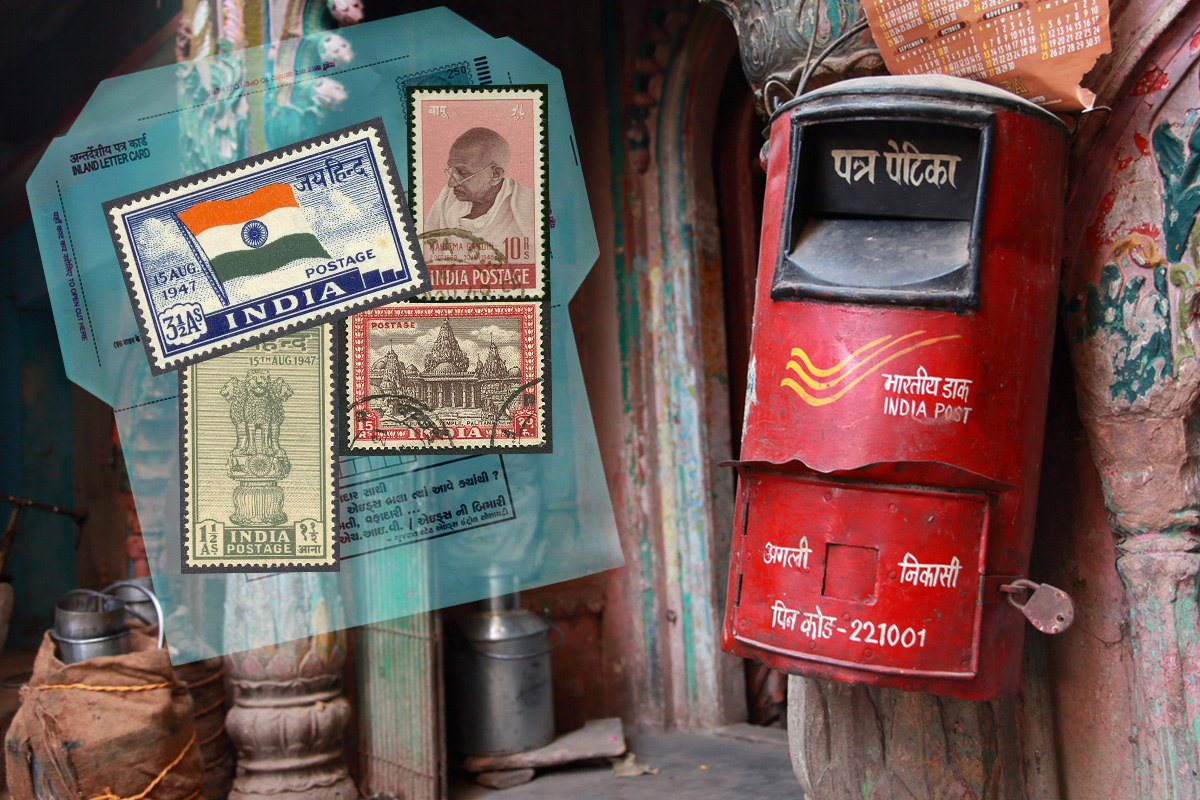
Post box of the Indian postal department hangs on the old walls of the street in Varanasi.

Synopsis: There was a time when letters were the gateways to distant worlds. They connected loved ones who were in faraway places and gifted abiding memories. Then there were those stamps…
Letter-writing has a long literary tradition in India, going back to the days of Kalidasa’s Meghadūta. Almost anyone of a certain vintage would have heard of Jawaharlal Nehru’s letters from prison to his daughter Indira Gandhi.
In fact, there was a time when the postman’s knock carried more than letters. It carried the faint, clean scent of distant paper and ink, the soft weight of envelopes that had travelled slowly across land and sea.
In those days, when the postal service was one of the great bridges between people, stamp collecting was not merely a hobby. It was a quiet, sensory ritual—an intimate conversation with texture, colour, and time. Philately flourished then, in the gentle rhythm of waiting and receiving. Today that once-living passion has grown faint, kept alive mainly by those who still remember how the world once felt when it arrived, piece by carefully printed piece, through the post.
After the Penny Black, the world’s first adhesive postage stamp, was issued in Britain on May 1, 1840, stamp collecting grew into a widespread and deeply personal practice. By the late nineteenth and early twentieth centuries, albums rested on wooden tables in ordinary homes, their pages slightly warped and softened from years of careful handling.
Children learned to soak stamps free from envelopes in shallow bowls of warm water. They watched the paper soften and curl at the edges, felt the gentle release as the adhesive let go, then laid the damp squares on soft cloth to dry in the afternoon light. The air carried the mild, clean smell of wet paper and old gum—a scent that still returns, years later, with surprising tenderness.
Adults sat under the soft glow of evening lamps, tweezers in hand, examining the precise teeth of perforations, the slight embossing of a portrait, the way light caught the engraved lines like tiny rivers of shadow. Families leaned close over open albums, tracing the raised edges of a ship or the delicate wings of a bird, speaking in low voices about places they had never seen. A single album could teach geography and history through the fingertips as much as through the eyes, turning distant lands into something that could be held, turned, and quietly loved.
The middle decades of the twentieth century were perhaps the golden age of this quiet art. Letter-writing remained the primary means of speaking across distance. Postal services issued stamps in abundance, many designed with care and printed with quiet pride. The paper itself held character—thicker stock that resisted tearing, inks that settled deep into the fibres, gum that still carried a faint sweetness when newly issued.
Small stamp shops stood on city streets, their windows filled with trays of colour that glowed softly in the afternoon light. Inside, the air smelled of paper, wood, and the dry, comforting dust of old catalogues. Collectors built thematic collections—birds of the world, railway engines, Olympic Games, national heroes—while specialists pursued the rarer pieces whose surfaces still whispered of long journeys.
There was a particular pleasure in the soft click of a hinge being pressed into place, the slight resistance of a well-preserved stamp against the tweezers, the muted rustle of album pages turning under careful fingers. In those moments the world felt both larger and more intimate, measured not in speed but in the slow accumulation of texture, colour, and memory. Time itself seemed to move more gently then, paced by the arrival of the post and the quiet satisfaction of placing each small square exactly where it belonged.
That world has largely slipped away. The sharp decline in physical mail is the most visible cause, yet the loss feels deeper than numbers. Emails and instant messages replaced the slow arrival of envelopes. Letterboxes grew quiet. The familiar scent of ink and paper no longer announced itself at the door.
Younger generations rarely encounter the tactile presence of stamps; parcels arrive with cold printed labels rather than adhesive miniatures that still carry the faint stick of gum. Without a steady stream of interesting stamps coming through the letterbox, the natural doorway into the hobby closed. Digital screens offered bright, frictionless images, but none of the quiet resistance of paper, none of the slight curl of an aged issue, none of the soft scent that rose when an old album was opened after years of rest.
Membership in philatelic societies dwindled as collectors grew older. Many of the old shops disappeared, taking with them the particular atmosphere of wood, paper, and muted conversation. Most common modern issues hold little value, but the rarest pieces still command serious attention from collectors. Inherited albums, assembled with years of quiet devotion, often find few new guardians willing to feel the paper for themselves. The absence is not dramatic, but it is deeply felt—a soft ache for a slower, more textured way of connecting.
Yet something of the old spirit endures, though in a quieter form. Dedicated collectors still gather, trade online, and study postal history. Thematic collections continue. A few younger people still discover the pleasure through a grandparent’s album—lifting the protective tissue, catching the faint, dry perfume of aged gum and ink, feeling the slight roughness of a perforation against a fingertip. Auction houses preserve the high end of the market, and local societies still introduce schoolchildren to the practice. The hobby has not vanished; it has simply withdrawn into a more private corner where the senses can still meet the past.
What remains most valuable is not the monetary worth of most collections but the memory of a different relationship with time and distance. Stamp collecting once taught the art of looking
closely, of organising carefully, and of finding significance in small, carefully crafted objects that could be held, turned, and breathed in. In an age of fleeting digital images, those habits retain a quiet dignity. The albums that once connected ordinary households to the wider world now serve as repositories of material culture—tangible records of how nations presented themselves and how people once waited for news that travelled at the speed of a ship or a train.
Philately may no longer occupy the central place it held when letters bound people together, yet the best collections still speak of that earlier time. They evoke evenings spent turning pages under soft light, the mild scent rising from damp stamps laid out to dry and the excitement when a new issue arrived still carrying the faint stickiness of fresh gum. They recall a gentler pace of connection—one measured in texture, colour, and the quiet resistance of paper. Though largely faded, that world continues to leave an impression on those who once knew how to feel it, a quiet echo of paper and gum that still returns, unexpectedly, whenever the light falls just so across an old album.
Also Read:
Smartphone camera: The first audience of childhood
The timeless satire of C Northcote Parkinson and what it teaches about our work life today
On Cinema: Political films from All The President’s Men to The Manchurian Candidate
(Edited by R Rajesh Kumar.)



