

Published Jul 07, 2026 | 9:00 AM ⚊ Updated Jul 07, 2026 | 9:00 AM

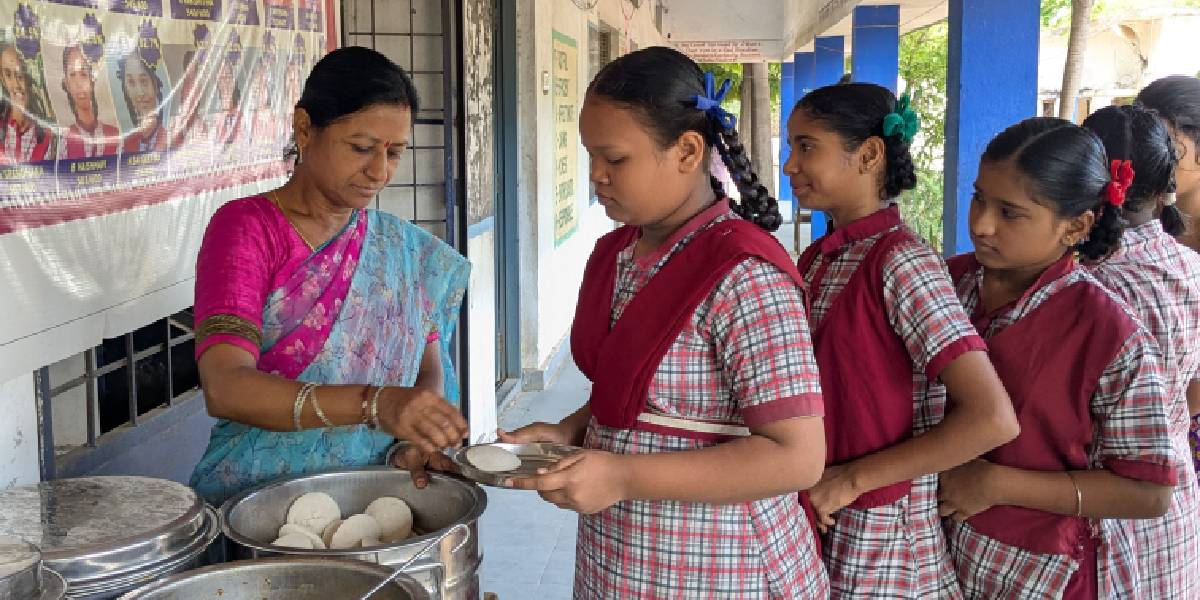
Students queued up for morning breakfast at Government Girls' High School, Marredpally (Sreshta Ladegaam/South First)

Synopsis: The Telangana government had recently launched the pilot phase of a breakfast and milk scheme in Hyderabad for school and junior college students. The programme has received a good welcome from students, parents and teachers alike, also raising attendance levels in schools. However, concerns exist regarding the quality of some items and a possible preferential treatment of junior colleges.
“I like the food here. My sisters, Nasreen and Asma, are also studying here. We are all coming a little early to eat breakfast,” said 11-year-old Rukhsar, who is currently enrolled in the 5th standard at the Government Primary School in Marredpally, a suburb of Secunderabad in Telangana.
On 21 June, when South First visited the school at around 7.45 am, children aged 4-11 were already lined up with plates for hot idli and sambar served by the Ayah.
Students sat in rows to finish their meals before classes began. They washed their plates, then stood in lines again, this time for hot milk. They sat around on the school porch, talking to each other with smiles on their faces, while teachers started to arrive.
Also Read: Telangana government launches Breakfast and Milk Scheme at state-run schools
Rukhsar said that when her father, a painter, and her mother, a homemaker, visited the school for a parent-teacher meeting the previous Saturday, they were elated to learn about the breakfast scheme.
The meal at the school is part of the Telangana government’s Breakfast and Milk Scheme. Education Minister Ponnam Prabhakar officially launched the programme at Raj Bhavan Government High School in Khairatabad on 15 June.
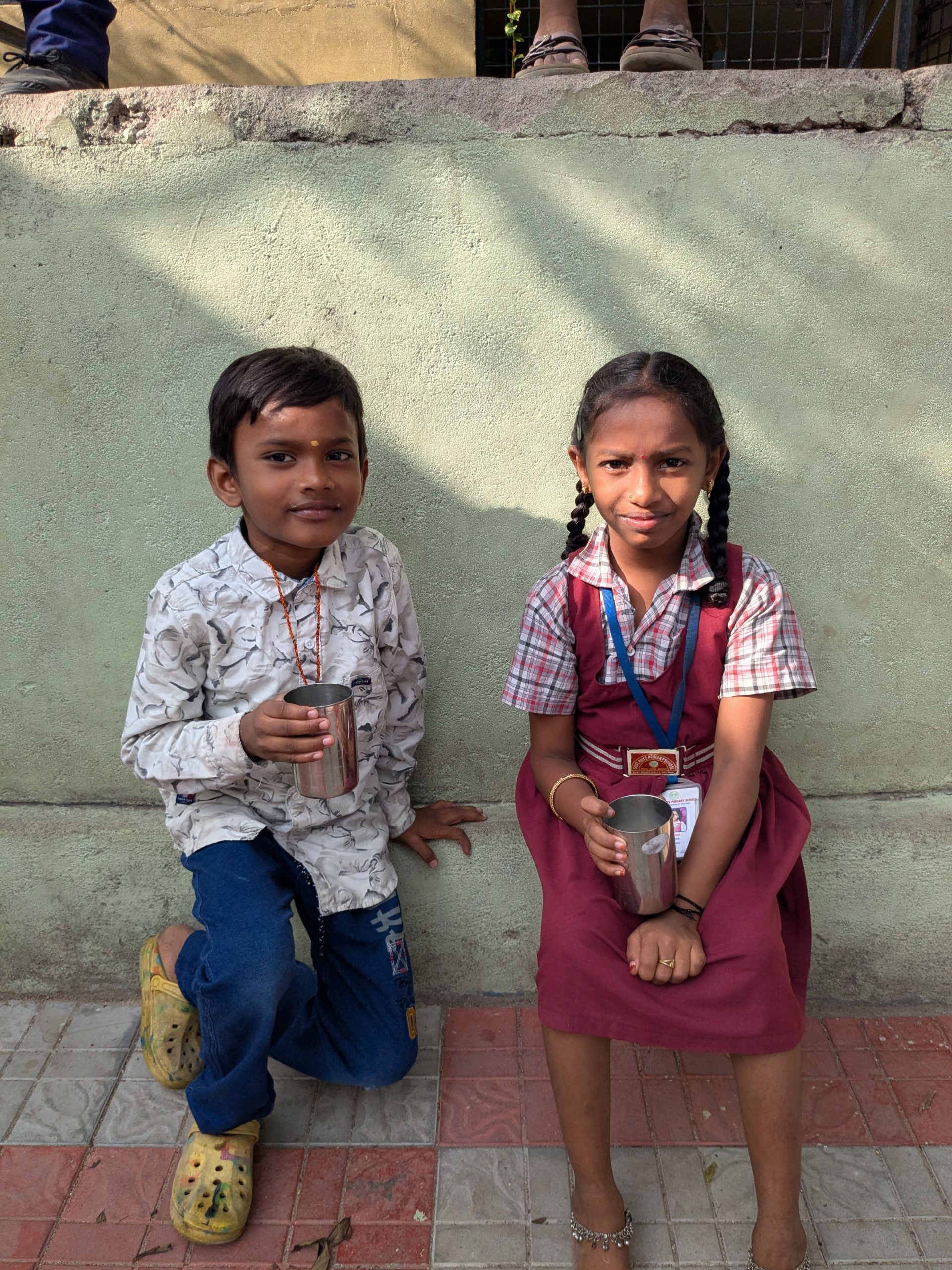
Students drinking milk at the Government Primary School, Marredpally
(Sreshta Ladegaam/South First)
The promise is simple: Nutritious breakfast, six days a week. Dosa, chapati, millet idli, poori, millet upma, pongal, and bonda are part of the weekly menu. The scheme also provides milk and ragi malt alternatively. Nearly 29 lakh students, from pre-primary to Class XII, stand to benefit.
Earlier, only primary and high school students were beneficiaries of the midday meals scheme. The scheme has now been expanded to the government junior colleges and was launched alongside the breakfast scheme.
Backed by an annual outlay of roughly ₹720 crore, the Breakfast and Milk Scheme is being rolled out in phases. In Hyderabad district, 45 schools were selected to be a part of the ongoing pilot phase. According to the officials, the programme is a response to classroom hunger and malnutrition, pitched to improve attendance, concentration and learning outcomes.
The scheme also hopes to nudge parents back toward public schools amid the “Badi Bata” enrolment drive.
South First visited four school campuses across Hyderabad district during the second and third weeks of the flagship programme’s pilot phase to assess its implementation and impact.
The breakfast scheme has been largely welcomed by students, parents, and teachers alike. At the government primary school in Talla Basti, Kavadiguda, parents also joined the students for breakfast.
Primary school teacher Vamsi said, “We usually go around the basti (settlement) to interact with parents. We maintain good relationships with them. They are impressed with the breakfast programme. Some of them also eat here while dropping off their kids; we have no problem with that.”
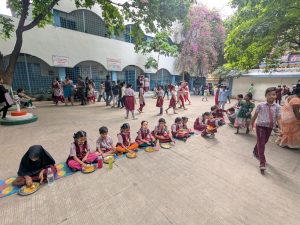
Students having breakfast at the Government Primary and High School, Kavadiguda (Sreshta Ladegaam/South First)
Nine-year-old Surakshit, who studies at the primary school in Kavadiguda, said, “I ate Idli, Dosa, Puri, and Bonda at school. My favourite is bonda. My parents are happy about the school breakfast. They told me to eat at school every day and that they’d make something special for the evening.”
Surakshit’s father works as a driver, and his mother works at a printing facility. He said that both his siblings study at the same school complex that also houses an English-medium high school.
At the Government Girls High School Marredpally, K Nirmala, the Ayah/helper, said that the high schoolers were also enthusiastically eating breakfast at school.
“At first, not all of them showed interest. But now no food is being wasted. We serve them as much as they want. Nothing remains by the end of the morning assembly. High school kids are coming back at 10.30 am for milk. They prefer drinking milk around their break time.”
Also Read: Telangana police refuse permission for Virasam’s seminar on fascism
Padma Lakshmi, who teaches English at the Government Boys High School, YMCA, said, “Attendance during the morning assembly has improved; students are coming on time. We are also giving the children extra time to eat. Sometimes the food is not sufficient, so we have already asked the authorities for more.”
She also noted that there’s a decline in the dropout rate but said they could only be sure of the official figures at the end of the school year.
Meanwhile, Government Primary School in Marredpally has seen an increase in enrollment this year. According to Principal Leelavathi and teacher Vijaya, the first week alone brought in 50 new students.
“We had only 80 fresh enrollments throughout the last academic year. But this time, the first week alone brought us 50 admissions. Some parents shifted their kids back here from other schools,” said Vijaya.
Eight-year-old Dhanu Sai’s mother works at the Yashoda Hospital. “She told me not to skip milk,” said Dhanu.
The Marredpally and YMCA schools are in proximity to major corporate hospital chains. Several parents of children attending these schools are healthcare workers.
Sisters Christina and Jaglina, both in the 5th standard, said their mother is a nurse. “She is less worried in the morning now,” they shared.
Despite the mostly positive reception, concerns remain about the consistency of the weekly menu’s delivery and the quality of some of the items served.
In the very first week after the scheme’s launch, leaders of the Opposition BRS shared pictures of breakfast, specifically puri, dumped in trash bins at schools.
Teachers at the Kavadiguda school confirmed that the students indeed rejected puri. A teacher, on condition of anonymity, said, “It is not that good compared to the other breakfast items. It’s clearly made using maida. We got Puri twice, and both times the kids didn’t eat much of it. We asked them (the authorities concerned) not to send it again.”
A similar complaint was also made at the Malakpet Primary School. Anitha, a teacher, said, “We notified the authorities about the quality. The second time it was significantly better. We have not faced this issue with other breakfast items.”
According to the breakfast programme, the children are supposed to receive milk for three days and ragi malt on the other three days of the week. No high schools or primary schools that South First visited received ragi malt.
Pupils at the Boys High School, YMCA, have raised concerns about the quality of the food they have received so far. They said, “We once found stones in idli and upma. We did not care because it’s a common occurrence in rice as well.”
They also expressed disappointment with the milk’s quality, saying it tasted like it was made from powdered milk.
Also Read: Alarming decline in groundwater levels in Telangana; situation in Hyderabad ‘critical’
High schools and primary schools situated in the same complex as the government junior colleges have alleged that the junior colleges were being given preferential treatment.
Students, teachers, and Ayahs at these schools told South First that they have not received the full range of breakfast items listed on the menu.
“We are only getting variations of upma and idli. We have not received ragi malt, but the adjoining junior college did. Children here are getting milk for three days but no ragi malt or milk on the other three days,” said a staff member at the Government Girls High School, Marredpally.
A similar sentiment was echoed by the students at the YMCA Boys High School. At the Boys Junior College next door, attendance for the morning breakfast was even bigger. Students took it upon themselves to serve food to each other.
A second-year student told South First, “We haven’t had any major issues with quality so far. If we did, we would not be silent. We’d express our grievances right away to the principal or the lecturers.”
They also confirmed receiving multiple breakfast varieties, including ragi malt on three days a week, according to the menu.
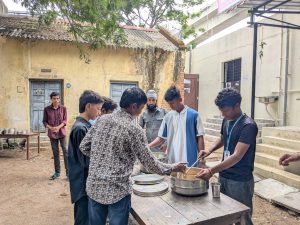
Students serving breakfast at the Government Boys Junior College, YMCA.
(Sreshta Ladegaam/South First)
For now, the scheme appears to be fulfilling most of its guarantees. Children are showing up earlier and eating together. Teachers said attendance at the morning assembly has picked up, alongside the overall attendance. There is a positive shift in enrollment, with dropout rates expected to decline as well.
However, the schools hope that the gaps in consistency and food quality are fixed before the programme expands beyond its pilot phase. There is also demand for improved nutrition standards, including the delivery of more millet-based food items as promised.
Following a Cabinet meeting on 2 July, the Telangana government announced that the breakfast, milk, and midday meals scheme will be extended to teachers and staff in government schools and junior colleges.
The decision drew mixed responses, including criticism from members of the ruling Congress.
Harshavardhan Reddy, a spokesperson for the Telangana Pradesh Congress Committee (TPCC) and the founding president of the Progressive Recognised Teachers Union (PRTU), said the idea is well-intentioned but impractical on the ground.
The PRTU said that the entire fund earmarked for teachers’ and staff’s meals should be redirected for students’ welfare, specifically to improve the quality of breakfast and lunch. They requested that the government ensure the scheme’s core goal of feeding underprivileged children remains the priority.
Officials from the state’s education department were unavailable for comment.
(Edited by Muhammed Fazil.)



