

Published Sep 10, 2026 | 2:10 PM ⚊ Updated Sep 10, 2026 | 2:10 PM

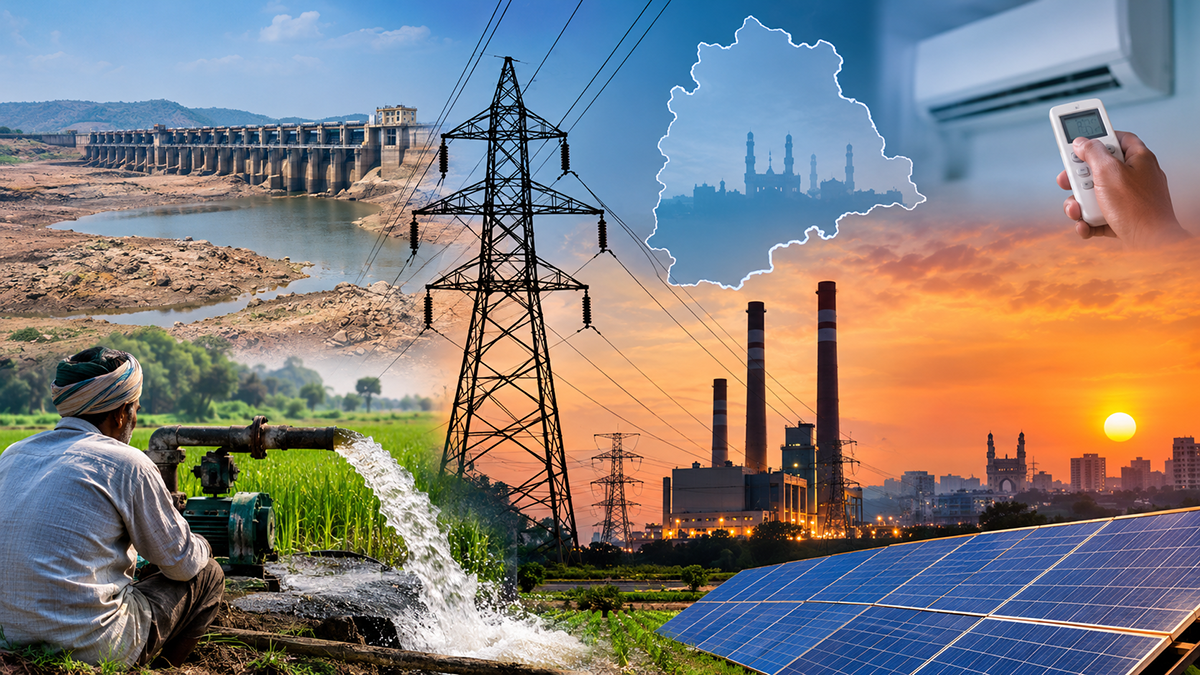
Image used for representational purpose. (AI generated)

Synopsis: Peak demand that typically settles around 11,000 MW during the monsoon has surged past 16,500 MW and crossed 17,000 MW in mid-season, placing unprecedented pressure on the grid. Thermal power faces constraints and solar capacity sits underused during the day when the grid faces its sharpest deficit before sunrise.
Telangana is confronting a severe power crisis shaped by the disruptive force of Super El Niño. Deficient rainfall has sharply reduced hydel generation while simultaneously pushing agricultural and domestic electricity demand to extraordinary levels.
What is normally a manageable monsoon load has transformed into a demand shock of nearly 7,000 MW, exposing the limits of the state’s generation mix and the heavy dependence of its farm economy on groundwater pumping. Peak demand that typically settles around 11,000 MW during the monsoon has surged past 16,500 MW and crossed 17,000 MW in mid-season, placing unprecedented pressure on the grid.
The monsoon, which should replenish reservoirs and enable flexible hydropower, has instead delivered widespread shortfalls. Low water levels have rendered close to 2,000 MW of hydel capacity unavailable. Major projects that normally supply low-cost, quickly dispatchable energy are generating only a fraction of their potential. This collapse has forced the system to rely almost entirely on thermal stations and costly short-term market purchases at a time when every available megawatt is critical.
State-owned stations, bolstered by progressive commissioning of the large Yadadri complex, form the core of reliable generation. Daily thermal output frequently ranges between 4,500 and 5,000 MW. Yet even this usually reliable source faces constraints.
Inferior quality coal has lowered efficiency, raised specific consumption and reduced actual output below design capacity. The financial and operational cost of these inefficiencies arrives precisely when the grid can least afford them. Central sector allocations and long-term contracts provide additional support, but they cannot fully compensate for the dual burden of rising demand and constrained domestic generation.
Agriculture is the dominant driver of the demand spike. Nearly 28 lakh borewells across the state are operating intensively to protect kharif crops amid rainfall deficits. Agricultural load alone has climbed to 6,500–7,000 MW daily for extended periods. Major lift irrigation schemes further intensify continuous draw.
The critical mismatch occurs in the early morning hours, when farm pumps, domestic households and municipal systems peak together—before solar generation begins. This creates a persistent 3,000 MW deficit that must be met by thermal stations or expensive exchange power, often costing nearly twice the average rate of long-term contracts.
Domestic consumption adds a second layer of pressure. Elevated temperatures have increased the use of cooling appliances in urban centres, particularly in and around Hyderabad. Combined with steady industrial and commercial growth, this has lifted overall system peaks to historic highs earlier in the year. The simultaneous rise of farm and household demand leaves little operational margin.
Solar energy has emerged as a partial but incomplete buffer. Daytime solar generation has helped meet a meaningful share of the load during sunlight hours, reducing immediate pressure on thermal plants and limiting the need for costly purchases in the middle of the day. Surplus solar is available precisely when agricultural pumping could be most efficiently scheduled. Yet the current pattern of farm power supply—concentrated in pre-dawn and early morning hours—fails to utilise this resource.
The result is a structural mismatch: solar capacity sits underused during the day while the grid faces its sharpest deficit before sunrise. Integrating solar more effectively requires both technical and policy shifts. Moving agricultural feeder schedules into daylight hours would allow farmers to draw power when solar output is highest, easing the morning peak and improving overall system efficiency. Accelerated solarisation of dedicated rural agricultural feeders under national schemes would further embed renewable generation at the point of consumption, reducing transmission losses and dependence on distant thermal stations.
Broader solar integration also demands complementary infrastructure. Without adequate storage—whether through pumped hydro or battery systems—solar generation cannot fully address evening and night-time peaks when domestic and residual agricultural loads remain high. Strengthening the transmission network to absorb and evacuate large volumes of intermittent solar power is equally essential. These steps would not eliminate the need for thermal capacity in the near term, but they would reduce the severity of climate-driven shocks and lower the long-term cost of power.
So far the state has avoided scheduled load shedding through careful planning, maximum utilisation of available thermal capacity, daytime solar generation and targeted market purchases.
Temporary interruptions have largely resulted from weather-related damage rather than deliberate cuts. Yet the strategy remains expensive and fragile. Continued reliance on high-cost power strains distribution company finances already burdened by accumulated losses. Coal quality problems and the time required for new capacity to come online limit operational flexibility.
The deeper issue is structural.
Telangana’s power system remains heavily dependent on weather-sensitive hydel resources and coal-fired thermal plants. Climate patterns such as Super El Niño amplify both the demand surge from agriculture and the generation shortfall from reservoirs.
Solar offers a pathway out of this vulnerability, but only if integration moves beyond incremental additions to deliberate alignment of generation, storage and demand patterns. Shifting farm power to solar hours, expanding feeder-level solarisation, and pairing new renewable capacity with storage would convert a growing liability into a stabilising asset.
The immediate task is to navigate the remaining months of rainfall deficit without outages. The larger imperative is to build genuine resilience. Super El Niño has revealed how tightly the state’s energy security is bound to monsoon performance and groundwater extraction.
Addressing that interdependence through accelerated solar integration, smarter load management and diversified firm capacity will determine whether Telangana can sustain reliable power for its farms, homes and industries in an era of intensifying climate volatility.
Also Read:
Can a non-existent Varuna stop El Niño, Mr Chief Minister?
Telangana’s irrigation crisis: Could Kaleshwaram have blunted the El Niño Shock?
Why Telangana has reasons to fear the likely “super” El Niño



