

Published Nov 08, 2026 | 7:28 PM ⚊ Updated Nov 08, 2026 | 7:29 PM

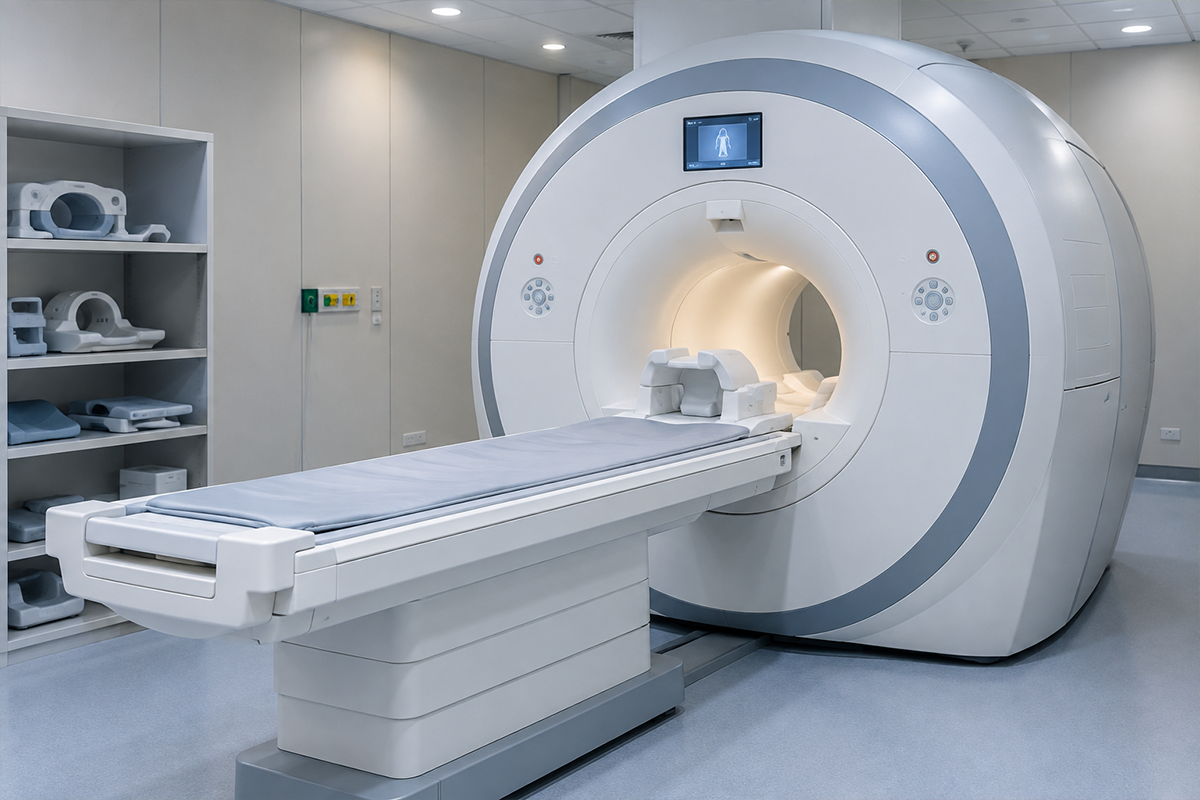
Telangana's government hospitals have just nine MRI machines serving an estimated population of 3.87 crore.

Synopsis: Telangana has added 14 MD Radiodiagnosis seats across four government medical colleges, but 12 are at institutions in districts without government MRI machines. The expansion raises questions about how students in Nalgonda, Kamareddy and Sangareddy will complete the NMC-mandated MRI training during their postgraduate courses.
Telangana has added 14 postgraduate MD Radiodiagnosis seats across four government medical colleges, but 12 of these seats are at institutions without a government MRI machine in their districts, raising questions about how students will receive the practical training required under the National Medical Commission (NMC) curriculum.
Government Medical Colleges in Nalgonda, Kamareddy and Sangareddy have received four seats each, although none of the three districts has a government MRI machine. RIMS Adilabad has received two seats and is the only one of the four institutions with access to a government MRI machine in its district.
The Directorate of Medical Education’s list of postgraduate seats applied for in 2026-27 shows that Nalgonda, Kamareddy and Sangareddy each sought four MD Radiodiagnosis seats, while RIMS Adilabad applied for three. The NMC seat matrix lists four, four, four and two seats, respectively, taking the total to 14.
The NMC’s approval is part of a larger expansion of postgraduate medical education in Telangana. Government medical colleges have received 359 additional PG seats, taking the total from 1,266 to 1,625. The number of government colleges offering postgraduate courses has increased from 10 to 23 out of 35.
A Legislative Council reply by Health Minister Damodar Raja Narasimha on 10 September listed nine government MRI machines across eight institutions in four districts, as of 31 August.
Hyderabad accounted for six machines, located at NIMS, Osmania General Hospital, TIMS Sanathnagar, MNJ Hospital and Gandhi Hospital. Warangal, Adilabad and Jayashankar Bhupalpally had one machine each.
The remaining 29 of Telangana’s 33 districts had no government MRI machine. This amounts to approximately one government MRI machine for every 43 lakh people in the state.
The shortage is particularly relevant for the three medical colleges receiving four Radiodiagnosis seats each. While Nalgonda has been included in the government’s announced procurement plan for a new machine, Kamareddy and Sangareddy have not been named.
Across Telangana, 70 MD Radiodiagnosis seats are listed at 11 government institutions. Five colleges with government MRI machines account for 44 seats, while five colleges without a machine account for another 21 seats. The remaining five seats are at ESIC Medical College, Sanath Nagar, which is not covered by the state government’s MRI machine disclosure.
Also Read: Ask an AI chatbot for a medicine, and you may get the same brand again and again, study finds
In September, the health minister told the Legislative Council that the government was procuring nine advanced 3-Tesla MRI machines. The proposed locations included Nizamabad, Siddipet, Suryapet, Nalgonda and Mahabubnagar, along with Niloufer Hospital in Hyderabad. Additional machines were planned for Gandhi and Osmania hospitals.
If all nine machines are installed, the state’s government MRI capacity would double from nine to 18. However, Kamareddy and Sangareddy are not among the locations identified for the new equipment.
The government has also announced a Public-Private Partnership (PPP) model to expand MRI services, beginning with a pilot at the Government General Hospital in Mahabubnagar. The state has set a two-year target to extend the model to all government general hospitals.
“Even under the PPP model, MRI scans will remain completely free of charge for patients visiting government hospitals,” the minister said in a Health Department statement on 31 October.
Officials told the minister that the arrangement would reduce government expenditure by approximately 20 percent compared with the existing system. They also said it would address recurring problems in operating and maintaining MRI equipment.
“This approach would not only resolve existing challenges in maintaining MRI machines but also ensure uninterrupted service for patients,” officials said.
The infrastructure gap also has implications for postgraduate medical education. The NMC’s MD Radiodiagnosis curriculum mandates a two-month MRI posting during the three-year course.
Students admitted in the 2026-27 academic year will complete their postgraduate programme in 2029. The state’s two-year target for expanding MRI services across government general hospitals runs until late 2028.
South First reported in September that Government Medical College, Nizamabad, was running its MD Radiodiagnosis programme without an MRI machine on campus. Students were sent to a private diagnostic centre, Indur CT & MRI Centre, for practical exposure and also accessed imaging cases through the Picture Archiving and Communication System (PACS).
A government doctor said postgraduate medical education requires supervision, equipped laboratories and regular assessment, and called for continued monitoring by the NMC and the state.
(Edited by Dese Gowda)



