

Published Nov 06, 2026 | 3:31 PM ⚊ Updated Nov 06, 2026 | 3:31 PM


Synopsis: Hyderabad resident Pavitra Sirolkar and paediatrician Dr Sivaranjani Santosh joined hands with international health-access groups to secure tiratricol, a treatment for the rare Allan-Herndon-Dudley syndrome, for seven Indian children. After a month’s supply cost nearly ₹13 lakh, a Dutch pharmacy compounded the medicine at a fraction of the commercial price, bringing the estimated annual treatment cost for all seven children to approximately ₹15.08 lakh.
A Hyderabad mother and paediatrician joined hands with international health-access groups to secure tiratricol, a treatment for the rare Allan-Herndon-Dudley syndrome, for seven Indian children. After one month’s supply cost nearly ₹13 lakh, a Dutch pharmacy compounded the medicine at a fraction of the commercial price, highlighting the barriers families face in accessing life-altering treatments.
When Hyderabad-based Pavitra Sirolkar learnt that her 20-month-old son Arav had Allan-Herndon-Dudley syndrome (AHDS), a rare genetic disorder affecting brain development, she was told that a medicine called tiratricol could help manage the condition. But there was a problem. The medicine was not available in India, and obtaining it from Europe came with a price tag that was beyond the reach of most families.
The commercial version of the drug, marketed in Europe as Emcitate by Swedish pharmaceutical company Egetis Therapeutics, costs €178.33 (approximately ₹18,934) per tablet in Germany. At an estimated annual treatment cost of €441,000, this translates to approximately ₹4.68 crore per patient.
For Pavitra, however, waiting for an affordable alternative was not an option. She eventually arranged nearly ₹12-13 lakh to purchase a month’s supply from Germany.
Now, following an intervention by Hyderabad-based paediatrician Dr Sivaranjani Santosh, Indian patient-rights groups and the Netherlands-based Pharmaceutical Accountability Foundation (PAF), seven children with the condition are set to receive tiratricol through a Dutch pharmacy at a fraction of the commercial price.
The compounded formulation is estimated to cost approximately ₹2.5 lakh per child annually, according to Dr Sivaranjani. PAF has put the total cost of providing one year’s treatment to the seven children at €14,200, approximately ₹15.08 lakh.
The immediate arrangement involves importing six months’ supply at a time, with the families having secured import permissions covering one year. The first batch of compounded medicine has been prepared in the Netherlands and is awaiting transportation to India.
View this post on Instagram
Also Read: Deepinder Goyal defends Temple wearable amid doctors’ concerns over brain blood flow claims
Arav was seven months old when Pavitra first noticed that something was not right. His weight gain had slowed, and his developmental milestones were delayed. Doctors initially investigated more common causes. His low iron levels were corrected, but his growth did not improve. His muscle tone remained low.
“I didn’t want to take any risk or delay things further, so I decided to start physiotherapy for him,” Pavitra recalled.
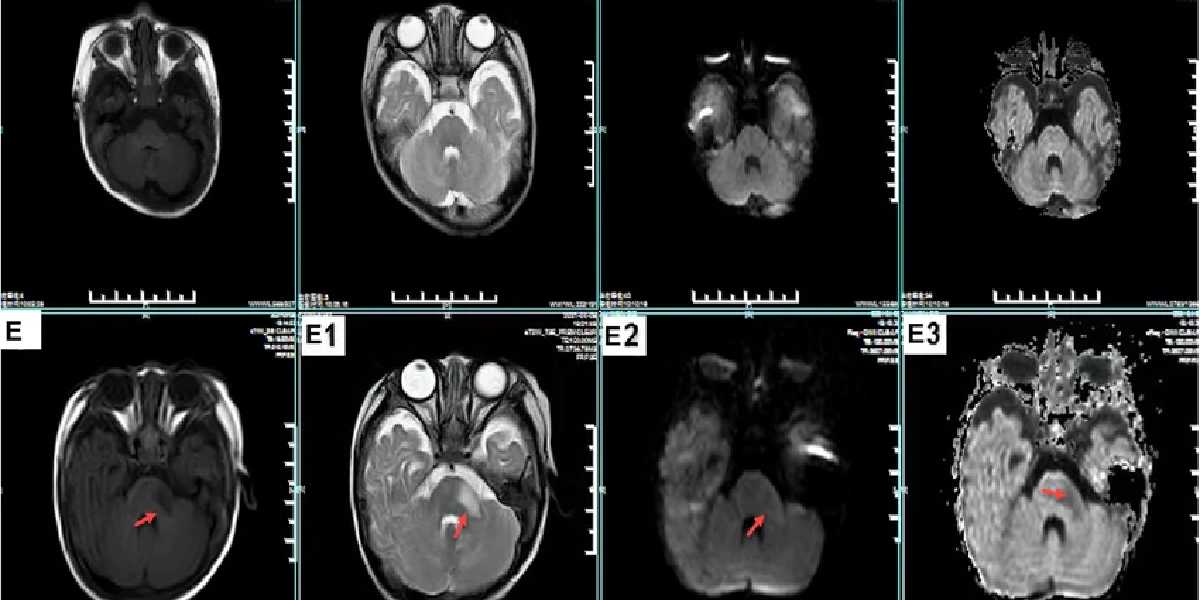
By the time he was 10 months old, Arav wanted to move, play and explore, but he would tire quickly. Further investigations followed. A brain MRI showed developmental delay but no structural damage. Genetic testing eventually established that he had AHDS, also known as MCT8 deficiency.
“The condition is caused by mutations affecting the MCT8 gene, which plays an important role in transporting thyroid hormones into brain cells. In affected children, thyroid hormone T3 cannot adequately reach the brain, affecting neurological development. At the same time, excess thyroid hormone in other parts of the body can cause complications, including muscle wasting, weight loss and cardiac problems,” Dr Sivaranjani said, speaking to South First.
Tiratricol, also known as TRIAC, is a thyroid hormone receptor agonist that can help overcome some of the effects of this deficiency by acting on thyroid hormone receptors.
For children with AHDS, the timing of treatment is important. Delays can affect developmental outcomes, and neurological damage that has already occurred may not be reversible.
“When I found out that Arav was diagnosed with AHDS, I didn’t even understand fully what the condition was about, what the symptoms were or what it would mean for my child. As I kept researching and understanding, the only thing I knew was that I needed this medicine for my child,” Pavitra said.
Dr Sivaranjani, who was treating Arav, began contacting paediatricians, endocrinologists and paediatric neurologists to identify a way to obtain tiratricol. She also reached out to doctors at Christian Medical College (CMC), Vellore, where other children with the same condition had been identified.
Dr Praveen from CMC Vellore informed her that five other children with AHDS were under the institution’s care. Some had participated in clinical trials conducted by researchers at Erasmus University Medical Center in Rotterdam, the Netherlands.
The doctors approached the Erasmus team, which had conducted research on tiratricol for AHDS. The researchers subsequently connected them to Egetis Therapeutics, the Swedish pharmaceutical company that acquired the intellectual property rights related to the research.
However, the efforts did not secure the medicine.
According to Dr Sivaranjani, Egetis declined to provide the medicine to Arav, even though the family was willing to pay. The company cited the absence of a reimbursement arrangement in India. An attempt to obtain the drug through a compassionate-use programme also did not succeed.
“We were feeling lost. At one point, the Erasmus team contacted Dr Praveen and asked whether he would be able to supervise the treatment for Arav. They said they would try to send the medicine. We were very happy, but that also did not work out,” Dr Sivaranjani said.
The family eventually found contact through another parent who was procuring medicines from Germany. Pavitra arranged the money independently and imported a month’s supply.
“I was desperate. I wanted to start this medication as early as possible. I arranged the funds independently,” she said.
The expenditure of nearly ₹12-13 lakh for a month’s treatment was not sustainable, particularly when the medicine could be required throughout the child’s life. Dr Sivaranjani also knew that the five children at CMC Vellore were waiting for access.
“How can a medicine be available in the world but not be available for our children?” she said.
Also Read: Ask an AI chatbot for a medicine, and you may get the same brand again and again, study finds
On 7 September, Dr Sivaranjani posted an appeal on Instagram, asking people to help the family obtain the medicine. She urged users to tag the Prime Minister, the Union Health Minister and other government representatives.
“I want you all to put yourselves in the shoes of this mother,” she said in the video.
Explaining that Arav was 19 months old and needed treatment without further delay, she said the family was willing to pay for the medicine or travel to Europe or the United States to obtain it.
“They’re willing to pay for it. They’re willing to go to other countries, Europe or America, to get that medicine, because if you don’t give the medicine now, there is no point in giving it much later,” she said.
The appeal circulated on social media, which eventually brought the case to the attention of the Pharmaceutical Accountability Foundation (PAF) in the Netherlands.
PAF explored an alternative to the commercially marketed drug: having tiratricol prepared by a pharmacy through compounding, using the active pharmaceutical ingredient (API).
The foundation approached Transvaal Pharmacy in The Hague, which had previously examined whether it could prepare the medicine. The pharmacy had retained a quantity of the API and began conducting test batches to establish a suitable formulation.
During an online press conference on 4 November, a pharmacist from Transvaal Pharmacy explained that the team had tested the possibility of compounding tiratricol several years earlier.
“When Wilbert contacted us and asked whether we could compound it for a few patients in India, we were willing to try. We made a few test batches because it is not an easy compounding process. We finally found one that worked,” a representative of Transvaal Pharmacy said during the conference.
The pharmacy can prepare tiratricol at €1.80 (approximately ₹191) per capsule, according to PAF. The foundation describes this as 99 times cheaper than the commercial medicine, comparing the compounded capsule’s price with the commercial tablet price. The comparison is based on unit prices and does not, by itself, establish equivalent dosages.
PAF and Universities Allied for Essential Medicines Netherlands (UAEM NL) have joined the Indian doctors and organisations in arranging funding for the children’s treatment.
The initial group included Arav and five children at CMC Vellore. A seventh child, aged one year, was identified after his father contacted Dr Sivaranjani following her social media appeal.
The child’s father earns approximately ₹40,000 a month, making the commercial medicine unaffordable for the family.
Dr Sivaranjani mobilised parents and other contributors to raise funds, while PAF undertook to raise additional money in the Netherlands.
According to PAF, the total cost of one year’s treatment for the seven children is €14,200 (approximately ₹15.08 lakh). Of this, €5,600 (approximately ₹5.94 lakh) had already been raised in India. The foundation aims to raise the remaining €8,600 (approximately ₹9.13 lakh) in the Netherlands.
The compounded medicine has a six-month shelf life. Consequently, the children will receive the supply in two batches rather than a single year’s stock. The first batch has been prepared and dispensed against the names of the seven patients. It will be transported to India along with the required documentation and individual import permissions.
The families have secured import permissions covering one year.
For Pavitra, the arrangement means that her son can continue treatment without having to depend on the expensive German supply.
“I have spent ₹12 lakh, ₹12.5 lakh or even ₹13 lakh just for one month of treatment for my son. And here we are, being able to provide one year of medicine,” she said.
She thanked the doctors, the Dutch team and the organisations involved in arranging access to the medicine.
“Now, not just Arav but so many more children will get access to the medicine. This is a very momentous event for me,” she said.
Also Read: FSSAI proposes allowing chemically recycled plastic in food packaging, sets safety conditions
While the initiative has addressed the immediate treatment needs of seven children, PAF says the case highlights a wider problem in the pharmaceutical industry, which it describes as ‘medicine hijacking’.
Tiratricol is not a newly discovered molecule. It has been known since 1953 and was available in France from 1974 for thyroid-related conditions. In 2014, researchers at Erasmus University Medical Center identified its potential to treat AHDS through publicly funded research.
In 2017, Erasmus MC licensed the intellectual property rights related to the research to Egetis. The company subsequently developed the drug for AHDS and received European marketing authorisation in 2025 under the brand name Emcitate, according to PAF.
The foundation argues that commercialising an existing medicine for a rare disease, followed by market exclusivity and a steep price increase, has made treatment inaccessible to patients.
According to PAF, the price of tiratricol increased from €0.35 per tablet in France in 2017 to €178.33 in Germany in 2026. At the latter price, the foundation estimates the annual treatment cost at €441,000, equivalent to approximately ₹4.68 crore at the exchange rate used in this article.
PAF chairperson Wilbert Bannenberg said approximately €14 million in public and charitable funding had gone into the research that established tiratricol’s potential for AHDS.
The foundation argues that universities and publicly funded research institutions should ensure that medicines developed using public resources reach patients at affordable prices. It also says the licensing agreement between Erasmus MC and Egetis did not include a fair-price clause.
PAF has questioned Egetis’s decision not to provide the medicine to the Indian children through compassionate use. According to the foundation, the company provides tiratricol free of charge to at least 230 patients across 25 countries through its compassionate-use programme, while new Indian patients have been unable to access the same route.
PAF said it had approached Egetis for comments on the Indian initiative and its position on providing the medicine to the children, but had not received a response by the time of its press conference.
For Dr Sivaranjani, the Dutch arrangement is an emergency measure, not a permanent solution. She wants India to explore domestic production of tiratricol so that children with AHDS do not have to depend on individual imports and international fundraising.
The current arrangement involves importing finished, compounded capsules from the Netherlands through individual patient-specific permissions. The families have obtained approvals from the Central Drugs Standard Control Organisation (CDSCO) under Form 12B, according to the participants involved in the initiative.
However, these permissions are for personal use. They do not automatically authorise bulk import of the API or commercial-scale manufacturing of the medicine in India.
India recognises certain forms of compounding and dispensing in pharmacy practice, but the regulatory provisions are limited and do not amount to a general authorisation for commercial production. The distinction is important because the permissions obtained by the seven families cannot be used as a regulatory pathway for supplying the medicine to other patients.
Dr Sivaranjani said she would approach the Union government and work with Access to Medicines India and other organisations to explore domestic production.
The immediate possibility is to source pharmaceutical-grade API and examine whether Indian pharmacies can prepare the medicine under an appropriate regulatory framework. A longer-term solution would involve developing and registering a generic version of tiratricol in India.
Bannenberg said this could require a clinical trial in Indian patients and potentially take around two years. Domestic production could also help make the medicine available to patients in other low- and middle-income countries.
The scale of the problem is difficult to establish because there is no confirmed count of children with MCT8 deficiency in India. Bannenberg estimated that there could be around 1,000 patients in the country, although this is not an established prevalence figure.
Dr Sivaranjani has started circulating a Google document among paediatricians, endocrinologists, paediatric neurologists and other specialists to identify children with confirmed or suspected MCT8 deficiency. Doctors have been asked to share relevant clinical information while avoiding unnecessary disclosure of patient-identifying details.
The one-year arrangement gives the seven families access to treatment while work continues on a longer-term solution. But tiratricol is a lifelong medicine, and continued access will depend on sustainable funding, an appropriate regulatory pathway and domestic availability.
For Pavitra, the effort has changed what began as a search for treatment for her son into a collective initiative involving families across India.
For Dr Sivaranjani, the next step is to ensure that the medicine can be made available within the country.
“We should get the medicine compounded in India and make it available for all the children with this condition,” she said.
(Edited by Dese Gowda)



