

Published May 28, 2026 | 2:40 PM ⚊ Updated May 28, 2026 | 2:40 PM

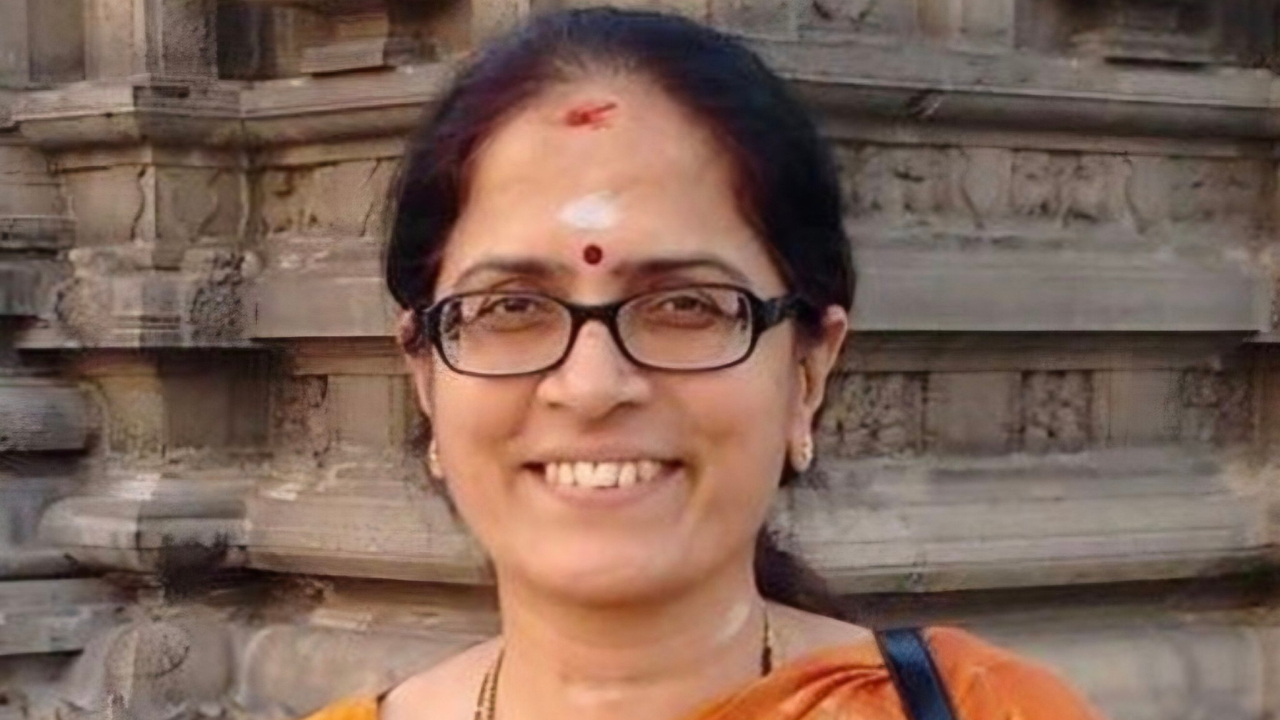
V Mohana

Synopsis: Senior Advocate V. Mohana, born in Coimbatore, rose from modest beginnings to a distinguished Supreme Court practice. Trained under stalwarts like Indu Malhotra and C.S. Vaidyanathan, she built expertise in constitutional and criminal law. Designated Senior Advocate in 2015, her possible direct elevation to the Supreme Court would make her only the second woman elevated from the Bar, symbolizing rare representation and resilience.
Senior Advocate V. Mohana’s legal journey began not in the grand corridors of Delhi, but in a large family home in Coimbatore, where a mother with little formal education dreamed that at least one of her children should become a lawyer.
Decades later, that dream has brought Mohana to the threshold of history.
The Supreme Court Collegium has recommended Senior Advocate V. Mohana for direct elevation to the Supreme Court of India. If approved by the Union Government, she will become one of the few advocates to be directly elevated from the Bar to the apex court, and only the second woman to enter the Supreme Court through this rare constitutional route, after Justice Indu Malhotra.
“I always thank my mother for this,” Mohana once recalled while speaking about her decision to study law. Born into a family of 13 children, nine daughters and four sons, she became the first lawyer in her family. Her mother, despite lacking formal schooling, insisted that law was a profession where women could excel with dignity and independence.
Mohana belonged to India’s very first batch of the five-year integrated law course introduced in 1983. She studied at Coimbatore Law College under Bharathiar University, at a time when legal education infrastructure was still rudimentary.
“There were very few girls in the class, no hostel for women, and only a handful of classrooms,” she had said in an earlier interview. Yet, those formative years shaped her approach to law and litigation.
Also Read: After Sabarimala, gold artefacts missing from Kerala’s famed Padmanabha Swamy Temple
While many law students today speak of internships as structured institutional programmes, Mohana’s entry into litigation was far more organic. In her final year, she approached renowned civil lawyer M. Panchapakesan in Coimbatore seeking training.
Her early training involved painstaking clerical and courtroom work, maintaining case schedules, copying pleadings manually, taking dictation, and closely observing trial proceedings.
She often credits those years with teaching her the foundations of discipline, drafting, and preparation.
“The habit of preparing in advance for every matter is something I follow even today,” she once said.
Mohana began her practice in the Coimbatore district courts in the late 1980s, a time when women litigators were still rare in Tamil Nadu’s trial courts.
One of her earliest memorable courtroom experiences came during an urgent injunction hearing where a senior opposing counsel remarked that women “should not be raising their voices in court” and belonged “inside the house.”
Mohana did not lose her composure.
“If he has any point in the case, he can argue that,” she had replied firmly before securing relief for her client. Years later, she would recall that incident not with bitterness, but as a lesson in courtroom dignity and restraint.
In 1992, encouraged by her senior and supported by family members already living in Delhi, Mohana moved to the national capital, a decision that transformed her career.
She first joined the office of then Advocate-on-Record Indu Malhotra, who would later become a Supreme Court judge. The move exposed Mohana to constitutional litigation, criminal law, drafting of special leave petitions, and appearances before the Supreme Court.
Her years with Malhotra became a defining phase. Mohana has often recalled how the office gave her exposure to some of the finest legal minds in the country, including Kapil Sibal, Arun Jaitley and P. Chidambaram. She said senior advocates of that generation encouraged junior lawyers to actively participate in conferences, discuss strategy, and present their own views on cases, something she credits with building her confidence and sharpening her courtroom approach.
She has often said the experience shaped her understanding of the rigour, preparation and precision demanded in constitutional litigation.
Also Read: ‘Sacrificing cows not obligatory religious practice’: Madras HC bans slaughter during Bakrid
Mohana later joined the chambers of senior advocate C.S. Vaidyanathan to sharpen her research and counsel work. There, she worked on several major matters of the era, including the Amratlal Prajivandas (SAFEMA) case, the McDowell tax case, and proceedings connected to the Jain Commission.
In 1996, after clearing the Advocate-on-Record examination, she began independent practice in the Supreme Court.
Over the years, Mohana built an expansive practice spanning constitutional law, criminal law, consumer disputes, service matters, and government litigation. She also served on panels representing the Union government and regularly appeared before tribunals including the National Consumer Disputes Redressal Commission, CAT, MRTP Commission, and CESTAT.
She worked alongside and briefed some of India’s most prominent legal minds, including Kapil Sibal, Arun Jaitley, P. Chidambaram, K.K. Venugopal, and T. Andhyarujina.
But even with a distinguished practice, Mohana often speaks most fondly about courtroom experiences that tested her personally.
Among them was a sensational Coimbatore murder appeal that reached the Supreme Court. Initially appearing only for three accused, she unexpectedly ended up arguing the case for all the appellants after senior counsel sought adjournments.
The hearing stretched over five weeks before a bench led by Justice S.N. Phukan. Though the accused she directly represented were ultimately convicted, Mohana has repeatedly described the matter as one of the most enriching experiences of her professional life because of the intensity of preparation and the opportunity it gave her to prove herself in criminal law.
In 2015, the Full Court of the Supreme Court designated her as a Senior Advocate, making her one among a very small group of women to receive the honour at the apex court.
She has since continued appearing in major constitutional and politically sensitive matters, including the Karnataka hijab case. Alongside her litigation practice, she has served as mediator in the Supreme Court Mediation Centre, acted as amicus curiae in several matters, and appeared pro bono in criminal appeals.
Throughout her interviews and public interactions, Mohana has consistently returned to one theme, the importance of preparation and self-belief for women in litigation.
“You earn automatic respect from the bench if you are prepared,” she once said. “Young women should not worry about who is appearing on the other side or what others think. Stay focused on the case.”
Also Read: Supreme Court upholds Special Intensive Revision, says exercise serves free and fair polls
Her possible elevation to the Supreme Court now carries significance beyond personal achievement.
Direct elevation from the Bar remains exceptionally rare in India’s judicial system. For women advocates, the path has been even narrower. If appointed, Mohana’s elevation would not only mark a personal milestone but also signal the gradual widening of representation in the higher judiciary.
For many young women lawyers across India, especially those beginning their journeys far away from Delhi’s elite legal circles, her story may stand as proof that the distance from a modest district courtroom to the Supreme Court bench is not impossible to travel.
And at the heart of that journey remains the conviction of a mother in Coimbatore who believed her daughter belonged in law.



