

Published May 27, 2026 | 12:05 PM ⚊ Updated May 27, 2026 | 12:09 PM

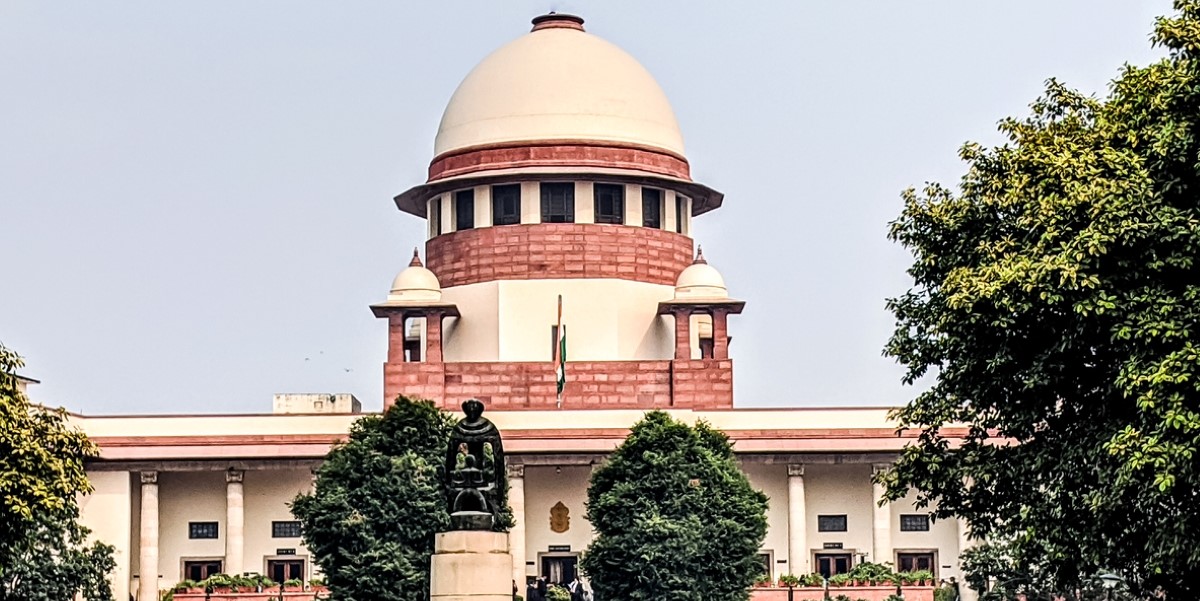
Supreme Court of India. (iStock)

Synopsis: The Supreme Court on Tuesday upheld the Election Commission of India’s Special Intensive Revision of electoral rolls, ruling that the exercise is legal and aimed at ensuring free and fair elections. The court said the poll body has the authority to verify electoral rolls, including examining questions of citizenship, while clarifying that such scrutiny does not amount to a final determination of citizenship status.
The Supreme Court of India on Wednesday, 27 May ruled that the Election Commission of India’s contentious Special Intensive Revision (SIR) of electoral rolls, conducted across more than a dozen states and Union Territories beginning in June 2025, is legal, observing that it advances the constitutional imperative of holding free and fair elections, LiveLaw reported.
A two-judge bench comprising Chief Justice Surya Kant and Justice Joymalya Bagchi delivered the verdict in several writ petitions challenging the ECI’s original notification to conduct the first phase of the SIR in Bihar.
The petitioners argued that, through the exercise, the Election Commission was acting as a de facto citizenship adjudicator, even though the law does not permit the Commission to require citizens already on the rolls to re-establish their citizenship through documentary proof.
In its ruling, the apex court held that the ECI has the power to conduct the SIR under Article 324 of the Constitution, read with the Representation of the People Act, 1950, and the rules framed subsequently.
“When the statute itself authorises a special revision at any time, for reasons to be recorded and in such manner as the Election Commission may deem fit, the impugned exercise cannot be invalidated merely because it does not conform in every respect to the ordinary modalities contemplated for routine revision. In our considered opinion, the impugned SIR does not supplant the Representation of the People Act and the Rules. Rather, it breathes life into the constitutional mandate under Article 324 within the precise statutory contours provided by Section 21(3). Therefore, it cannot be said that the Commission has acted in excess of its statutory powers,” the Chief Justice observed, according to LiveLaw.
Thus far, the Election Commission has completed the SIR in large parts of the country in two phases. Phase I, conducted in Bihar, was completed in September 2025. Phase II, completed in April 2026, covered nine states—Chhattisgarh, Goa, Gujarat, Kerala, Madhya Pradesh, Rajasthan, Tamil Nadu, Uttar Pradesh and West Bengal—along with the Union Territories of Andaman and Nicobar Islands, Lakshadweep and Puducherry.
The poll body has also announced the third phase of the SIR across 16 states and three Union Territories, including Andhra Pradesh, Karnataka and Telangana, to be conducted in the coming months. Once this phase is complete, the SIR exercise will cover the entire country except Himachal Pradesh, Jammu and Kashmir, and Ladakh.
Also Read: SIR of electoral rolls: Here’s how you can join voter list update
The apex court observed that the ECI’s stated objective for the SIR was in line with the constitutional goal of ensuring free and fair elections. The court noted that free and fair elections do not depend merely on the mechanics of polling, but fundamentally on the integrity, accuracy and credibility of the electoral rolls.
It further observed that the reasons cited by the ECI—including the fact that more than four decades had passed since the last intensive revision, large-scale additions and deletions to the rolls over the years, and rapid urbanisation and migration leading to the possibility of duplication and inaccuracies—clearly aimed to ensure the integrity of the rolls.
The bench found no merit in the argument that the ECI’s procedure violated either the Representation of the People Act, 1950, or the Registration of Electors Rules, 1960. It also dismissed claims that the exercise undermined the presumption of citizenship enjoyed by those already included in the electoral rolls.
“Calling upon electors to furnish supporting material in the course of such an exercise does not amount to negation of the presumption. Rather, it reflects the procedural mechanism through which the Commission seeks to reaffirm or, where necessary, correct existing entries. The presumption continues to operate, but it does not negate the possibility of verification,” the Chief Justice observed, according to LiveLaw.
The court ruled that the ECI is empowered to scrutinise questions of citizenship while preparing or revising electoral rolls.
“Upon detailed consideration, we have come to the conclusion that, in view of the statutory requirement under Section 16 of the Representation of the People Act, the Commission, in the course of preparing or revising electoral rolls, is undoubtedly empowered to examine questions bearing upon citizenship,” the judgment reads.
“The consequence of such a citizenship determination is correspondingly limited. It affects the individual’s entitlement to be included in the electoral rolls and thereby the right to participate in the electoral process. It does not, however, operate to divest the individual of claims to citizenship, nor does it foreclose adjudication of that question by the competent authority under the Citizenship Act.”
The court also directed the ECI to forward to the Central Government, within four weeks, the names of persons deleted from the electoral rolls over doubts regarding their citizenship.



