

Published May 27, 2026 | 11:00 PM ⚊ Updated May 27, 2026 | 11:00 PM

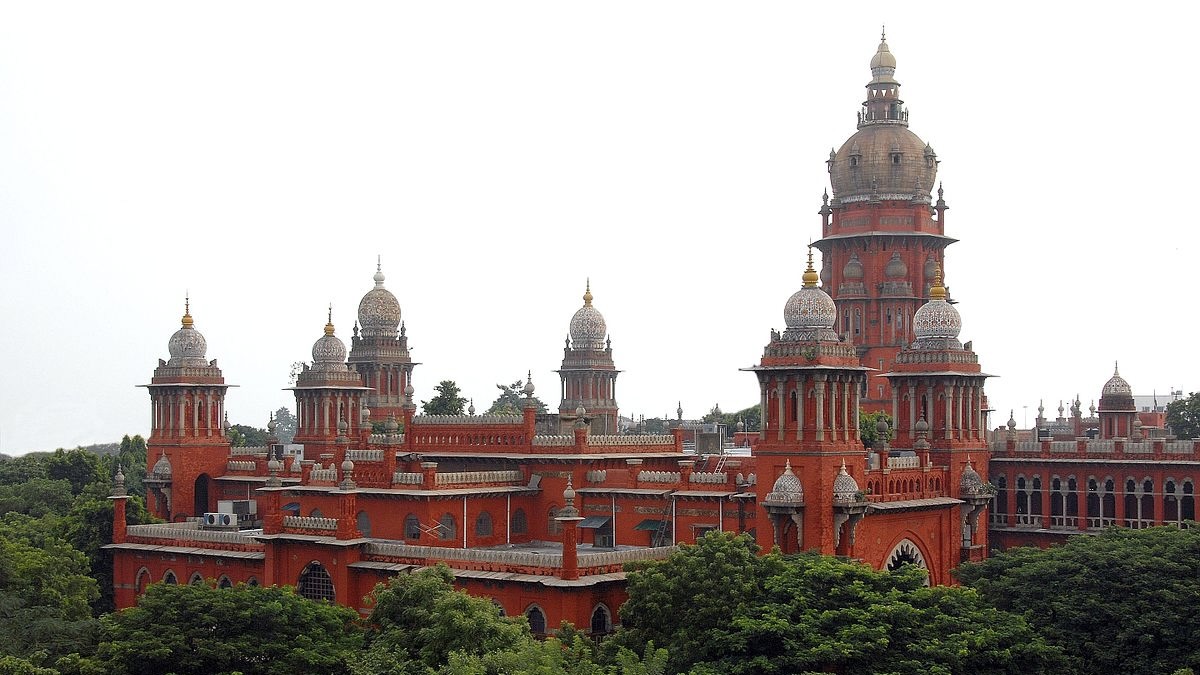
Madras High Court.

Synopsis: The Madras High Court has directed the Tamil Nadu government to ensure that no cow or calf is slaughtered during Bakrid or on any other day, while reiterating that animal slaughter can only take place in designated and licensed slaughterhouses.
Sacrificing cows is not an obligatory religious practice, the High Court of Madras noted while directing the Tamil Nadu government to ensure that no cow or calf is slaughtered on the eve of Bakrid or on any other day.
Bakrid, or Eid al-Adha — also called the “Festival of the Sacrifice” — is on Thursday, 28 May.
While disposing of a writ petition, the high court concluded that cows could not be slaughtered in places other than designated spots or licensed abattoirs.
A Division Bench comprising Justices GR Swaminathan and V Lakshminarayanan passed the order on a petition filed by K Surya Prasanth, the state youth wing secretary of the Indu Makkal Katchi.
The petitioner had sought a mandamus writ. directing authorities to consider his 18 May representation, and take steps to prevent the slaughter of cows in public places during Bakrid celebrations.
Also Read: When beef-loving Kerala was once one vote short of banning cow slaughter
Allowing the petition, the Bench directed the state government to ensure that no cow or calf is slaughtered either on the eve of Bakrid or on any other day.
The court specifically directed the Chief Secretary and the Additional Director General of Police (Law and Order) to issue suitable instructions to officials concerned to ensure that the order is implemented.
The matter has been posted for 29 May for reporting compliance.
Also Read: Beef, red sanders and Pawan Kalyan’s twin battle
The petitioner said arrangements were being made in Coimbatore for qurban (animal sacrifice) in places not officially designated as slaughterhouses.
He contended that such activities violated statutory provisions governing animal slaughter and public health regulations.
During the hearing, the state filed a counter affidavit stating that police officers had inspected the site on 21 May and found that a temporary shed had been erected for slaughtering cows in a non-public area without causing traffic obstruction or disturbing the religious sentiments of other communities.
However, the Bench observed that the respondents had effectively conceded the factual averments raised in the petition.
Also Read: Beef-biryani stalls emerge at Chennai Food Festival
The judges extensively discussed Article 48 of the Constitution, which directs the state to prohibit the slaughter of cows and calves and preserve milch and draught cattle.
The Bench observed that during Constituent Assembly debates, cow protection was described as an issue closely tied to Indian civilisation and cultural traditions.
The court also referred to Mahatma Gandhi’s views on cow protection and cited writings of scholar Dharampal, who had argued that large-scale cow slaughter increased during British colonial rule to meet the dietary requirements of the colonial army.
The High Court relied on multiple Supreme Court judgments while examining the issue.
Referring to the ruling in Mohammed Hanif Quareshi vs State of Bihar (1958), the Bench noted that many Muslims did not sacrifice cows during Bakrid and that such sacrifice was not an obligatory religious practice.
The judges also cited State of West Bengal vs Ashutosh Lahiri (1995), in which the Supreme Court held that sacrifice during Bakrid did not necessarily require slaughtering cows.
The court further referred to the Supreme Court judgment upholding the Gujarat government’s ban on cow slaughter through amendments to the Bombay Animal Preservation Act.
The Bench examined Section 4 of the Tamil Nadu Animal Preservation Act, 1958, which governs the slaughter of cattle in the state.
The provision states that no animal can be slaughtered unless a competent authority certifies that it is either over 10 years of age and unfit for work and breeding, or permanently incapacitated due to injury, deformity or incurable disease.
The court stressed that the provision must receive a “strict construction” since it permitted cow slaughter despite Article 48 of the Constitution. It clarified that the animal must satisfy both conditions, being over 10 years old and unfit for work as well as breeding, before allowing it to be slaughtered.
The judges further observed that slaughter could not be permitted unless a valid certificate in the prescribed format had been issued by a competent authority.
While the Tamil Nadu Animal Preservation Act permitted slaughter under limited certified conditions, the Bench directed authorities to ensure that no cow or calf was slaughtered.
The Bench also referred to a Tamil Nadu government order that imposed a ban on the slaughter of cows and heifers in slaughterhouses across the state, citing concerns about the rural economy, milk production and availability of breeding stock.
The judges held that since executive power was co-terminus with legislative power, such a government order carried the force of law and must be enforced.
The court also relied on a 2020 Division Bench order in Madurai North Indian Welfare Association vs Chief Secretary, Government of Tamil Nadu, which had directed authorities to ensure that no slaughtering took place in public places, including during Bakrid.
The earlier order had stated that slaughtering of permitted animals could be carried out only in recognised, approved and licensed slaughterhouses in compliance with the Prevention of Cruelty to Animals Rules and other statutory regulations.
The Bench further analysed provisions of the Tamil Nadu Urban Local Bodies Act, 1998, and the Tamil Nadu Urban Local Bodies Rules, 2023, which laid down detailed conditions for operation of slaughterhouses, including licensing, sanitation, veterinary inspection, waste disposal, public health safeguards and restrictions on public slaughter.
After examining those provisions, the court concluded that authorities could not permit the slaughter of any animal in places other than designated slaughterhouses.
The Bench made several cultural and historical observations while discussing Article 48 of the Constitution.
The judges held that cows are “revered animals” associated with Indian civilisation, from the time of Lord Krishna, and noted that cow protection was an issue “dear to Mahatma Gandhi.”
Referring to scholar Dharampal, the court observed that cows began to be slaughtered “in very large numbers” mainly to cater to the dietary requirements of the British army.
The Bench also noted that several Muslim rulers had abolished cow slaughter during their reign.
The PIL originally sought directions only to prevent the slaughter of cows “in public places.”
However, the final order directed the state to ensure that “no cow or calf is slaughtered on the eve of Bakrid or on any other day.”
This effectively widened the scope of the case from regulating public slaughter to a broader prohibition, which could become a key legal issue if the order is challenged.
(Edited by Majnu Babu).



