

Published May 16, 2026 | 1:38 PM ⚊ Updated May 16, 2026 | 1:38 PM

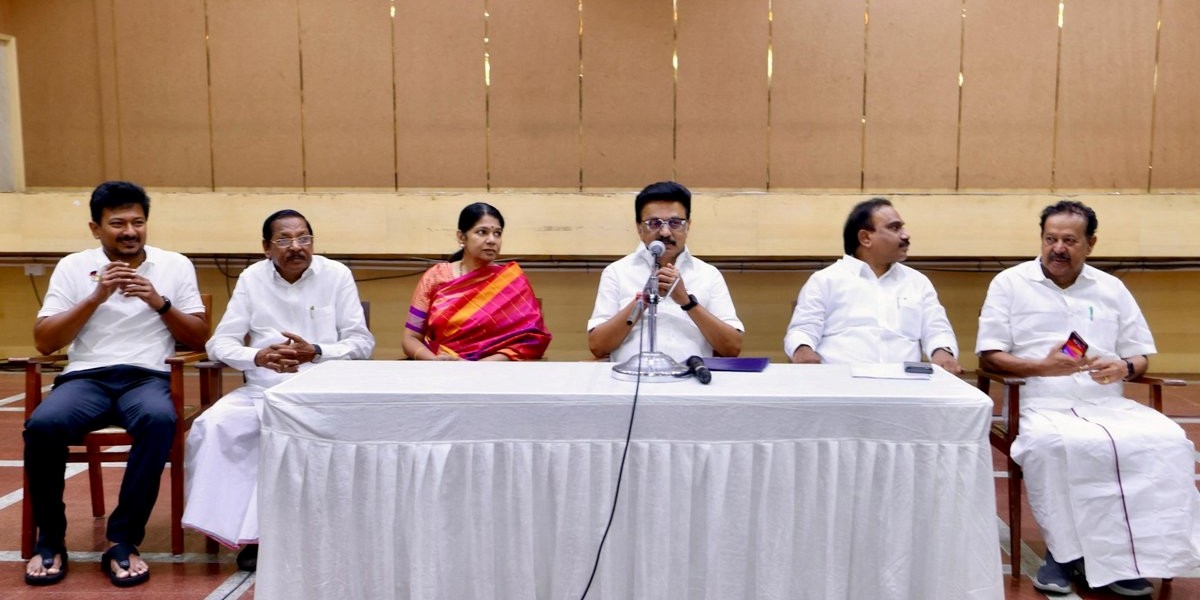
MK Stalin addresses 36-member field study committee. (Supplied)

Synopsis: The DMK president further stated that organisational changes and reforms within the party would be carried out based on the committee’s findings and asked the members to prepare a “scan report-like precise assessment.” The committee has been asked to submit its report by June 5, and the leadership aims to complete follow-up corrective measures by the end of June.
Under the leadership of MK Stalin, the DMK on Saturday, 16 May, held a consultative meeting with a 36-member field study committee appointed to conduct a constituency-wise assessment across all 234 Assembly segments following the party’s electoral defeat.
Addressing the committee members, Stalin said they were being sent as representatives of the party headquarters and as “his ears” to gather honest feedback from the grassroots.
He instructed the members to function without personal bias and said their sole responsibility was to convey the truth expressed by party cadre and functionaries exactly as it is. “You should not try to protect anyone. Nor should you act with an intention to target or take revenge against anyone,” he told the committee members.
Stalin further directed that all interactions should be conducted only in teams of two and that no member should independently meet party functionaries alone.
He urged the committee members to allow cadre and local-level office-bearers to speak openly about their grievances and the reasons behind the election outcome.
“Even if criticism is directed at me as the leader, include it in your report,” Stalin reportedly said, stressing that he wanted to know the genuine feelings and opinions of party functionaries.
Drawing an analogy, he said just as patients should not hide facts from a doctor, party members should not conceal anything from the leadership. “Only if the disease is diagnosed clearly can the right treatment be given,” he said.
Also Read: Caught between gratitude and hope: MK Stalin’s defeat is Kolathur’s paradox
Stalin also instructed the committee members not to share the feedback or information collected during the consultations with anyone else, particularly with the persons concerned, warning that doing so would defeat the very purpose of the exercise.
He said the party could remain politically vibrant for the next hundred years only if it identifies problems, corrects them, and reforms itself accordingly.
The DMK president further stated that organisational changes and reforms within the party would be carried out based on the committee’s findings and asked the members to prepare a “scan report-like precise assessment.”
The committee has been asked to submit its report by June 5, and the leadership aims to complete follow-up corrective measures by the end of June.
“Understand the true sentiments of the cadre and come back with the truth,” Stalin told the committee members.
Also Read: MK Stalin concedes defeat, says DMK will serve as ‘exemplary opposition’
(Edited by Sumavarsha, with inputs from Subash Chandra Bose)



