

Published Oct 24, 2026 | 6:25 PM ⚊ Updated Oct 24, 2026 | 6:25 PM

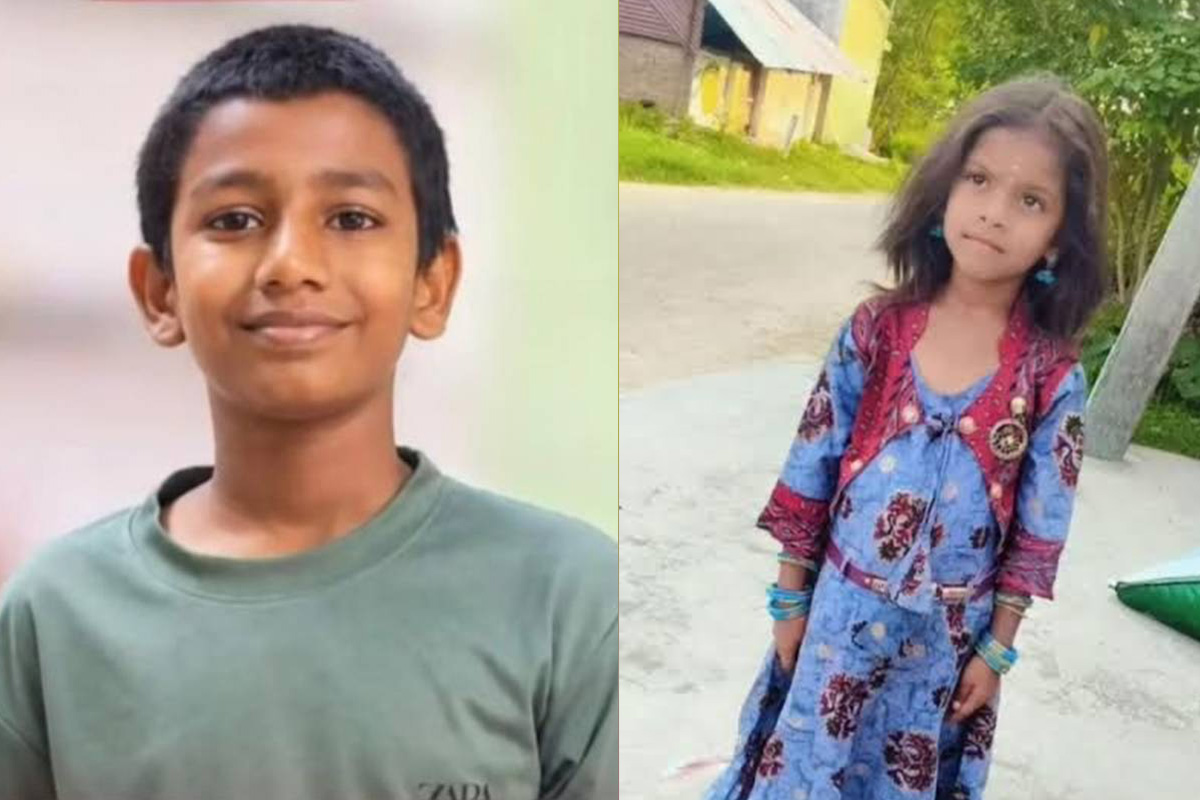
12-year-old Sanjay and seven-year-old Hemalatha have not been traced yet, several days after they went missing.

Synopsis: At least 10 children were reported missing across Tamil Nadu in 30 days, with four found dead, some traced and others still missing. A retired police officer and a child rights activist discuss gaps in community policing, parenting and child protection, and the need for early intervention to prevent such incidents.
The growing number of missing cases in Tamil Nadu, involving infants, schoolchildren and adolescents, has become a matter of concern. While some children have been traced and reunited with their families, others have been found dead, and a few remain untraced according to the latest available reports.
The incidents raise questions about the effectiveness of local policing, family relationships, child safety and the wider social conditions that leave children vulnerable.
According to news reports, at least 10 children were reported missing between September 24 and October 24, 2026.
One-year-old Maheswari, daughter of Sekar and Prema, went missing while sleeping with her parents by the roadside near Lalapettai in Ranipet district on September 25. Police formed four special teams and continues investigation into the disappearance. The child remains untraced, as of latest updates.
Seven-year-old Hemalatha, a Class 2 student from Naduppattu village near Gingee in Villupuram district, went missing on the morning of October 12, hours after celebrating her birthday with her family. Police, fire and rescue personnel and forensic teams searched agricultural fields, canals, wells, water bodies and surrounding villages. Drones, thermal surveillance equipment and sniffer dogs were deployed. After more than 10 days without a breakthrough, the Director General of Police ordered the case to be transferred to the CB-CID. The child remains missing, according to the latest report.
12-year-old Sanjay, a Class 7 student from the Singarapettai area near Uthangarai in Krishnagiri district, went missing on October 23. Reports said he had sought a lift on a motorcycle while travelling home. Police registered a case based on the complaint by his parents and examined CCTV footage along the suspected route. Sanjay remains missing, according to reports published on October 24.
Eight-year-old Besty, whose parents are from Jharkhand, was living with her maternal grandparents in Karumangazhani near Sriperumbudur in Kancheepuram district. She went missing after she left home on October 16 to travel to Jharkhand to meet her mother.
Police formed five special teams and used CCTV footage, drones, and a sniffer dog to trace her movements. According to police, Besty travelled by bus to Chennai Central railway station, where Railway Protection Force personnel found her unattended and arranged for her stay at a children’s home in Kellys. Her identity was confirmed on October 20.
Days later, in the early hours of October 23, two sisters, Blessy (15) and Prinza Papa (14), went missing following an attack on their family at Mudalur near Thoothukudi district’s Sathankulam. Their mother, Mary Vijila, was killed, while their father, Muthukrishnan, and their 12-year-old brother were seriously injured.
Police traced the girls after one of them shared her live location through WhatsApp. According to investigators, the accused, Gnanapragash, allegedly took the girls to his residence after attacking their parents. Both girls were rescued, and the accused was apprehended within hours.
Another case involved four schoolchildren from Lakshmipuram in Chromepet, Chennai: K. Devadarshan ( 12), D. Yuvanesh (10), Pooja (13) and Khushi (13), who went missing on October 3. After an overnight search by their families and local police, their bodies were found in the Thiruneermalai Periya Eri lake on the morning of October 4. Police suspect drowning.
Also Read: Heavy rain alert for Tamil Nadu as Bay of Bengal system likely to intensify into cyclone
According to retired Superintendent of Police M Karunanidhi, such incidents are influenced by several factors, including population growth and social and economic changes. He argued that the police and other government departments must change how they function to meet the evolving needs.
“Many of them are still following old methods. In fact, some of those traditional methods were effective, but their use has declined considerably,” he said.
Karunanidhi believes that maintaining regular contact with the public and keeping track of developments in every locality are essential to effective policing.
In the past, he explained, the village headman and later the Village Administrative Officer (VAO) would generally know what was happening in the village. Today, a VAO may know the people who approach the office but not necessarily everyone living in the area.
He said a police officer responsible for a particular jurisdiction should be familiar with the people living there and interact with them regularly. This would ensure a steady flow of information from the public to the police, the retired SP said.
“If a child suddenly goes missing from a particular locality, the incident does not necessarily happen in isolation. There may be certain circumstances or underlying issues in that area that contributed to the incident. The police need to examine those circumstances. If they maintain regular contact with the public and gather information, they may be able to identify warning signs early,” he said.
Karunanidhi pointed out that many police constables today are graduates and engineering graduates, yet their abilities are not being utilised to their full potential. In many cases, they are assigned beat duties and expected to follow routine instructions, he said.
Instead, he suggested that each constable be assigned a specific locality.
“They should interact with the people in that area, understand what is happening within their jurisdiction and identify the kinds of offences that could potentially occur there. They must collect information and report it to the officer responsible for that area,” he said.
He also highlighted the availability of technology. Mobile phones and CCTV cameras are now widely available, giving the police access to facilities that were less common in the past. However, he questioned whether these resources were being used effectively.
“We have far more facilities than we did in the past. But are we making effective use of them? I do not think so,” he claimed.
Karunanidhi cited the POCSO cases involving granite businessman ‘Gem Veeramani’ as an example of delayed intervention by the authorities. He argued that timely action might have prevented matters from developing into a major problem.
He claimed that authorities often responded to major controversies by forming special teams or transferring investigations to agencies such as the CBI or CB-CID. Such investigations may be necessary, but the police intervention should begin much earlier, at the local level, he said.
Every officer responsible for a jurisdiction should have a sense of ownership over the area and feel accountable for ensuring that wrongdoing does not go unnoticed, he said.
He rejected the argument regarding a shortage of police personnel and claimed that several layers of supervision was in place now, compared to the past when some areas had to be managed at the inspector-level.
The answer, he argued, lies in distributing responsibilities properly, including among constables, rather than restricting them through blanket instructions.
“Often, constables are restricted by instructions such as, ‘Do not do anything without my permission.’ This effectively prevents them from taking initiative,” he argued.
He added that senior officers must supervise constables rather than use the need for supervision as a reason to prevent them from acting independently within their assigned responsibilities.
A constable who regularly interacts with residents may learn about a dispute, identify a person with a history of violence who is about to be released on bail, or receive information that someone is preparing to commit another offence. Such information can help police issue warnings where appropriate, monitor potential threats and take preventive action.
“The purpose of local policing is not merely to investigate crimes after they occur, but to gather information, identify warning signs and prevent offences before they happen. With effective information-sharing, clear responsibilities and proper supervision, even a murder might be prevented,” Karunanidhi said.
Child rights activist Valavan V. S said the increase in reported missing-child cases must be examined alongside changes in reporting practices, family relationships, adolescent behaviour, sexual abuse and child trafficking.
He acknowledged that an increase in reported cases can, in one sense, be a positive development. Earlier, families sometimes searched for missing children themselves without approaching the police. More families now report such incidents, giving authorities a better opportunity to trace children and helping the public understand the extent of the problem, he said.
However, he warned that the scale of the problem could be much larger than what the official numbers suggested.
“The actual number of incidents could be many times higher than the figures available in official statistics. Many cases may never even be reported. This makes the gravity of the problem much greater than what the numbers suggest,” he said.
Valavan stressed that missing-child cases do not all have the same explanation. Some involve suspected abduction and possible sexual abuse, while others involve adolescents who leave home voluntarily because of romantic relationships, conflicts with parents or a lack of emotional closeness within their families.
Valavan said that children from migrant families have gone missing for years, with some leaving home and travelling to other towns to find work. Such reports have emerged from across India.
He cautioned against attributing every recent incident directly to mobile phones or social media.
“Every generation has had its own technology, and every technology has both positive and negative aspects,” he said, comparing the transition from newspapers to television and then to mobile phones.
He argued that the more fundamental concern is the growing distance between children and the adults around them.
Over approximately the past decade, he said, the gap between parents and children has widened. The distance between teachers and students and teachers and parents have also increased, he claimed.
As a result, children may have fewer opportunities to discuss their problems openly.
“We tell children what they must and must not do, but we rarely go beyond that to understand why they behave in certain ways or what difficulties they are experiencing,” he said.
Also Read: CB-CID takes over probe into missing 7-year-old near Gingee as search enters 12th day
Valavan noted that in many families with one or two children, both parents work and have limited time to spend with them. Children may consequently turn to the outside world to meet their emotional and social needs.
Through social media, they form friendships, develop romantic relationships and connect with people they have never met in person. In some cases, these relationships can influence them to leave home.
He recalled seeing cases while working in Odisha in which children from villages travelled by train to Delhi to meet boys they had become acquainted with.
According to him, these incidents reflected deeper problems in the family and society.
“We often treat children as people who should simply carry out our expectations, rather than individuals facing the challenges of the contemporary world,” he said.
He added that telling children not to go outside, meet friends or interact with people online was not a sufficient solution. Adults must instead help them understand potential risks and make informed decisions, he said.
Valavan also stressed that child trafficking and the illegal sale of children are not new problems.
He recalled cases from around 20 years ago in which children were stolen and sold to childless couples under the guise of adoption. Some people turned to illegal means because they believed that formal adoption procedures took too long, he said.
Cases of newborn babies being stolen from hospitals have been reported over the years. Children from migrant labour families who sleep on railway platforms or pavements can also be vulnerable.
These incidents, he said, show that a child is not automatically safe simply because they are at home or in a seemingly secure environment.
“We need to view this as a wider societal problem, rather than placing the responsibility entirely on the police,” he said.
Valavan said that preventing crimes against children must remain the priority and stressed that authorities must examine how quickly cases are investigated, how soon suspects are identified and brought to justice, and whether the system provides effective accountability.
He called for renewed public awareness about child protection and emphasised the importance of recognising and responding to sexual abuse. He stressed the importance of helping children recognise inappropriate behaviour, understand personal boundaries and enabling them to open up to a trusted adult if they experience abuse.
Valavan also pointed out that the same approach cannot be applied to every age group.
“With a 10-year-old child, for instance, it may be possible to have a conversation about personal boundaries, inappropriate touching and the importance of telling a trusted adult. But what can we explain to a one-year-old or a two-year-old child? They cannot understand or communicate these risks in the same way,” he said.
For infants and very young children, he emphasised, protection and responsible supervision are especially crucial because they cannot be expected to recognise danger or protect themselves.
(Edited by Fayisa CA)



