

Published Aug 10, 2026 | 9:00 AM ⚊ Updated Aug 10, 2026 | 9:00 AM

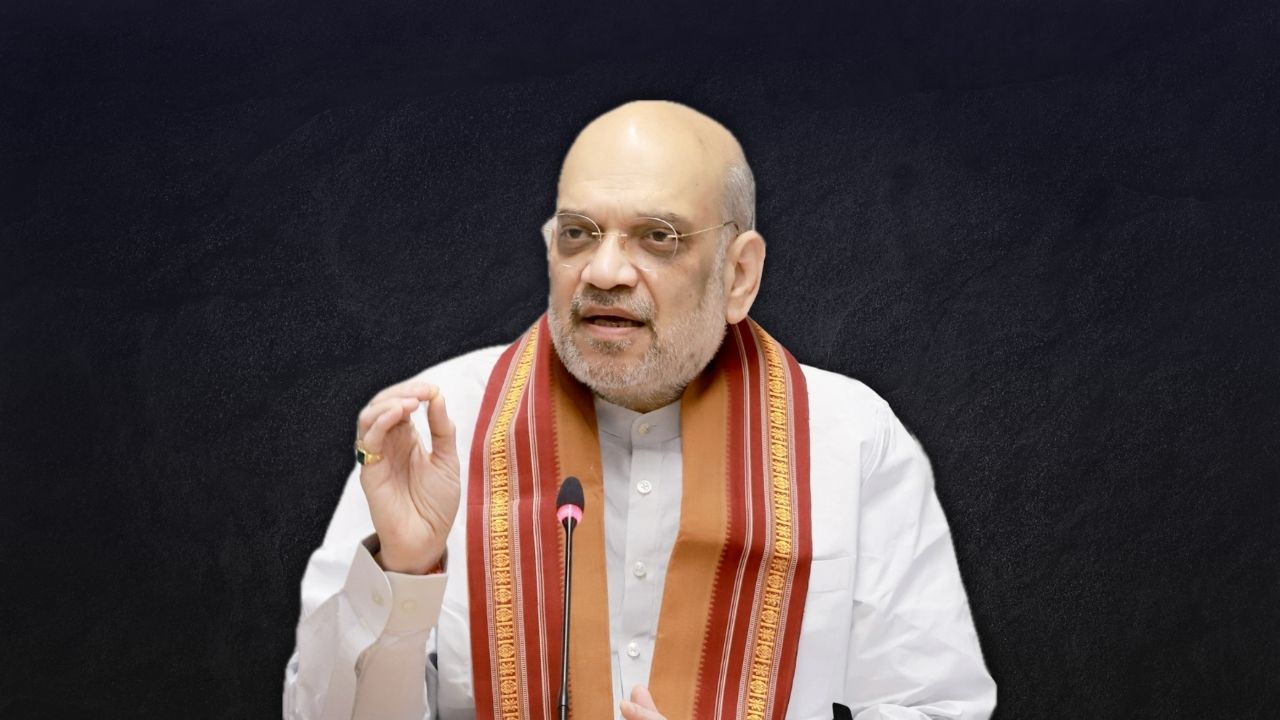
Home Minister Amit Shah, who is championing the NDA's delimitation push. (Special Arrangement)

Synopsis: Tamil Nadu, Kerala, Karnataka, Andhra Pradesh and Telangana invested in education, healthcare, social reform and family welfare to control their population. They have also been the drivers of India’s economic progress. Expecting them to pay the price for getting so much right is perverse.
The question is no longer whether delimitation should happen. The real question is whether delimitation will remain a democratic exercise or become an iron fist with which the political balance of India is reshaped.
This is the question every Member of Parliament from Southern India must confront if the issue is brought before Parliament in the next three days.
Hon’ble Southern MPs, this is not the time for silence, party calculations or political convenience. It is time to remember why the people of the South sent you to Parliament. When the political future of your States is at stake, regional interests cannot be sacrificed at the altar of party commands.
For decades, Southern States were told to control population growth. They did.
They were told to improve literacy, healthcare, women’s welfare and family planning. They did.
They were asked to modernise their economies and become engines of national growth. They did that too.
And now, if the reward for this responsible governance is a reduction in political representation, while States with much larger population growth gain greater parliamentary weight, the country must answer a basic question:
Is responsible governance going to be rewarded—or punished?
Delimitation is not merely about redrawing constituency boundaries. It is about redistributing political power.
The number of Lok Sabha seats determines the political weight of States in government formation, national policymaking, financial negotiations and the allocation of developmental priorities. Any substantial alteration in that balance cannot be dismissed as a technical exercise.
The South must therefore ask: Why should a State lose political influence because it succeeded in population stabilisation?
The demographic transition of Tamil Nadu, Kerala, Karnataka, Andhra Pradesh and Telangana was the result of decades of investment in education, healthcare, social reform and family welfare.
The Union government cannot urge States to control population for decades and then ignore that achievement when parliamentary representation is recalculated.
If population becomes the overwhelming—and virtually unquestioned—basis for political representation, the message will be deeply perverse: Increase your population and gain political weight; control your population and lose it. What kind of national policy incentive is that?
This is not a North-versus-South argument. Southern India is not asking for the democratic rights of citizens elsewhere to be curtailed. Every Indian deserves representation.
But democracy cannot be reduced to population arithmetic alone when that arithmetic has the potential to fundamentally alter the federal balance of the country.
India is a Union of States. Federalism is not an ornamental word in the Constitution. It is part of the architecture of Indian democracy.
Therefore, Southern MPs must not enter this debate as fragmented representatives of different political parties. Congress, BJP, DMK, AIADMK, TDP, YSRCP, CPI, CPI(M), JDS or any other party—the flags may differ, but the interests of the States they represent cannot be allowed to disappear behind party lines.
Party politics can continue tomorrow. The consequences of delimitation may last for decades.
Also Read: Does India really need delimitation?
The South must also place its economic contribution firmly on the table.
Southern States are among the principal engines of India’s manufacturing, technology, pharmaceuticals, services, exports and employment. Their economies contribute enormously to the national exchequer. Yet there is a real danger of the region becoming economically stronger while becoming politically weaker.
That imbalance cannot be accepted as the price of development.
If the South contributes substantially to India’s economy but its parliamentary bargaining power declines, who will protect its interests in taxation, fiscal transfers, infrastructure, employment, irrigation, education and industrial policy?
Who will ensure that national priorities continue to reflect the interests of all regions?
These questions must be answered before, not after, delimitation.
Southern MPs must therefore demand complete transparency on the proposed formula, detailed demographic and parliamentary data, adequate parliamentary debate and safeguards for States that successfully implemented population-control policies.
They must reject any attempt to push through a consequential redistribution of political power under the cover of procedural urgency.
Above all, they must demonstrate political courage.
Hon’ble Southern MPs, the South is watching.
History will not judge you merely by the number of speeches you made or the party positions you defended. It will judge whether you stood up when the political future of your region was being debated.
Do not become silent passengers in a process whose consequences may outlive your political careers.
Do not allow Delhi’s political arithmetic to become the South’s constitutional disadvantage.
Do not allow demographic responsibility to become political punishment.
And do not allow delimitation to become an iron fist wrapped in the language of democratic reform.
The next three days may be only three days on Parliament’s calendar. But what happens during those three days could determine the political bargaining power of Southern India for a generation.
Therefore, stand together. Speak together. Negotiate together. And, if necessary, resist together.
For us, it must be ‘South First’.
Not because we want to weaken India. Not because we seek a North-South divide. But because India’s unity can remain strong only when every region feels that its contribution is recognised, its voice respected and its political future protected.
The South has contributed. The South has delivered. The South has accepted responsibility.
Now the South must demand its due.
Let delimitation redraw constituencies if it must. But let it not redraw the federal balance of India.
The time for Southern MPs to prove their mettle is not tomorrow.
It’s now.
Also Read:
Fair Delimitation, not ‘No Delimitation’: Has the DMK really changed its stand?
Delimitation, democracy and federal balance: An Ambedkarite view from the South
(Edited by R Rajesh Kumar.)



