
Published Aug 09, 2026 | 7:00 AM ⚊ Updated Aug 09, 2026 | 7:00 AM

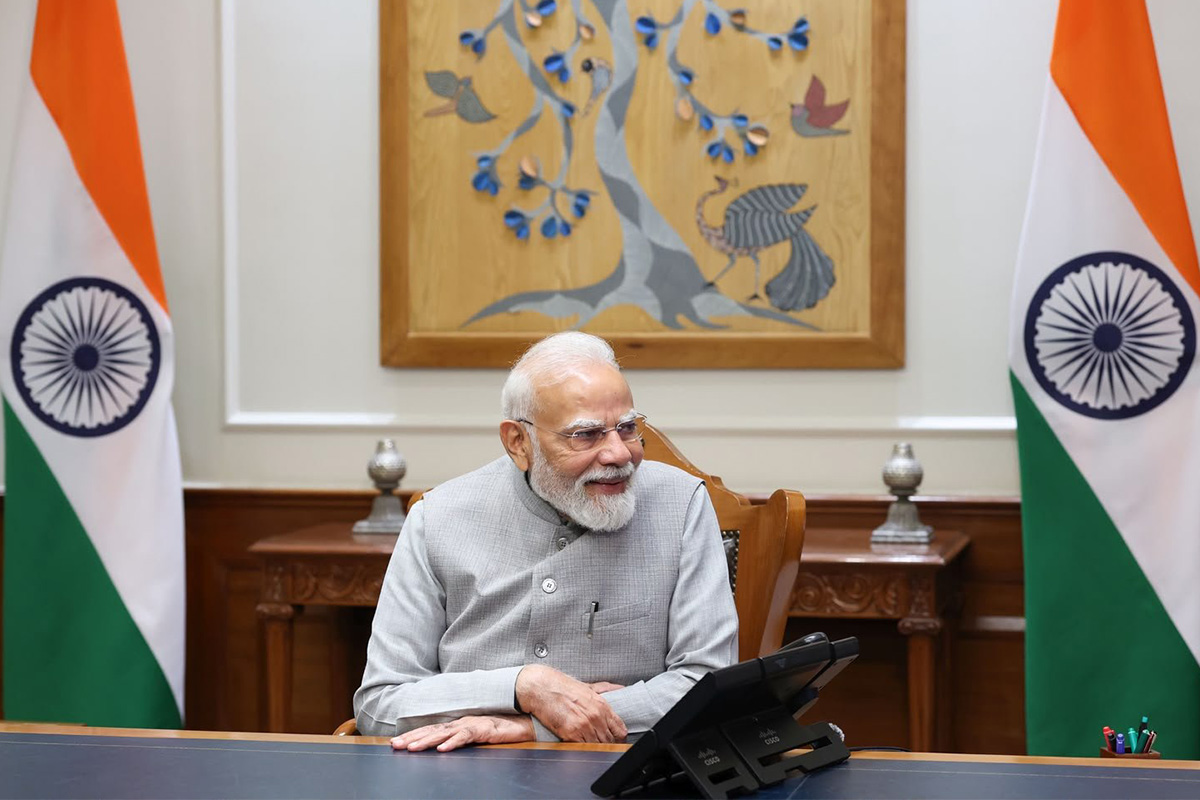
Where is PM Modi looking? Do you also feel he needs get his focus right? (x.com/narendramodi(

Synopsis: The Prime Minister’s appeal to forgive the teenager who spoke intemperately is welcome. But the political leadership must also pause to reflect on how the language of public discourse in the country has been coarsened.
Prime Minister Narendra Modi’s decision to forgive the teenage girl who used abusive language against him at the Jantar Mantar protest has shifted public attention to the conduct of one individual. It should instead prompt a different question. Who taught this generation that such language is acceptable in democratic politics?
The question deserves greater attention than the behaviour of one teenager. Young people do not develop their political language in isolation. They learn it from families, schools, peers, the media, social media, and, above all, political leaders. If public discourse has become more abusive, responsibility cannot rest only with those who repeat that language. It must also rest with those who have normalised it.
Psychologist Albert Bandura’s work on social learning showed how children and adolescents learn behaviour by observing influential role models.
Political leaders are among the most visible of these role models. Their speeches are televised, circulated on social media, and repeated by party workers and supporters. When leaders ridicule, demonise or dehumanise opponents, they do more than just attack political rivals. They redefine the boundaries of acceptable democratic conversation.
Indian politics has never been entirely free of personal attacks. What has changed over the last decade is their scale, frequency, and visibility. Television debates and social media have often rewarded outrage over argument, personal attacks over policy discussion, and attractive slogans over evidence. Political abuse has become normalised in a way that would have been difficult to imagine a few decades ago.
The consequences are visible across public life.
During the 2024 general election campaign, Prime Minister Modi referred to Muslims as “infiltrators” and suggested that the Opposition intended to redistribute citizens’ wealth to those “who have more children.” Quite rightly, those remarks drew criticism from constitutional scholars, civil society organisations and international human rights groups. Several BJP leaders at the national and state levels have also made inflammatory remarks targeting Muslims and Christians, often without significant political consequences.
Similar instances of abusive rhetoric can be found across the political spectrum. But while responsibility in a democracy is shared, the incumbent government and the rhetoric employed by its leaders have an outsized influence on the country’s political culture.
This is why the Prime Minister’s appeal to forgive, though welcome, remains incomplete. It addresses the bad behaviour of one teenager but says little about the political environment that shaped her understanding of acceptable public conduct.
Leadership requires more than magnanimity after an unfortunate incident. It requires a willingness to examine whether those who hold positions of power have consistently upheld the standards they now expect of citizens. Democratic leadership is measured not only by electoral victories or administrative achievements but also by the norms it establishes for public life. Every speech, campaign slogan, and public statement helps define the boundaries of acceptable political conduct, particularly for young citizens entering public life for the first time.
Therefore, the current debate should move beyond the question of whether the teenager deserves forgiveness. The more important question is whether India’s political class is prepared to accept its own share of responsibility for the steady coarsening of public discourse. And because public criticism cannot become a one-way expectation directed only at citizens, it must also apply to those who occupy positions of power.
One may argue that educational institutions should teach democratic citizenship through respectful disagreement, critical thinking, and informed debate. They definitely must. But sadly, those lessons lose credibility when students encounter a political culture that rewards abuse, polarisation, and personal vilification.
Selective indignation only weakens the moral authority of democratic leadership. If abusive language deserves condemnation when directed at the Prime Minister, it must also be condemned when directed at other political opponents, journalists, minorities, or ordinary citizens. Democratic standards cannot change according to who is speaking or who is being targeted. Consistency alone gives public appeals for civility their credibility.
This unpleasant episode should therefore be seen as more than an isolated controversy. In truth, it reflects a broader decline in the quality of democratic conversation. Restoring civility cannot be achieved simply by asking young people to behave better. All political parties must examine their own communication practices, discipline those who repeatedly cross acceptable limits, and reject abusive language, regardless of who uses it.
The Prime Minister may have shown his magnanimity in forgiving. Forgiveness, no doubt, has an important place in democratic politics. But forgiveness cannot become a substitute for accountability. Before asking why one teenager spoke the way she did, India’s political leadership should ask a more difficult question: what kind of political culture has it created for the next generation to inherit?
Also Read:
The Supreme Court keeps clarifying obscenity. Nobody is listening
Vijay’s June 23 Assembly speech: When performance trumped governance
(Edited by R Rajesh Kumar.)



