

Published Jul 25, 2026 | 8:00 AM ⚊ Updated Jul 25, 2026 | 8:00 AM

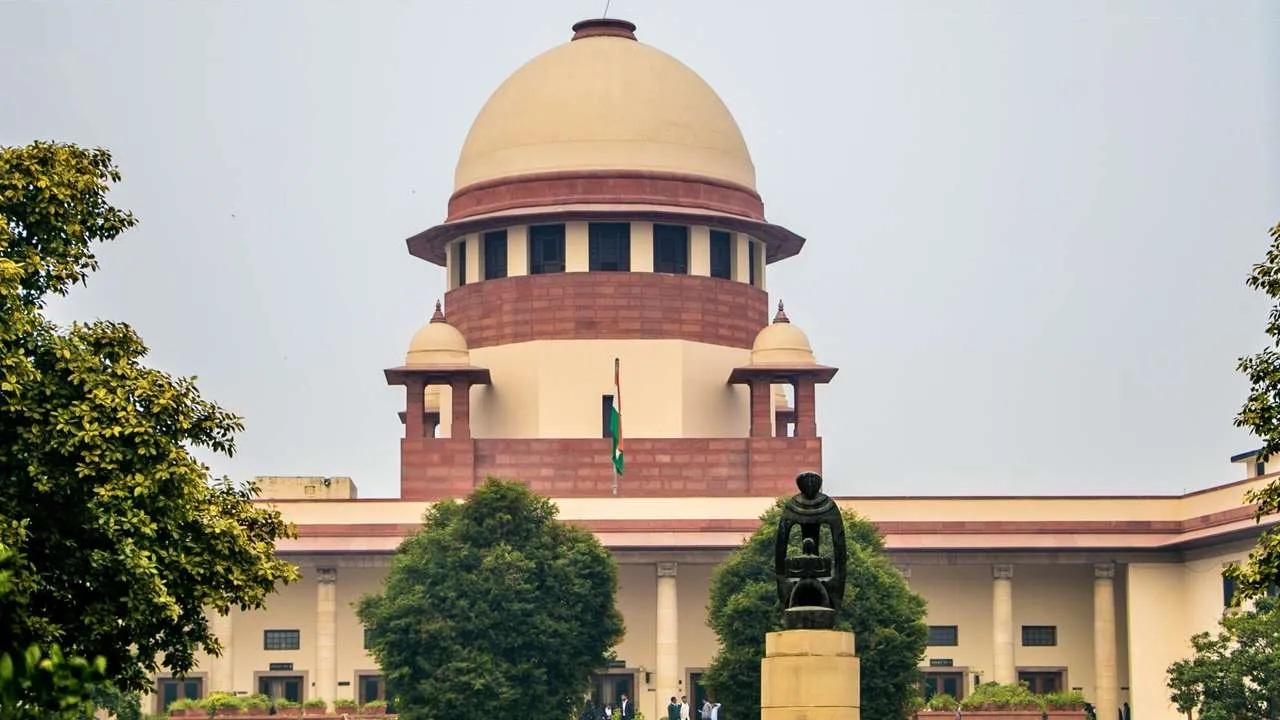
Supreme Court

Synopsis: The Supreme Court has recently clarified once again that abusive language is not automatically obscenity under Indian law. But despite repeated judgments to this effect, pre-trial harassment hasn’t ended. Comedians have been left particularly vulnerable as a result. This is because filing an FIR requires no proof of prurient interest. A simple check would help address this…
On July 17, the Supreme Court ruled in Mani @ Subramaniyam v. State that abusive language does not automatically qualify as obscenity under Indian law.
The case itself involved a man who, during a land dispute quarrel and an assault that occurred in 2017 in Erode, Tamil Nadu, used expletives such as “motherf***er” and “son of a wh**e”. The Court held that, however offensive, uncivil, or abusive such words may be, they are not legally obscene unless they satisfy the requirements of Section 294(b) of the Indian Penal Code.
Interesting. But the question is, what is new about it? The Court only restated a legal test it had articulated earlier. Not once, but multiple times.
Under Section 294(b), obscenity requires lascivious words that appeal to prurient interest and tend to deprave or corrupt those who hear them. Mere vulgarity or abuse does not meet this standard. The point is, despite issuing this clarification many times before, nothing has changed the way the law is actually used. Of course, many suffer because this important distinction is not applied uniformly. However, I will focus only on comedians and creative artists in this piece, as they are often the ones victimised by it.
As I said earlier, the test the Court applied is not new. A quick look at a few past cases proves this.
First, let us consider Ranjit D. Udeshi v. State of Maharashtra (1965), which defined obscenity as material tending to deprave and corrupt susceptible minds. It was again refined in Chandrakant Kalyandas Kakodkar v. State of Maharashtra (1969), which tied the standard to contemporary morality rather than a fixed benchmark. Once again, it was updated in Aveek Sarkar v. State of West Bengal (2014), which replaced the nineteenth-century Hicklin test with a community standards test. The Court had also said, in Samaresh Bose v. Amal Mitra (1985), that vulgar writing is not necessarily obscene writing.
Four rulings across sixty years have said essentially the same thing. The question worth asking is why a test that is restated so often keeps failing to make those understand where it is first applied: not the courtroom, but the police station or the regulator’s desk.
The answer, in my view, has less to do with judicial oversight than with what a word like ‘obscene’ or ‘vulgar’ allows a complainant to do before any court gets involved. Filing a complaint or an FIR under Section 294(b) does not require proof of lascivious content or prurient appeal, only an assertion that the words were offensive. The legal test exists to be applied later, at trial or on appeal, by a judge weighing evidence.
Everything that happens before that point—an arrest, a period in custody, a broadcast suspension, a show pulled from a platform—happens on the strength of the word alone. This is not a flaw in how the provision is enforced. It is what makes the provision useful to whoever invokes it: a low threshold for action.
Even a cursory glance at some past events and what followed will help understand this.
In 2021, Munawar Faruqui was arrested in Indore over jokes he had not yet performed, after a complaint alleged he intended to make indecent remarks about Hindu deities. He spent over a month in custody before the Supreme Court granted him bail.
In February 2025, a joke made on the YouTube show India’s Got Latent led to FIRs against the comedian Samay Raina and the podcaster Ranveer Allahbadia in three states, invoking the Bharatiya Nyaya Sanhita’s obscenity provisions. The Supreme Court eventually granted Allahbadia interim protection from arrest. However, the FIRs and the professional fallout preceded any judicial test of whether the remarks met the legal definition of obscenity.
A similar sequence followed the 2015 AIB Knockout, a comedy roast that drew FIRs against its performers on grounds that it was vulgar, obscene, and pornographic, three words the complaints used as though they were interchangeable.
In 2013, the channel Comedy Central was taken off air in India for six days after a regulator objected to content it deemed vulgar, a decision a court later upheld without asking whether the content met the separate, higher threshold for obscenity.
In each instance, the correction came too late to prevent the consequence it sought to address.
In fact, there is a reasonable case, even independent of legal doctrine, for treating profanity and crude language as distinct from morally corrosive speech.
A 2017 study by Gilad Feldman and colleagues, published in Social Psychological and Personality Science, examined the relationship between profanity and honesty across three separate studies and found that people who swore more frequently were not more likely to lie and often scored higher on measures of interpersonal integrity.
Timothy Jay, a psycholinguist, has argued that swearing often functions as a direct and honest expression of emotion rather than a marker of moral failure.
Renowned English novelist DH Lawrence made a similar argument nearly a century ago in “Pornography and Obscenity” (1929), an essay written after police seized his paintings and his novel “Lady Chatterley’s Lover” (1928) was banned, insisting that frankness of language was not the same as an appeal to prurient interest.
Thus, legal doctrine, psychological research, and literary defence arrive at the same conclusion by three different routes. And the conclusion is simple: coarse language signals crudeness, not corruption.
None of this is to argue for immunity.
Content that genuinely meets the legal test for obscenity remains punishable, as it should. But a test that only operates after an arrest, a custodial period, or a broadcast ban has already taken effect is not doing the work it is meant to do.
If the distinction between vulgarity and obscenity is to mean anything to the people who are actually charged under it, it needs to be checked before an FIR is registered or a broadcast is suspended, not only by the Supreme Court months or years afterwards. Until that practice changes, restating the test is pointless. It will keep producing the same headline without changing the sequence that makes the headline necessary in the first place.
Also Read:
The Supreme Court’s onerous gift to the Bar: Autonomy with accountability
India’s digital future is drying out Bengaluru
Vijay’s June 23 Assembly speech: When performance trumped governance
(Views are personal.)



