

Published Jul 24, 2026 | 6:44 PM ⚊ Updated Jul 24, 2026 | 6:44 PM

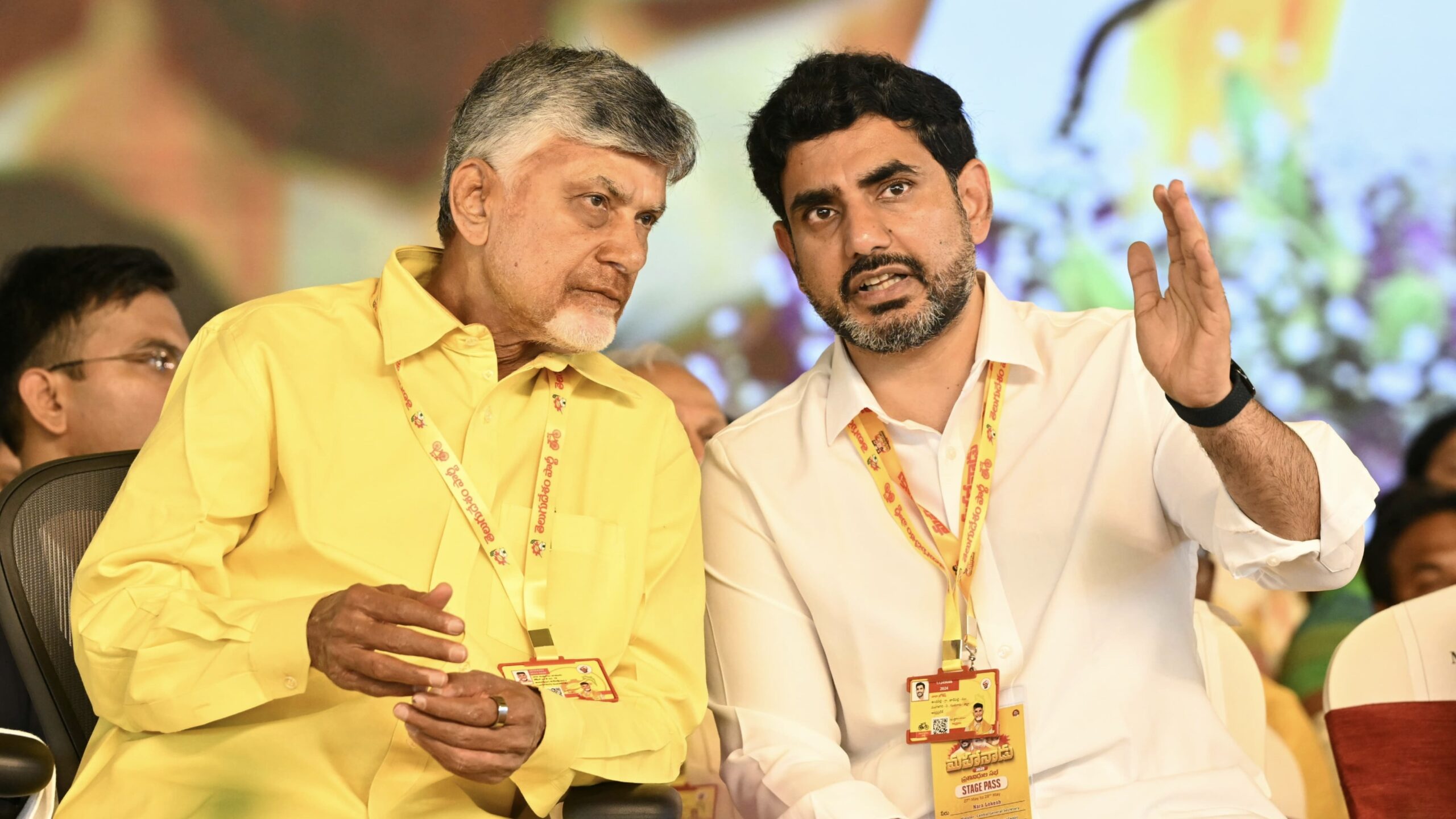
The Thalliki Vandanam Scheme, a flagship initiative under the Telugu Desam Party (TDP)-led National Democratic Alliance (NDA) government’s “Super Six” election promises, has emerged as a shining example of meticulous planning and execution.

Synopsis: The Andhra Pradesh government’s Thalliki Vandanam represents a governance model that views education as the foundation of inclusive growth, social justice and sustainable development. Significantly, it extends the benefit of the scheme to every child in the family, unlike the earlier Amma Vodi scheme, writes the Jana Sena Party’s Rajya Sabha MP.
The true measure of a government’s commitment to development lies not merely in the infrastructure it builds or the revenues it generates, but in the opportunities it creates for its youngest citizens. Education remains the most effective instrument of social transformation, economic mobility and national progress. Every educated child contributes to a stronger workforce, a more informed society and a more prosperous future. It is this belief that underpins the Andhra Pradesh government’s flagship initiative, Thalliki Vandanam, which places education at the centre of public policy and mothers at the heart of this empowerment process.
The Jana Sena Party has consistently argued that investment in education is the most meaningful investment any government can make. Deputy Chief Minister Pawan Kalyan has repeatedly emphasised that empowering children through education is essential for building a self-reliant and progressive Andhra Pradesh. Guided by this vision, the NDA coalition government has introduced Thalliki Vandanam not merely as another welfare programme, but as a long-term investment in the State’s human capital.
For lakhs of families, particularly those from economically weaker sections, educating children often involves difficult financial choices. Spending on books, uniforms, transportation and other educational requirements continues to put significant pressure on household incomes. In many homes, mothers quietly shoulder these burdens, making personal sacrifices to ensure that their children remain in school. Thalliki Vandanam acknowledges both the aspirations of children and the invaluable role played by mothers by providing direct financial support that eases this burden and enables families to prioritise education.
One of the most significant features of the programme is the correction of a major limitation in the earlier Amma Vodi scheme. Under the previous policy, financial assistance was restricted to only one child in a family, leaving several deserving students without support. The coalition government has replaced this approach with a more equitable model by extending assistance to every eligible student from Class I to Intermediate. This reform reflects the principle that every child deserves equal opportunity, irrespective of the number of children in a household.
The impact of this policy change is evident in its expanded coverage. While the earlier programme benefited around 43 lakh students, Thalliki Vandanam now reaches nearly 67.47 lakh eligible students across Andhra Pradesh. Financial assistance is being provided to more than 42.70 lakh mothers and guardians, making it one of the largest education-support initiatives in the State. Such expansion demonstrates the government’s determination to ensure that no deserving child is excluded from educational assistance because of financial constraints.
The programme is equally significant for its financial commitment. For the current academic year, the government has allocated ₹10,120.78 crore for Thalliki Vandanam, substantially higher than the approximately ₹6,450 crore spent under the previous programme. This increase reflects a governance philosophy that treats spending on education not as a recurring cost but as a productive investment in Andhra Pradesh’s future.
Under the scheme, every eligible student receives annual assistance of ₹15,000. Of this amount, ₹13,000 is directly transferred into the mother’s bank account, enabling families to meet educational expenses according to their needs. The remaining ₹2,000 is utilised for strengthening school infrastructure and maintenance, creating better learning environments for students. This balanced approach supports both families and educational institutions.
Thalliki Vandanam also stands out for its inclusive design. The benefits extend to children of Anganwadi workers, sanitation workers and other eligible categories. Students admitted to private schools under the Right to Education Act are also covered. Eligibility is determined through clearly defined socio-economic criteria, including household income, land ownership, electricity consumption and other objective indicators. This transparent verification mechanism ensures that public resources reach genuinely deserving families while reinforcing public confidence in welfare delivery.
The significance of the programme extends beyond financial assistance. It encourages school enrolment, reduces dropout rates and gives parents greater confidence to continue investing in their children’s education. More importantly, by transferring financial assistance directly to mothers, the government recognises their central role in household decision-making and in shaping the educational future of their children. Empowering mothers strengthens families, and stronger families build stronger societies.
Governments are remembered not simply for the schemes they launch but for the lasting change they create. Thalliki Vandanam represents a governance model that views education as the foundation of inclusive growth, social justice and sustainable development. Its success will ultimately be measured not only by the number of beneficiaries or the funds allocated, but by the aspirations it nurtures, the classrooms it fills and the futures it helps shape.
A developed Andhra Pradesh can only be built on the foundation of an educated generation. By supporting every eligible child and empowering every mother, Thalliki Vandanam is laying that foundation with purpose and conviction. More than a welfare initiative, it is a promise that no deserving child should be denied education because of financial hardship and that every mother’s dream for her child’s future deserves the support of the State.
Also Read: The Constitution protects dissent, not digital abuse
(Views are personal. Edited by R Rajesh Kumar.)



