

Published Jul 15, 2026 | 8:00 AM ⚊ Updated Jul 15, 2026 | 8:00 AM

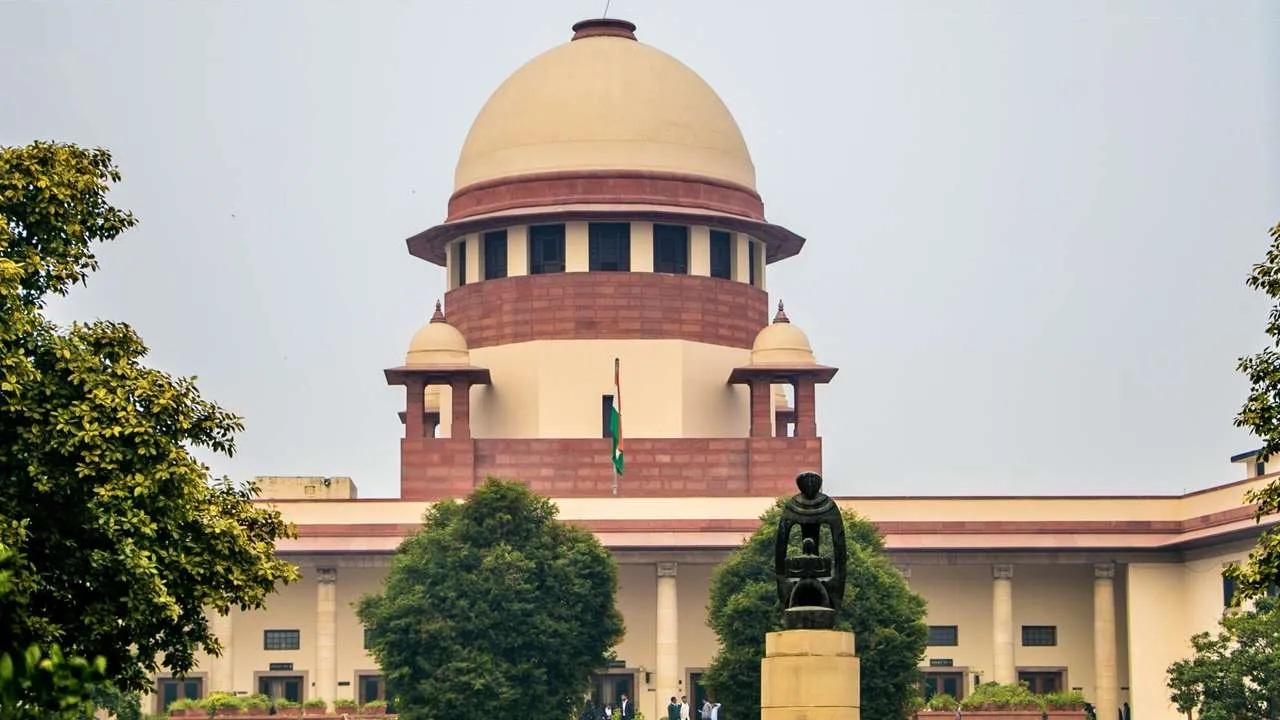
Supreme Court

Synopsis: The Supreme Court’s recent verdict on Bar autonomy reminds us that judicial independence cannot survive without a fiercely independent, dignified legal profession. To protect civil liberties, the Bar must be shielded from external coercion while embracing rigorous internal accountability.
In the year 65 CE, Rome witnessed a grim testament to the eternal friction between autocratic whim and intellectual integrity. Emperor Nero, descending rapidly into absolute megalomania, ordered his longtime tutor and advisor, Seneca the Younger, to commit suicide. While history often remembers Seneca’s end through the lens of a tragic Stoic philosopher, the core of Nero’s deep-seated animosity lay in Seneca’s stubborn insistence on institutional boundaries, constitutional moderation, and the rule of law.
Early in Nero’s reign, Seneca had spearheaded significant judicial and fiscal reforms, attempting to replace arbitrary imperial trials with proper legal procedures. To a despot who demanded that his personal decree be absolute law, any adherence to a code higher than the sovereign’s will was viewed as intolerable treason. Seneca’s tragic fate underscores a timeless truth: an independent mind grounded in the law is the ultimate shield against tyranny—and the very first target an overreaching authority seeks to crush.
Centuries later, this existential struggle for institutional autonomy finds a modern resonance in democratic governance, specifically within the mechanics of our justice delivery system. The independence of the judiciary is an extensively codified and celebrated constitutional value. Yet, a crucial truth is frequently obscured: the independence of the judge is entirely dependent upon the independence of the advocate. In a landmark ruling, the Supreme Court profoundly re-anchored this principle, observing that the legal profession’s independence from both the Executive and the Legislature forms the bedrock of our democracy.
The apex court’s observations in Ajay Vijh v. Indian Banks Association serve as a timely corrective to a growing, dangerous tendency to view the legal profession as merely a commercial enterprise rather than a public calling. Nani Palkhivala, one of India’s most towering constitutional lawyers, spent his final decades deeply lamenting this very transformation. Palkhivala frequently critiqued the shift of law from a “learned profession” to a purely “lucrative profession,” warning against the rise of “legal, ethical illiterates” who trade the profession’s moral core for materialism. For Palkhivala, true advocacy was a constitutional duty—a tool to defend citizens’ fundamental rights, often discharged, as he famously did in landmark civil liberties cases, without charging a single rupee.
This imperative of professional independence gains an even deeper significance when viewed alongside Dr BR Ambedkar’s final, prophetic address to the Constituent Assembly on November 25, 1949. In his famous “Grammar of Anarchy” speech, Ambedkar warned that with the dawn of constitutional methods, all unconstitutional forms of protest—like civil disobedience or satyagraha—must be abandoned, for they represent nothing but the “grammar of anarchy.” He argued that to preserve democracy, citizens must hold fast to constitutional methods for achieving their social and economic objectives.
However, for a society to rely exclusively on constitutional methods, the institutional machinery that facilitates these methods must remain robust, accessible, and uncompromisingly free. If citizens are to abandon the streets in favour of the courtroom, they require a fearless legal profession capable of translating their anxieties into potent legal arguments.
The Supreme Court’s intervention in Ajay Vijh provides the teeth and nails required to protect this defensive infrastructure. The dispute arose when an advocate was not only removed from a bank’s panel due to an allegedly erroneous title search opinion but was subsequently placed on an industry-wide “Caution List” maintained by the Indian Banks Association (IBA) under the explicit tag of “Third Party Entities Involved in Fraud”. When the High Court dismissed his writ petition on the technical ground that the IBA did not constitute a “State” under Article 12, the Supreme Court stepped in to expand the horizons of constitutional remedy.
The Court held that the focus under Article 226 must shift from the formal character of the body to the nature of the function performed and its direct effect on fundamental rights. Because inclusion on the Caution List functions as an industry-wide adverse accreditation mechanism that destroys a lawyer’s standing and livelihood, it directly infringes upon the right to practice a profession under Article 19(1)(g), making the writ thoroughly maintainable.
On merits, the Court dismantled the bank’s overreach by separating professional misjudgment from criminality. The legal principle behind the Ajay Vijh judgment rests on a sharp distinction between negligence and fraud. The Court ruled that the regulatory frameworks issued under Section 35-A of the Banking Regulation Act, 1949, are designed exclusively to isolate deliberate dishonesty, criminal intent or collusion affecting the banking system. An erroneous legal opinion or a genuine oversight in title verification cannot be elevated to the status of fraud. While a bank possesses the absolute contractual liberty to de-empanel a counsel whose performance is substandard, publishing an industry-wide declaration regarding an advocate’s competence or negligence is an act completely devoid of statutory jurisdiction and entirely illegal. If an advocate can be financially exiled or blacklisted by corporate or state actors for rendering a bold legal opinion, the formal channels of justice shrink, and the “grammar of anarchy” threatens to return.
Also Read: Governors vs state governments: Can this 36-hour “constitutional fiction” from Brussels help?
A critical reading of Ajay Vijh v. IBA reveals a masterful exercise in balancing public interest with professional sovereignty. By dismantling the IBA’s arbitrary Caution List practices, the Supreme Court addressed a long-standing grievance of the contemporary Indian Bar. For over a decade, panel lawyers for public sector and private banks operated under a modern sword of Damocles. The threat was not merely losing a client, but facing a systemic, permanent professional embargo via the IBA’s “Third Party Entities” mechanism. The court’s ratio strikes at the core of administrative overreach by affirming that a sectoral regulator’s powers under Section 35-A of the Banking Regulation Act cannot be stretched to bypass the Advocates Act, 1961.
However, the true brilliance—and the conceptual complexity—of the judgment lies in its jurisdictional expansion under Article 226. By looking past the structural form of the IBA and focusing entirely on the “function test” and the “public law element,” the Court prevented a private, voluntary association of banks from operating an extra-legal punitive regime. The Court acknowledged that the Caution List is a powerful industry-wide adverse accreditation tool. To leave such a tool unregulated by constitutional principles simply because the IBA claims a private status would have created a dangerous regulatory blind spot.
Yet, critics might argue that the Court walks a tightrope regarding banking safety. Financial institutions rely heavily on legal opinions to safeguard public funds. An erroneous title verification can lead to non-performing assets (NPAs) and deep systemic distress. The judgment recognises this tension. It does not strip banks of their autonomy to manage risk; it explicitly preserves their right to remove inadequate counsel from their panels. What it forbids is the weaponisation of professional oversight into an industry-wide blacklist without the statutory safeguards of a fair trial. The judgment establishes that the determination of professional misconduct must remain within the absolute domain of a lawyer’s peers.
The impact of Ajay Vijh on the contemporary Bar in India is nothing short of revolutionary, introducing a structural paradigm shift that will be felt for generations. For the individual practitioner—particularly first-generation and district court lawyers who form the vulnerable backbone of institutional panel work—the judgment provides an essential shield against corporate and administrative bullying. It restores a sense of psychological safety. Advocates can now render independent, candid legal advice without the paralysing fear that a complex title dispute might lead to administrative blacklisting and the sudden ruin of their professional livelihood.
Beyond individual protections, the judgment’s structural mandate introduces an “onerous gift” that will fundamentally redefine the Bar Council of India (BCI) and the State Bar Councils. For decades, the statutory bodies under the Advocates Act have faced heavy criticism for systemic delays, mounting pendency of disciplinary complaints, and a perceived lack of institutional transparency. The Supreme Court has effectively told the Bar that if it wants to keep external regulators out of its affairs, it must urgently clean its own house.
The court-mandated performance audit of the BCI’s disciplinary jurisdiction is a major institutional shake-up. By forcing the BCI to involve external experts—including data analysts, public administration specialists, and representatives of litigants—the judgment shatters the insular wall of absolute professional immunity. It introduces evidence-based reform to a system that has long been obscured from public scrutiny. The Bar can no longer treat self-regulation as a shield to protect its members from accountability.
Furthermore, the directive to establish a full-time National Legal Academy (NLA) addresses a glaring structural flaw in the Indian legal ecosystem: the complete absence of post-enrolment institutional training. While entry-level law schools have modernised rapidly, standard legal practice has remained largely unstructured, relying on informal mentoring networks that favour well-connected practitioners. The NLA promises to democratise legal competence. By formalising Continuing Legal Education (CLE), the judgment provides a mechanism to bridge the wide knowledge gap between elite urban corporate law offices and struggling mofussil practitioners. It prepares the contemporary Bar to navigate an increasingly complex legal landscape driven by technological disruption, intricate financial transactions, and evolving global compliance standards.
True independence, however, cannot exist in a vacuum of accountability; dignity must be earned through rigorous self-regulation and continuous self-improvement. The Supreme Court reaffirmed that the legal profession is sui generis (unique in nature), and under the Advocates Act, 1961, the legislature explicitly intended that “peers must regulate peers”. Sections 35 and 36 vest exclusive disciplinary control over professional misconduct within the State Bar Councils and the Bar Council of India, legally barring external administrative entities from creating parallel punitive structures.
Yet, the Court recognised that the concerns of financial institutions regarding the reliability of legal opinions are legitimate. Deficiencies in legal service carry substantial financial exposure. The solution, therefore, lies not in corporate blacklisting, but in the rigorous, internal reformation of the Bar itself.
For decades, the mounting crisis of judicial pendency has been treated almost exclusively as a judicial failure—a burden for the Bench alone to carry. Yet, as the court rightly pointed out, the Bar and the Bench are the “two wheels of the chariot of justice,” and the onus of reducing delays must be shared equally. To transform this shared burden into capability, the Supreme Court directed the Bar Council of India to execute a comprehensive performance audit of its disciplinary jurisdiction to eradicate systemic delays. Furthermore, it mandated a paradigm shift toward “future continuous learning” by directing the BCI to establish a full-time National Legal Academy (NLA). Just as the National Judicial Academy refines our judges, institutionalising post-enrolment Continuing Legal Education (CLE) will bridge the professional gap between practitioners and equip advocates to collaboratively tackle judicial backlogs.
When Seneca attempted to restrain Nero, he did so by appealing to clementia (the Latin concept of mercy, clemency, and mildness) and the established laws of Rome. He failed because he stood alone against a tyrant who recognised no institutional boundaries.
In a constitutional democracy, the Bar stands as a collective Seneca. Its autonomy is not a privilege reserved for the comfort of lawyers, but a constitutional guarantee essential for the preservation of civil liberties. If the wheels of justice are to move forward and sustain the constitutional methods that Dr Ambedkar envisioned, the independence of the Bar must be guarded just as fiercely as that of the Bench.
For the legal profession, true liberation lies not in commercial indulgence, but in its founding ideals. As Tennyson famously penned, “The way of duty is the path to glory.” By reclaiming its role as a fearless defender of the rule of law and embracing the onerous responsibility of self-regulation, the Bar can ensure that its path remains glorious and that democracy is shielded from the slow return of arbitrary power.
(Faisal CK is Deputy Law Secretary to the Government of Kerala. Views are personal.)
Also Read: Kerala to examine scope for legislation to curb online misuse of women’s images



