
Published Jun 26, 2026 | 7:10 AM ⚊ Updated Jun 26, 2026 | 7:10 AM

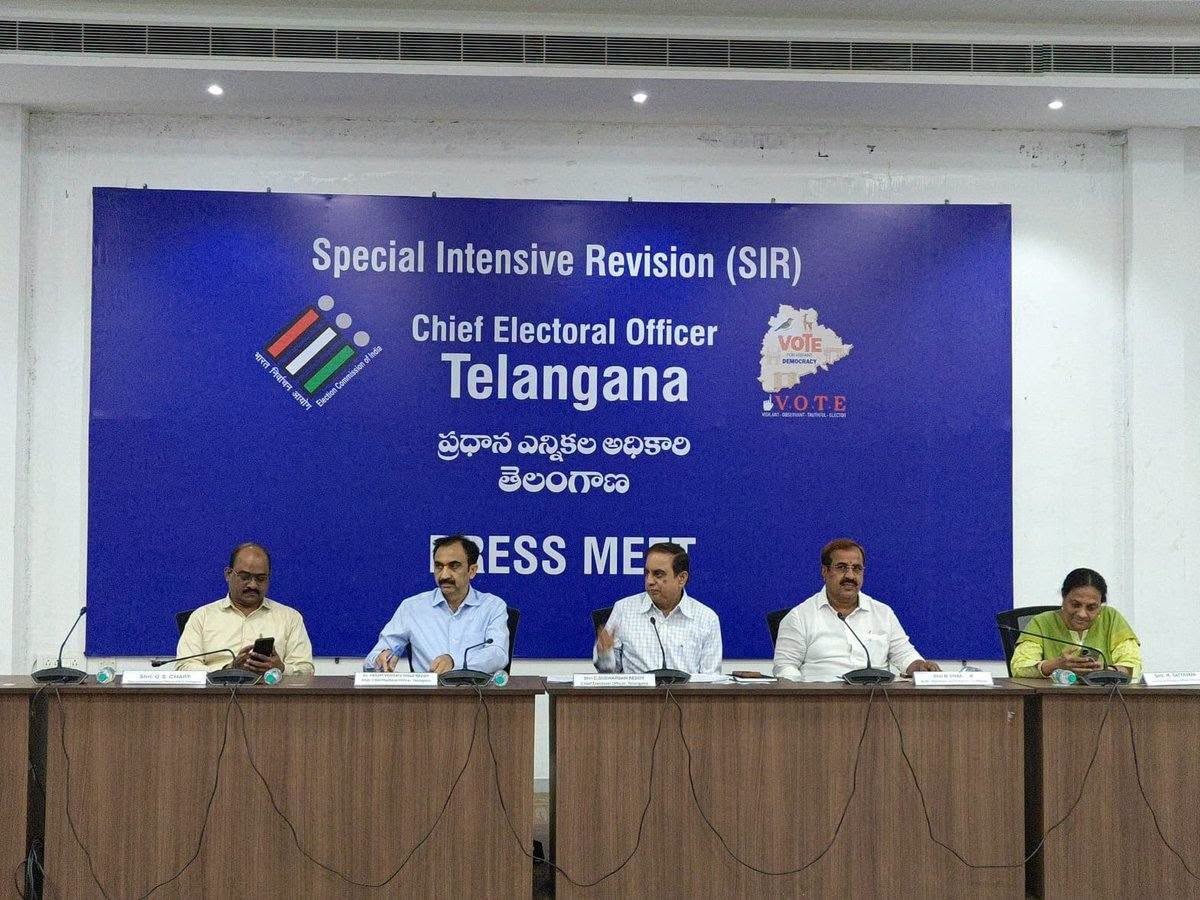
With the nation watching, how will the Telangana SIR turn out to be? (Handout)

Synopsis: Absolute transparency, proactive outreach, efficient grievance redressal, and sustained oversight can make SIR in Telangana a meaningful exercise. With all of India watching, the exercise’s credibility hinges on whether it succeeds in doing so.
The fear of cloaked disenfranchisement hangs over nearly 90 lakh voters mapped in Telangana, where the Election Commission of India’s (ECI) Special Intensive Revision has flagged roughly one in four of the state’s 3.38 crore electorate as “suspect”.
As Phase III of this ambitious exercise commenced on June 25, 2026, with Booth Level Officers fanning out across the state until July 24, that fear has crystallised into a broader national debate. The SIR represents far more than routine administrative maintenance. It is a comprehensive reckoning with voter lists bloated by decades of neglect, rapid urbanisation, and large-scale migration. Yet its scale, methodology, and timing have ignited fierce opposition and widespread public unease, prompting legitimate questions about whether this constitutes genuine electoral purification or a selective purge carrying political undertones.
India’s electoral rolls, now exceeding 90 crore voters, have long suffered from well-documented imperfections: names of the deceased persisting on lists, duplicate registrations by migrants, and sporadic bogus entries. Annual summary revisions offer basic upkeep, but Special Intensive Revisions—thorough, house-to-house, de novo exercises—occur infrequently.
Historical precedents date to the 1950s (1952–56), with subsequent major drives in the 1960s, 1980s, and notably around 2002–2004. After more than two decades without comparable intensity, the ECI’s current phased SIR, which began prominently in Bihar in 2025 before expanding to Telangana and other states, seeks to correct accumulated distortions amid Aadhaar integration and shifting demographics.
In Telangana, pre-SIR analysis identified discrepancies in demographic details, family linkages, addresses, and eligibility for approximately 89–90 lakh records. BLOs are distributing enumeration forms, cross-referencing older rolls (often from 2002–2004), and verifying key indicators. Voters may respond through the ECI portal or helpline 1950.
Draft rolls are expected by July 31, followed by periods for claims and objections, culminating in final publication on October 1, 2026. The Commission maintains that most of the cases that are flagged involve minor, resolvable anomalies rather than automatic deletions, and it pledges liberal acceptance of documents such as Aadhaar cards, ration cards, and voter IDs. Yet for many among those 90 lakh, the process evokes the fear of cloaked disenfranchisement—an administrative veil that could silently erase legitimate voices.
Defenders of the process, including the ECI and supporters of the ruling dispensation, rightly underscore the non-negotiable need for electoral integrity. Accurate rolls form the foundation of free and fair elections. They help curb bogus voting, improve the precision of welfare delivery, and restore public confidence in the world’s largest democracy.
Political parties across the spectrum have repeatedly criticised the quality of voter lists in the past. The Supreme Court has affirmed the ECI’s broad powers under Article 324 of the Constitution and the Representation of the People Act, emphasising that deletions from voter lists do not constitute determinations of citizenship—a matter reserved for separate legal processes. In this perspective, SIR constitutes long-overdue modernisation rather than a novel intervention.
Nevertheless, concerns articulated by opposition parties, civil society organisations, and affected communities demand serious consideration and directly feed the pervasive fear of cloaked disenfranchisement. In Telangana, the Congress, BRS, and other groups have warned of potential “vote theft,” establishing help desks while alleging that the exercise disproportionately targets vulnerable voter bases.
Also Read: What next for Telangana after caste census?
Nationally, the INDIA bloc has characterised SIR as a backdoor NRC-style mechanism, likely to burden Muslims, slum dwellers, urban migrants (particularly in Hyderabad), daily-wage labourers, the poor, elderly, women, Dalits, tribals, and nomadic populations who frequently lack seamless documentation. Reports from other states, including substantial deletions in West Bengal, have heightened fears of politicised implementation and inconsistent diligence by BLOs on the ground.
Public anxiety remains palpable and understandable, with the shadow of cloaked disenfranchisement looming large. In Telangana’s villages and urban bastis, families express fears of missed BLO visits, minor mismatches in spelling or addresses, or complications arising from migration-induced family separations.
Memories of Assam’s NRC exercise—where documentation shortfalls led to “D-voter” classifications and prolonged uncertainty—continue to trouble minority communities. Civil society activists, including figures such as Yogendra Yadav, have cautioned that millions could be impacted nationwide, with secondary effects on welfare schemes sometimes linked to voter status. Despite the ECI’s safeguards, reports of bureaucratic obstacles and perceived local biases continue to erode trust and intensify the sense that disenfranchisement may occur under the cloak of procedural necessity.
The SIR episode highlights a fundamental paradox in Indian democracy. Electoral purity is essential, yet the world’s largest democracy must not pursue it through barriers that inadvertently exclude the very citizens it seeks to empower. Variations in execution across states, combined with the exercise’s proximity to upcoming polls, only intensify suspicions of partisanship, whether intended or otherwise, keeping the fear of cloaked disenfranchisement alive among the 90 lakh in Telangana and beyond.
For the SIR to emerge as a strengthening rather than fracturing force, it must prioritise absolute transparency, proactive outreach, efficient grievance redressal, and sustained oversight by all stakeholders. Ordinary Indians—migrants pursuing better lives, minorities in contested regions, and the undocumented striving for inclusion—deserve more than procedural reassurances; they require concrete protection of their franchise. A genuinely purified electoral roll will fortify democracy only if every eligible name survives the scrutiny intact.
As verification proceeds in Telangana and final rolls materialise across states, the nation will learn whether this intensive revision upholds the promise of inclusive representation or allows cloaked disenfranchisement to undermine public faith in the ballot. The credibility of Indian democracy hangs in the balance.
Also Read: Are thirty-seven per cent of voters in Telangana suspect? Seriously!
(Edited by R Rajesh Kumar.)



