

Published Apr 23, 2026 | 7:00 PM ⚊ Updated Apr 23, 2026 | 7:00 PM

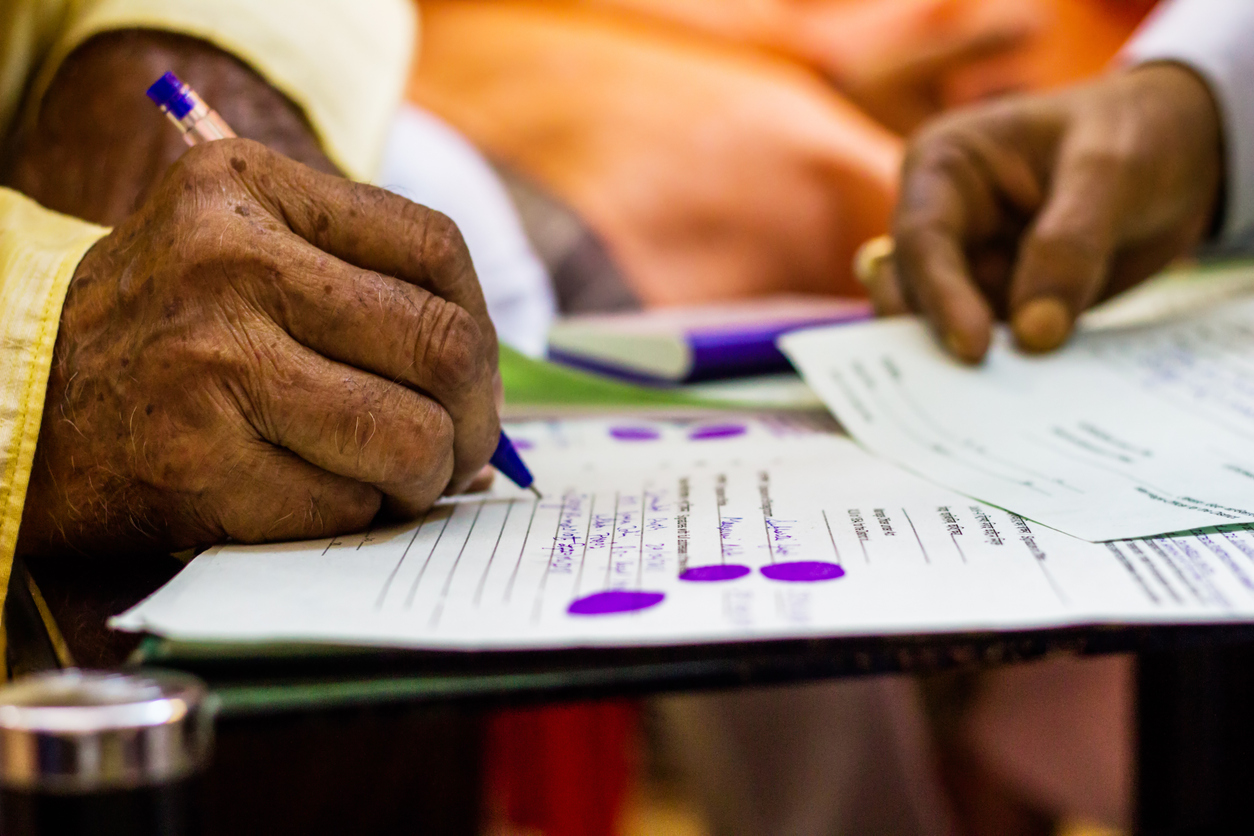
Representational image. Credit: iStock

Synopsis: The Telangana caste census report (SEEPC 2024) spans over 1,400 pages, analysing 242 castes through a Composite Backwardness Index of 42 parameters. It reveals widespread caste-linked deprivation, with SCs, STs, and BCs disproportionately affected. While the government deserves credit for completing survey and analysis, the real challenge lies in implementing sincere, equitable policies to reduce entrenched backwardness.
The state government has finally released, on 15 April, the comprehensive report of the “Telangana Social, Economic, Educational, Employment, Political, and Caste Survey 2024” (SEEPC), widely known to the public as caste census.
The report prepared by the “Independent Expert Working Group” appointed for this survey runs into two volumes (322 pages), and the detailed household survey tables on which the report is based run into four volumes (1096 pages).
All these volumes are currently available on the website of the Directorate of Economics and Statistics of the Telangana government.
It is not possible, in a single article, to thoroughly and critically examine the information and conclusions contained in these more than 1,400 pages and to answer the larger questions—whether these reports truly reflect the condition of Telangana society, whether they suggest that this condition needs to be changed, and what the government proposes to do to bring about such change. However, in the context of the release of the report, there are several broad issues that deserve discussion.
Before entering the present discussion, let us revisit the opinions expressed under this same column on November 7, 2024, when the survey was launched, and on 6 February, 2025, when a summary report was released.
“…The Telangana state government undertaking a caste census, and particularly Rahul Gandhi coming to inaugurate this programme, are welcome developments. However, given the history of the Congress on caste enumeration, the history of the Telangana government, and the experiences of caste surveys in other states, one is compelled to doubt whether the present exercise will succeed, whether it will yield the necessary results, and whether these caste statistics will actually benefit the backward castes,” I had written on 7 November, 2024.
“…It is not clear whether every caste and sub-caste in Telangana has been taken into account. There are many who say that enumerators never came to them, and it is said that nearly 16,00,000 people did not provide any information; therefore, it must be assumed that the census was not conducted as it should have been. If they are even hesitant to release the full report, they themselves must be aware of the shortcomings in it,” I had written on 6 February, 2025.
Also Read: Is urban India casteless? In Telangana, discrimination doubles, Adivasis fare worse
Now, even if it is after a delay of a year and a half, it is a matter of satisfaction that the government has released the full report. A comprehensive survey covering nearly 97 percent of the total population is the first act.
The report prepared by a team of experts who have meticulously analysed the survey data is the second act. The third act consists of the policy measures and administrative actions that must be taken on the basis of this report. The government deserves congratulations for successfully completing two acts in this three-act exercise.
But the real test lies ahead. After such explicit statistical evidence of caste-based backwardness has been brought out, crucial questions arise: what policies will be announced to eliminate or at least reduce this backwardness? Have the caste groups that require greater developmental and welfare measures been identified? What steps will be taken? With what sincerity will the announced policies be implemented?
Because of conflicts between the interests of different caste groups, biases of ruling parties towards certain groups, neglect of others, and systemic, historical, and political-economic reasons, the third act is the most difficult—perhaps even impossible. Whether the rulers possess the intent and commitment to reach and successfully complete that stage will become clear in the next two years. Leaving that question to the future, we must now discuss the key aspects of the first two acts already completed.
Since the objective of this survey is to identify backwardness and to establish the relationship between caste and backwardness (especially in the context of some intellectuals claiming that no such relationship exists), the expert group attempted to construct a comprehensive index to identify backwardness.
Also Read: Caste survey: Telangana’s Dalits and Adivasis go to the Gulf, forward castes fly to the US and UK
This Composite Backwardness Index (CBI) has been prepared on the basis of 42 parameters. These include two indicators relating to social discrimination, three to gender discrimination, eight to educational status, nine to occupation, four to income, eight to land ownership and assets, six to living conditions, and two to indebtedness.
On the basis of this CBI, the survey covered 35.5 million people belonging to 242 castes in the state. For each caste, scores were assigned based on responses to these 42 parameters, measuring the degree of backwardness. The score could range from 0 to 126.
That is, if a caste is extremely backward across all 42 indicators, it would score 126; if it shows the least backwardness across all indicators, it would score 0. Accordingly, the Dakkali (a Scheduled Caste) registers the highest backwardness with a score of 116, while the Kapu caste registers the lowest backwardness with a score of 12.
The average backwardness score across all 242 castes is 81. As many as 135 castes have scores above this average, indicating higher backwardness. Among these, 69 are from the BC category, 41 from SCs, and 25 from STs. Among the 107 castes with lower backwardness, there are 18 from the General category, 67 from BCs, 18 from SCs, and seven from STs.
At first glance, these figures may suggest that backwardness, in varying degrees, exists across all castes, and that even among SC, ST, and BC groups there are castes with relatively lower backwardness. However, another layer of data shows that 99 percent of STs, 97 percent of SCs, and 71 percent of BCs are in backward conditions. While about half of the SC population are daily wage labourers, in the General category this figure is less than ten percent. In private sector employment, the General category accounts for 30 percent, whereas STs constitute only five percent.
The report itself acknowledges certain limitations: that the CBI alone cannot fully explain the causes of backwardness, and that the CBI score is relative rather than absolute.
Nevertheless, there are problems with the CBI. Questions remain as to whether the chosen indicators are appropriate, and whether assigning equal weight to all indicators without differentiation is justified.
Beyond the issues arising from this new metric, there are also the usual problems associated with household surveys. In society, there are aspects that cannot be fully captured through questions, answers, and numbers. The responses given by individuals to survey questions at a particular moment may not always be complete or accurate.
They may contain negligence, prejudice, exaggeration, understatement, or an inability to express in numerical terms. Qualitative responses may not neatly fit into the quantitative categories supplied in the questionnaire, leaving the surveyor to make subjective judgments. Such problems in survey methodology have long been recognised.
In many cases, it is not possible to adequately translate qualitative social realities into quantitative data. To address these issues, methods such as cross-verifying responses with existing data and designing cross-check questions within the questionnaire have been developed.
The results also reveal anomalies: castes traditionally regarded as “upper” or dominant do not always fall into the category of “least backward” according to the CBI. For instance, according to the CBI scores, the Kapu caste (12) appears less backward than Reddy (28), Karanam (27), Komati (25), Brahmin (22), Kamma (19), and Velama (19). This itself indicates potential issues with the methodology.
Leaving aside such technical issues, two important observations that emerged earlier during the Bihar caste survey appear even more clearly here.
First, Muslims in our society, especially in rural areas, are identified not merely as a religious community but as another caste within the caste framework. Second, no single caste is demographically dominant.
Also Read: Survey: 12 lakh Telangana residents have ‘No Caste’, 95% still marry within their community
Out of 242 castes, only 22 have a population exceeding one percent. Among them, only a handful exceed five percent. The largest populations are Madiga (10.3 percent), Mudiraj (7.4 percent), Lambadi (6.8 percent), Yadav (5.7percent), Reddy (4.8 percent), Goud (4.6 percent), Mala (4.1 percent), Munnuru Kapu (3.9 percent), Padmashali (3.3 percent), and Rajaka (2.8 percent).
Interestingly, those who identify as belonging to no caste constitute 3.4 percent—comparable to some of the larger caste groups. This suggests that while caste identities remain significant and continue to shape social alignments, no single caste is inherently powerful in numerical terms. Greater unity among castes becomes necessary.
These statistics demonstrate that the dominance of certain castes—despite their small population share of three to four percent—in terms of power and wealth is rooted not in numbers but in historical and political-economic factors. It is surprising that the survey includes no questions aimed at uncovering these historical, systemic, and political-economic dimensions.
Now that it is established that backwardness exists on such a large scale and that it is so closely linked to caste, it is the responsibility of political parties—especially the ruling party—to propose policies that can change this situation. The caste census has starkly exposed the condition of our society. It is now the responsibility of all of us to reflect on what must be done to transform this condition.



