

Published Jun 25, 2026 | 1:00 PM ⚊ Updated Jun 25, 2026 | 1:00 PM

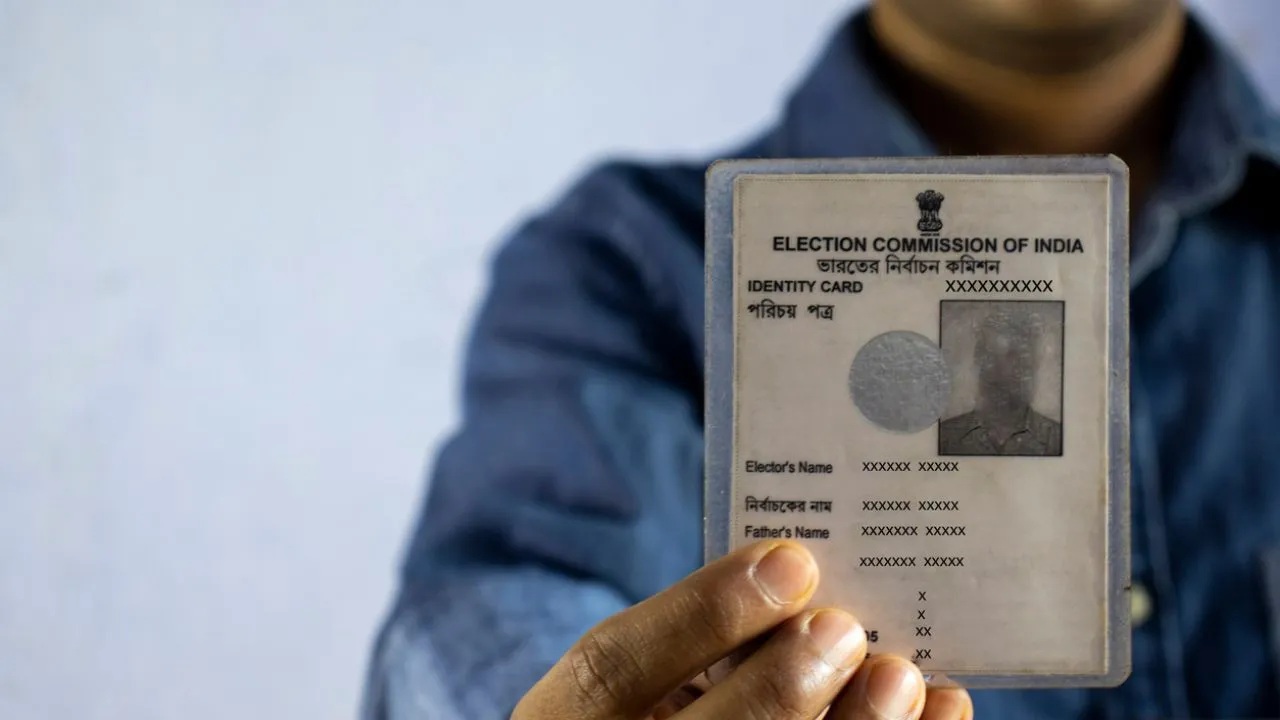
The SIR will run from 25 June to 24 July in Telangana.

Synopsis: The SIR exercise beginning in Bihar in July 2025 and extending up to West Bengal in January 2026 has removed lakhs of voters from the electoral rolls. A pliant Chief Election Commissioner, acting as a chief clerk of the Sangh Parivar, has not helped matters. With SIR arriving in Telangana, it’s time for eternal vigilance.
According to the Election Commission, in the existing voters’ list in Telangana, one out of every three names—or to be precise, thirty-seven out of every hundred names—is “suspect”. This means that all the elections conducted so far must have been dens of bogus voters and breeding grounds of illegality. Otherwise, the Election Commission’s current claim must be a blatant falsehood.
Even if it is true, it would only stand as a clear symbol of governmental incompetence; it cannot become a justification to rob people of their right to vote. A government that says one-third of voters must newly submit identification documents and verify themselves must first verify its own legitimacy.
Ordinarily, in any parliamentary democratic system, people—the voters—elect their representatives. The political party to which a majority of those representatives belong forms the government and governs for five years. This basic convention now appears to be something the Sangh Parivar wants to overturn.
Instead of voters electing their representatives, the government seems to be devising a novel method whereby it selects voters it likes and excludes those it dislikes. Under the leadership of the Chief Election Commissioner—functioning as a chief clerk of the Sangh Parivar—this new method has been introduced under the name Special Intensive Revision (SIR). Beginning in Bihar in July 2025 and extending up to West Bengal by January 2026, SIR played a significant role in removing lakhs of voters from the rolls and thereby altering the outcomes of state assembly elections.
Now this SIR serpent has entered Telangana and begun to hiss. How many lakhs of voters will fall victim to its bite in the state is unknown.
As part of the SIR process, Booth Level Officers will go door-to-door, distribute enumeration forms, and undertake revision of voter lists from June 25 to July 24. Based on this revision, a draft voter list will be released on July 31. Only then will the full picture emerge—how much poison this SIR intends to inject into Telangana, how many voters’ fundamental rights it seeks to steal, and what kind of danger the Sangh Parivar is planning for the state.
Warning signals of the impending disaster have already begun to ring.
In the preliminary mapping exercise conducted before SIR, out of the total 3.39 crore voters in the state, enumerators met only 2.32 crore people. According to mapping data as of June 4, discrepancies were found in the details of 88,13,207 voters. That is, unless these 88 lakh people verify themselves with proper documents, they will be treated as “suspect” voters. Notably, the mapping process did not even cover all voters—only 68.7 per cent of the total electorate was mapped. Among those mapped, 37 per cent have been declared suspects!
In the Quthbullapur constituency of Medchal–Malkajgiri district, the proportion of suspect voters is reportedly as high as 78 per cent. This clearly indicates that a conspiracy has been set in motion to find excuses to delete the names of eligible voters. The State Election Commissioner has said that after verification, 90 per cent of these suspect names may be restored. But looking at the examples of Bihar and West Bengal, such assurances are difficult to believe. While training for enumerators was scheduled from June 15, the Election Commission’s announcement on June 11 itself appears ridiculous, shocking, and indicative of its malicious intent.
In Bihar and West Bengal, the diplomatic term used to justify the deletion of voters’ names under the SIR process was “logical discrepancy.” The same tool is now being used in Telangana as well. On the surface, the term “logical discrepancy” appears reasonable and justified. Indeed, there should be no inconsistencies in voter lists. However, the ten types of discrepancies listed by the Election Commission in this category hand officials arbitrary powers to delete names at will. Instructions on whom to remove may well be coming unofficially from Nagpur or Delhi.
The officially stated discrepancies include:
1. When parents have more than six children.
2. When the age gap between mother and children is less than 15 years.
3. When the age difference between parents and children exceeds 50 years.
4. When the gap between two siblings is less than nine months.
5. When there is a difference between parents’ names in the previous and current voter lists.
6. When there is a discrepancy between the age recorded in the 2002 revision and the current age.
7. When only Aadhaar is submitted as proof.
8. When the age difference between grandfather and grandson is less than 40 years.
9. When there are differences in name, surname, or father’s name.
10. When there are spelling variations in the name.
Also Read: What next for Telangana after caste census?
Some of these may be applicable and necessary in certain cases. But treating submission of Aadhaar alone, minor name errors, or spelling differences as discrepancies is objectionable. Since its introduction, Aadhaar has been widely accepted as an identity document. Now the Election Commission claims that submitting Aadhaar alone constitutes a “logical discrepancy.” Does the Election Commission not recognise the Government of India?
As for variations in names, father’s names, or spellings—these often arise when Indian language names are transliterated into English in multiple ways. Why should such variations determine whether a person is a voter or not? This becomes merely a pretext to remove certain names. Those with multiple forms of spelling may continue on the rolls without scrutiny, while anyone targeted for deletion can be removed, citing this reason under the pretence of “logical discrepancy”. Thus, “logical discrepancy” is not a neutral rational standard but an arbitrary weapon.
Among the reasons cited by the State Election Commissioner for declaring 88 lakh voters as suspect is the case of a woman voter whose father’s name appears on one document and her husband’s name on another. Another reason cited is variation in familial relationships within a household. These reasons are so absurd that they hardly require elaboration.
When Booth Level Officers conduct enumeration and mark a name as suspect, invoking such discrepancies, that name will not appear in the draft list published on July 31. It will then become the voter’s responsibility to get their name re-included. Deletion is easy for authorities; restoration is a painful process for citizens, who must run around offices and prove within a month that they are indeed voters.
Initially, the Election Commission said it would accept 11 types of identification documents for verification—but Aadhaar was not among them. After a case reached the Supreme Court questioning how Aadhaar—promoted as a universal identity—could be excluded, it was later included. Now the Commission recognises 12 documents, a list that appears almost laughable. Many people may not possess even one of these documents. Strangely, the list does not even include the voter ID card issued by the Election Commission itself!
The approved documents are:
1. ID cards issued to employees/pensioners by central/state governments or public sector undertakings.
2. Identity cards issued by government bodies, banks, post offices, LIC, etc.
3. Birth certificate.
4. Passport.
5. Matriculation or other educational certificates.
6. Permanent residence certificate.
7. Forest rights certificate.
8. Caste certificate.
9. National Register of Citizens.
10. Family register document.
11. Government-issued land or house allotment document.
12. Aadhaar.
Some of these apply only to small groups, some exist only in specific regions. While nearly everyone has Aadhaar, it was initially excluded; instead, a list of documents that only a few people might have was prepared.
Thus, fundamentally, this is not a process of revising voter lists.
It is not about adding new voters or systematically removing the deceased, migrated, or duplicate entries. Rather, it is a Chanakyan process to make voter list revision complex, convoluted, and opaque. Its primary objective is to selectively remove certain voters from the existing list while providing seemingly rational justifications.
It is true that voter lists in the country are not entirely accurate. Bogus votes and fake voters must indeed be removed. However, neither the current Election Commission nor the ruling party—nor, for that matter, any political party—has a genuine interest in eliminating bogus votes. The system of bogus voting exists because of political parties themselves. What each party desires is that those voters who are unlikely to vote for them should not be on the rolls.
In this pursuit, the Bharatiya Janata Party has gone a step further. Having meticulously studied data from the last three elections, it has calculated precisely how many votes need to be eliminated in which constituencies and polling booths to ensure victory. Accordingly, it has undertaken a programme to remove voters in areas where its influence is weak. The Sangh Parivar believes that Muslims, women, and Dalits generally do not vote for it; hence, their votes are being removed on a large scale. Voters in opposition strongholds are being targeted.
Therefore, the SIR sword is most likely to fall heavily on Telangana. This is a moment to remember the maxim: eternal vigilance is the price of democracy.
Also Read: The grand farce that is Telangana’s minimum wages announcement
(Edited by R Rajesh Kumar.)



