

Published Aug 09, 2026 | 7:00 AM ⚊ Updated Aug 09, 2026 | 7:00 AM

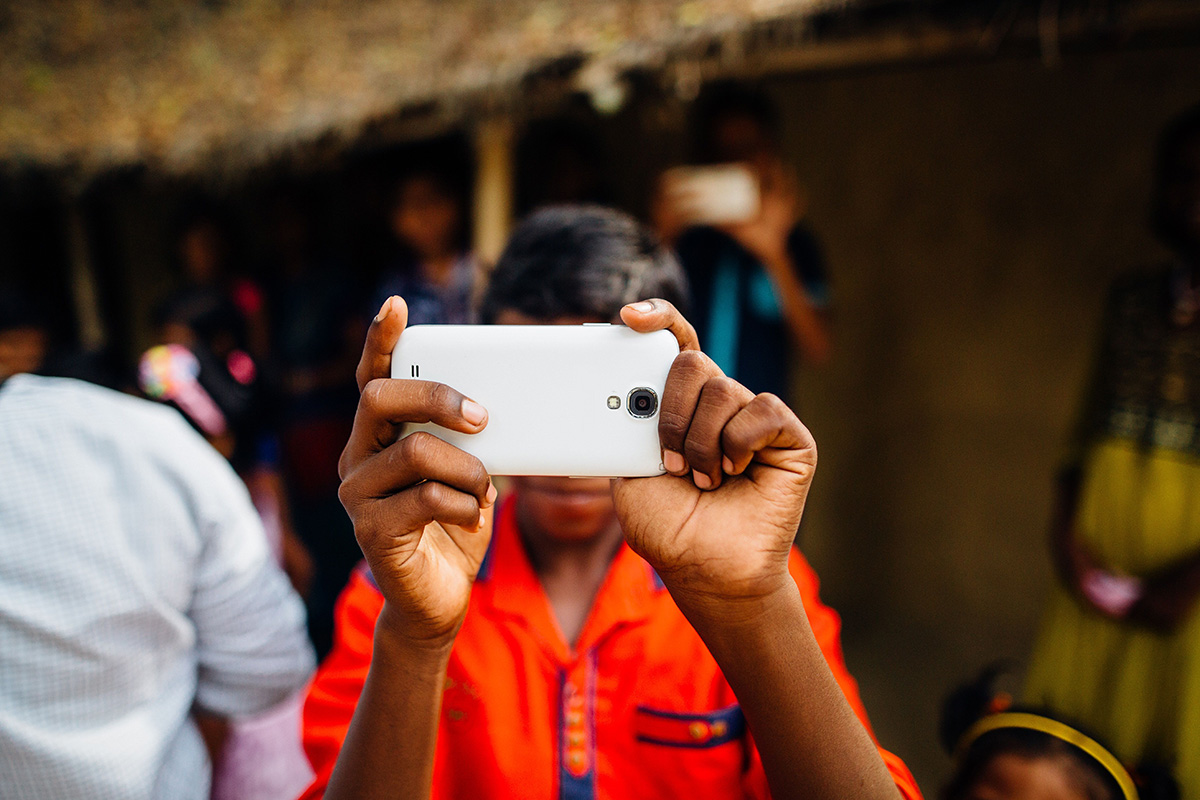
Image used for representational purpose. (Photo | pexels.com)

Synopsis: The smartphone and multiple platforms are taking over the lives of children. A parent reflects on the changes it is bringing to our lives...
A simple homework assignment made me rethink what it means to grow up in the digital age.
Last week, my daughter, a first-standard student, returned home with a homework assignment. She had to memorise a short poem and read a few sentences in English. There was nothing unusual about that. What caught my attention came next. The teacher asked parents to record the children reciting the poem and send the video to the class WhatsApp group.
That evening, our living room quietly turned into a small recording studio. My daughter stood against a plain wall while I held my phone. She read the poem once, stumbled over a word, and asked to try again. We recorded another take. She watched herself on the screen, smiled, corrected her pronunciation and requested one more recording before we finally sent it to the class group.
What fascinated me was not the technology itself. It was how naturally she embraced the camera. She was not only learning a poem; she was learning to perform it. The assignment did not end with reading. It culminated in us producing a video.
A few days earlier, I had unknowingly done something similar. It was my daughter’s sixth birthday. As we were gathered around the cake, I found myself moving from one corner of the room to another, adjusting angles, checking the light and taking photographs. I wanted the perfect picture before the candles were blown out. Somewhere in my mind, I was already deciding which photograph would become my WhatsApp Status.
Then my wife quietly interrupted the moment.
“You seem more interested in taking photographs than cutting the cake with your daughter.”
I laughed. But her remark stayed with me.
Only later did I realise that the birthday and the homework assignment were connected. At home, I had turned a family celebration into digital content. At school, learning itself had become digital content.
Neither of us found anything unusual about it. Perhaps that is precisely what makes it significant. The first audience of childhood is no longer always the child, the teacher or the family. Increasingly, it is the smartphone camera.
Researchers describe one part of this transformation as sharenting—the routine sharing of children’s photographs, videos and personal information through digital platforms. Studies on digital childhood suggest that many children today acquire a digital identity long before they understand what privacy, consent or social media actually mean. Some even begin their digital lives before birth through ultrasound scans proudly shared by expectant parents. By the time they create their first social media account, a substantial archive of their childhood has often already been created for them.
Yet my daughter’s homework made me think that something even broader is taking place. The digitalisation of childhood is no longer confined to social media. It is becoming embedded in everyday institutions, including schools.
This is not a criticism of teachers. Asking students to submit videos can be an effective way to assess pronunciation, encourage participation and keep parents involved in learning. Many teachers adopted such practices during the pandemic, and some have continued to use them because they offer genuine educational benefits.
But these practices also reveal a subtle cultural shift. Activities that once disappeared as soon as they were completed now leave digital traces. A poem recited once before classmates can now be rehearsed repeatedly, recorded, replayed, archived and shared. Learning increasingly unfolds with the awareness that it can be watched.
The smartphone has quietly become another classroom. More importantly, it has become another audience. This same logic extends beyond education. Birthday celebrations pause while parents search for the perfect angle. School annual days are viewed through raised phones rather than attentive eyes. Children’s drawings are photographed before they are discussed. Increasingly, everyday moments such as these unfold in the presence of a camera.
Documentation is no longer something that follows experience. It has become part of the experience itself.
Parents rarely do this because they wish to expose their children. They do it out of affection. The smartphone has become today’s family album, greeting card and neighbourhood conversation rolled into one. Sharing a photograph is often an act of love.
Yet love expressed through platforms also produces something new. Childhood gradually becomes content.
Scholars describe this as digital childhood—not simply because children spend more time with screens, but because growing up itself is increasingly organised through platforms, algorithms and continuous documentation. Entertainment, education, communication and family life all converge within the same digital ecosystem.
Perhaps the most profound change is not technological but cultural. Previous generations remembered childhood through stories and family albums. Today’s children grow up surrounded by cameras that expect moments to be recorded before they are remembered. The ordinary rhythm of childhood increasingly unfolds with the possibility that it may be photographed, uploaded, forwarded or replayed.
Later that night, I looked again at the photographs from my daughter’s birthday. The images were beautiful. Then I noticed something. My daughter appeared in every frame. I appeared in very few because I was standing behind the camera.
Perhaps that is the quiet paradox of parenting in the digital age. We have become extraordinarily good at preserving childhood. The challenge now is ensuring that, in documenting every precious moment, we do not allow the camera to become the first audience of a childhood that deserves, above all else, to be fully lived.
Also Read:
What AI can’t teach: The power of serendipity in learning
‘At home I am alone, not here…’: The joy of watching the football World Cup on community screens
(Edited by R Rajesh Kumar.)



