

Published May 27, 2026 | 4:00 PM ⚊ Updated May 27, 2026 | 4:00 PM

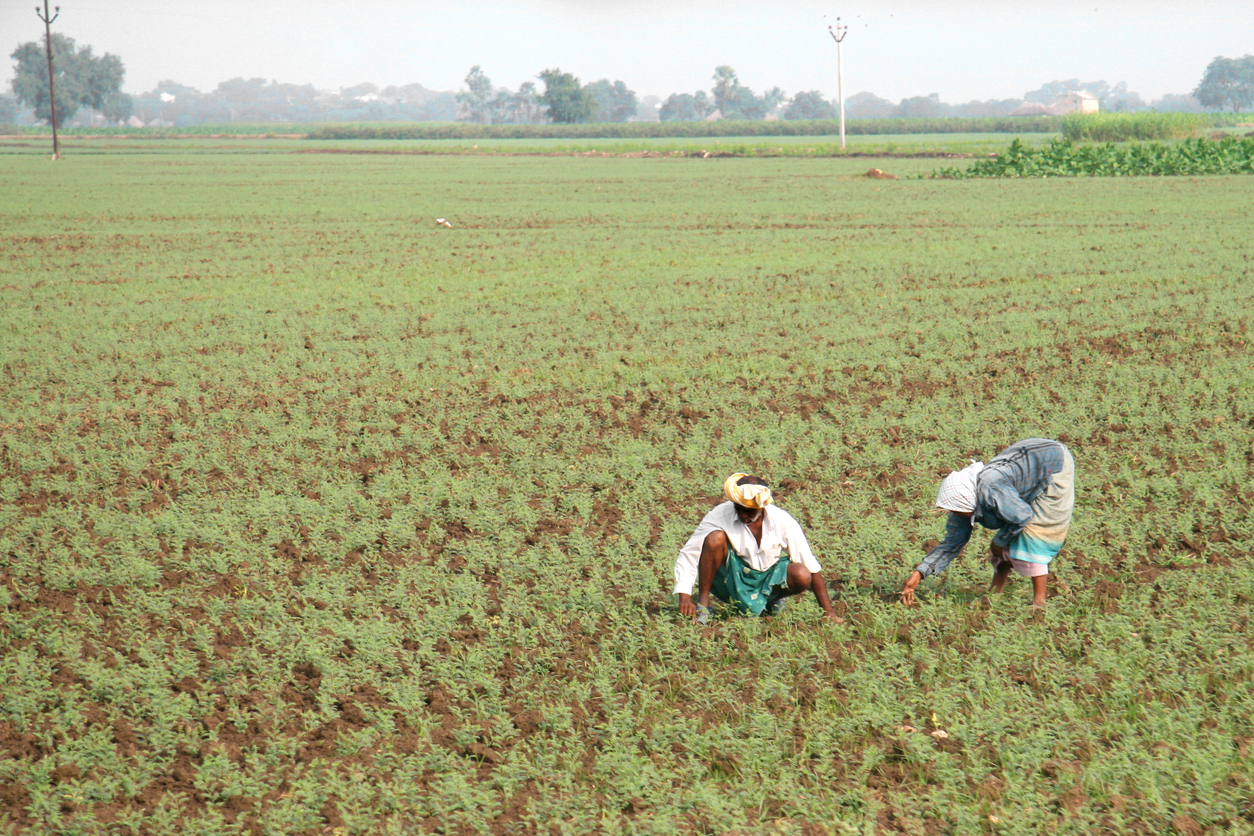
Representational image. credit: iStock

Synopsis: Silent discontent is rising in rural Andhra Pradesh as farmers face fertilizer access fears, irrigation delays, rising costs, and exclusion of tenant cultivators from support systems. Digital governance reforms like urea cards deepen anxieties, reinforcing perceptions of policy detachment. Without visible infrastructure fixes and inclusive support, this quiet frustration risks evolving into politically significant anti-incumbency sentiment.
In the villages of Andhra Pradesh today, the anger is not loud. There are no major protests yet. No highways are blocked. No dramatic political confrontation is visible on television screens. Yet beneath the surface of rural Andhra, a quieter and far more politically dangerous sentiment is slowly taking shape. Farmers are beginning to feel that the system no longer understands them.
This emerging frustration is not rooted in a single crisis. It is growing from the accumulation of multiple anxieties surrounding fertilizer access, irrigation uncertainty, rising cultivation costs, weak infrastructure maintenance, and the continued invisibility of tenant farmers within the State’s agricultural governance structure.
Individually, these may appear administrative issues. Collectively, they are creating the foundations of a silent anti-incumbency.
The coalition government today possesses an unprecedented volume of agricultural data. From e-crop registrations and digitised land records to fertilizer tracking systems and irrigation schedules, governance is increasingly being shaped through technology, databases, and verification mechanisms. On paper, this appears to represent modernization and administrative efficiency.
Also Read: The world failed to reverse falling birth rates with cash. Andhra Pradesh still wants to try
Yet, across rural Andhra Pradesh, a very different perception is emerging. The government may have data, but the farmer still lives with uncertainty.
That uncertainty is no longer limited to questions of crop profitability or monsoon dependency. Farmers are increasingly worried about whether the system itself recognizes the realities of cultivation on the ground.
The proposed urea-card based fertilizer distribution mechanism has become the clearest reflection of this widening disconnect between policy design and agricultural reality.
From an administrative perspective, the mechanism may appear to be a reform intended to regulate fertilizer distribution and reduce misuse. But for many cultivators, especially tenant farmers, it has triggered fears that agricultural support is gradually becoming documentation-driven rather than cultivation-driven.
This distinction carries enormous political and social significance in Andhra Pradesh, where a substantial portion of farming activity depends on tenant cultivation and informal lease arrangements.
Field-level estimates in several regions suggest that nearly 70 to 80 percent of cultivation activity involves tenant farmers, seasonal cultivators, or informal agreements between landowners and actual cultivators.
Yet most agricultural support systems continue to revolve around Pattadar Passbooks, ownership records, and formal registrations. As a result, the individual cultivating the land is often not the individual recognised by the system meant to support agriculture.
For tenant farmers, this invisibility is not a new experience. Access to institutional crop loans remains difficult. Crop insurance mechanisms rarely function effectively for cultivators without ownership documents. Subsidized support structures frequently bypass them. Procurement systems often become complicated.
Welfare delivery increasingly depends on digital eligibility frameworks. Now, with fertilizer access also appearing likely to depend heavily on formal documentation, many cultivators fear they may once again remain outside the support structure despite carrying the actual burden of cultivation.
What deepens this anxiety is the memory of earlier fertilizer app-based systems that struggled during implementation. Many farmers still recall authentication failures, server disruptions, connectivity limitations in villages, and delays during crucial cultivation periods.
In several areas, cultivators were forced to depend on intermediaries simply to navigate digital verification procedures. Consequently, the proposed urea-card mechanism is not being viewed as a facilitation tool, but as another possible layer of exclusion.
The political significance of this perception should not be underestimated. Rural dissatisfaction rarely erupts immediately. Farmers absorb uncertainty quietly for long periods before political consequences become visible.
Also Read: Andhra Pradesh bans paraquat sale amid rise in suicides by pesticide consumption
Andhra Pradesh has historically witnessed how accumulated agrarian frustration gradually transforms into electoral behaviour. Silent anger in rural societies is often politically more consequential than visible protest.
At the same time, fertilizer concerns are now merging with broader frustrations surrounding irrigation preparedness and agricultural infrastructure. Across several farming regions, cultivators continue to complain about incomplete desilting works, damaged canal bunds, uncleared drainage channels, and delayed maintenance activity despite approaching cultivation deadlines.
Public announcements regarding irrigation-release schedules may create an impression of preparedness, but many farmers increasingly judge governance not through declarations, but through visible conditions on the ground.
This disconnect is particularly visible in discussions surrounding irrigation schedules linked to the Godavari Delta, Krishna Delta, Vamsadhara ayacut, KC Canal, and Nagarjuna Sagar systems. Farmers preparing for kharif cultivation require certainty regarding both water and fertilizer access.
Delays or confusion in either area directly affect sowing decisions, crop planning, labour arrangements, and household-level financial investments. For cultivators already operating under debt and uncertainty, even small administrative delays carry enormous consequences.
The circulation of statistics regarding irrigation infrastructure is further reinforcing public dissatisfaction. Claims that out of nearly 1,040 lift irrigation schemes in the State, only around 156 remain fully functional while hundreds are neglected or underutilized are gaining traction in rural discussions.
Whether these figures entirely reflect technical realities or not, politically they are becoming influential because they reinforce an already existing perception among farmers that agricultural infrastructure receives greater attention in announcements than in execution.
Increasingly, farmers are comparing the speed of policy declarations with the slower pace of implementation on the ground. This widening gap between administrative intent and field-level experience is gradually affecting governance credibility across rural Andhra Pradesh.
Compounding these concerns are fears surrounding global fertilizer availability itself. International geopolitical instability and supply-chain disruptions have already generated anxieties regarding future urea shortages, artificial scarcity, black-market diversion, and hoarding. As cultivation season approaches, farmers are confronting multiple layers of uncertainty simultaneously, including uncertainty regarding water availability, fertilizer access, rising input costs, and institutional responsiveness.
The opposition space is naturally likely to capitalize on these anxieties by framing the issue emotionally rather than administratively. Narratives suggesting that governments are prioritizing apps, cards, and verification systems over actual cultivators have the potential to resonate strongly among tenant farmers, marginal farmers, and agricultural labour-linked households.
Also Read: Cash for more children: Andhra Pradesh’s population policy may exact a heavy price from women
In agrarian politics, perception frequently carries greater political weight than policy intent.
Yet, the present situation is still manageable. Rural dissatisfaction has not yet transformed into irreversible anti-incumbency sentiment. Farmers continue to retain expectations from the coalition government, largely because it entered office with promises of responsive governance and farmer-sensitive administration.
However, expectations also create vulnerability. When promises of accessibility are followed by experiences of procedural exclusion, disappointment becomes deeper and more emotional.
The solution does not require abandoning modernization or digital governance. Technology, by itself, is not the problem. The challenge lies in ensuring that systems recognize cultivation realities instead of merely validating ownership records. Agricultural governance cannot become detached from the social realities of farming communities.
A more practical and politically sustainable approach would involve linking fertilizer eligibility to actual cultivation activity through local verification mechanisms involving agriculture officers, village secretariats, and local institutional structures.
Digital systems can certainly strengthen governance, but they cannot entirely replace ground-level administrative flexibility and human judgment. Similarly, irrigation preparedness must become visible at the field level through timely repairs, desilting works, drainage restoration, and proactive agricultural infrastructure management.
Most importantly, the government must communicate clearly and consistently that no genuine cultivator will be denied agricultural support because of documentation limitations or procedural complications.
In a State where such a large section of agriculture depends on informal cultivation arrangements, this reassurance is politically and socially essential.
Agriculture ultimately operates on trust as much as on infrastructure. Once cultivators begin to feel that the system no longer recognizes them, even well-intentioned reforms start appearing exclusionary.
Andhra Pradesh today may possess more agricultural data than ever before, but unless governance reconnects with cultivation realities, the silent anti-incumbency now building beneath rural Andhra may eventually become impossible to ignore.



