

Published May 24, 2026 | 6:59 PM ⚊ Updated May 24, 2026 | 6:59 PM

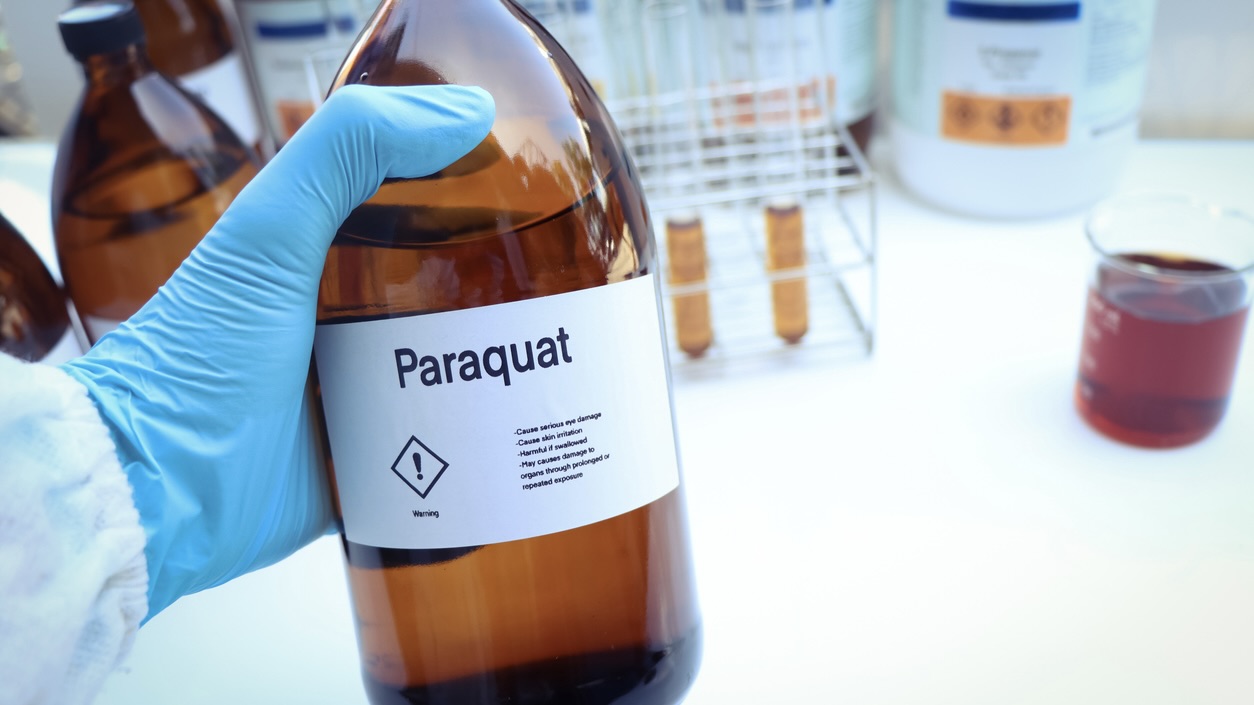
Paraquat accumulates in the lungs, triggers irreversible fibrosis, and causes acute respiratory failure, kidney failure, and liver injury.

Synopsis: Andhra Pradesh has imposed a 60-day ban on the sale, distribution and use of paraquat dichloride after reports of rising suicides involving the herbicide. The order follows a similar ban by Telangana in march. Doctors and researchers said paraquat poisoning has become a major public health emergency in rural areas because of its high fatality rate and the absence of a specific antidote.
Andhra Pradesh has banned the sale, distribution and use of paraquat dichloride, the lethal herbicide linked to thousands of deaths across the two Telugu states, months after Telangana imposed a similar ban in March.
The order, G.O.Rt.No.421, issued on 22 May by the Agriculture and Cooperation Department of Andhra Pradesh, prohibits the sale, distribution and use of Paraquat Dichloride 24% SL and all its formulations across the state for 60 days under sub-section (1) of Section 27 of the Insecticides Act, 1968.
The government issued the order after the Director General of Police, Andhra Pradesh, wrote to it on 28 April 2026, citing recent suicides in which victims consumed Paraquat Dichloride 24% SL.
The Health, Medical and Family Welfare Department also submitted remarks on the matter, enclosing reports from faculty at Government Siddhartha Medical College, Vijayawada. The faculty said paraquat poisoning “represents a multifaceted public health emergency, particularly in rural Andhra Pradesh”, and that its “rapid systemic toxicity, high fatality rate, and absence of a specific antidote make it one of the most serious threats in clinical toxicology.”
The Commissioner of Agriculture, Andhra Pradesh, has been directed to enforce the ban through district administrations and other enforcement authorities.
Also Read: Heatwave tightens grip on Andhra Pradesh as temperatures climb beyond 48°C
According to the National Crime Records Bureau’s Accidental Deaths and Suicides in India 2024 report, Andhra Pradesh recorded 2,871 suicides by insecticide consumption last year – 2,377 men and 494 women.
Telangana recorded 4,252 deaths. Together, the two states accounted for more than 7,100 of the 26,921 deaths by suicide following pesticide consumption recorded nationally in 2024, or more than one in four.
A decade-long study from a quaternary care centre in South India, published in the Indian Journal of Critical Care Medicine in February 2026, found that 65.7 percent of its 166 paraquat cases came from Andhra Pradesh. Kadapa and Chittoor districts accounted for three-quarters of those cases. Nearly 80 percent of the patients did not survive. A parallel study at Gandhi Hospital in Hyderabad, involving 400 patients, found a mortality rate of 75 percent.
Dr Bandari Rajkumar, a critical care specialist, called it “a national health and social emergency affecting farmers, rural families, and young individuals”. He also announced that doctors’ associations are preparing a “Chalo Delhi” movement to demand a permanent nationwide ban from the central government.
Under Section 27 of the Insecticides Act, 1968, a state government may ban a pesticide for 60 days, extendable by another 30 days. After 90 days, the state’s authority ends. A permanent ban requires the central government to cancel the pesticide’s registration. In February 2022, the Kerala High Court struck down the state’s long-standing paraquat ban on those grounds.
Paraquat has been banned in more than 78 countries, including the United Kingdom, the European Union, China and Vietnam. In India, it holds “deemed to be registered” status, meaning it predates the Insecticides Act, 1968, and has not undergone the mandatory evaluation process required for newer pesticides.



