

Published Aug 22, 2026 | 8:42 PM ⚊ Updated Sep 03, 2026 | 4:10 PM

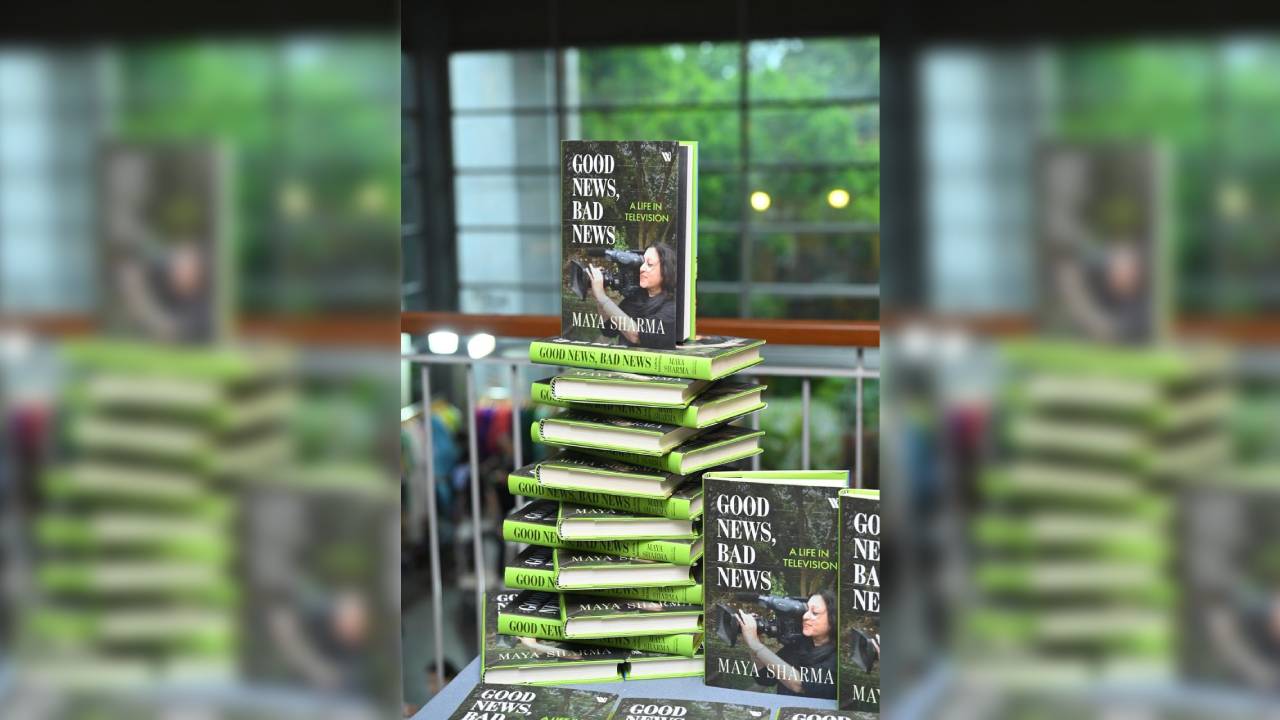
Maya Sharma records the rise and fall of Indian television news in her book 'Good News, Bad News: A Life in Television."

Synopsis: Veteran journalist, writer and teacher Maya Sharma reflects on nearly three decades in television, the rise of private news channels, shrinking space for regional voices, and why journalism must continue to question those in power.
For Maya Sharma, television journalism was never merely a profession. It was a front-row seat to a changing India — and to the transformation of Indian news itself.
From Doordarshan to more than 26 years at NDTV, Sharma’s career spanned defining phases of television journalism: state-run broadcasting, the rise of private news channels, the emergence of star anchors and, eventually, a media landscape shaped by digital platforms and social media.
Looking back at that journey in her book “Good News, Bad News: A Life in Television”, Sharma described it, above all, as a story about her love for journalism.
“No profession is perfect. It is what you make of it. There were days when, as a TV reporter, I just wanted to quit. Still, mostly I was lucky to do what I did and cover some very interesting events in the country,” Sharma said during a conversation with South First‘s Editor Anusha Ravi Sood at the Book Brahma Lit Fest in Bengaluru on Saturday, 22 August.
While Sharma sees television news as having changed over the years, she remains proud of the work done during her time in the profession. “We did lots of good, real work for the country,” she said.
One recurring theme in Sharma’s book is the evolution of television news in India.
Also Read: Why is traditional media at the receiving end at Jantar Mantar
She recalled the Doordarshan era, when television journalism often meant recording politicians and telecasting what they said, with limited questioning. Private television changed that culture, creating greater space for reporters to question politicians, investigate corruption and challenge those in authority.
But Sharma now feels the pendulum has begun to swing back.
“Sadly, it’s back to only recording and no questioning,” she said, describing the trend as worrying for a democracy.
For Sharma, questioning power lies at the heart of journalism and requires courage, particularly today. She cited censorship, financial pressures from advertising, and the impact of social media as challenges facing journalism.
The medium may have changed, she argued, but the responsibility to ask difficult questions has not.
Sharma recalled having to convince editors in Delhi that stories from the southern states deserved airtime, while news from the national capital often received greater attention. At times, even major stories in the states would be covered by journalists assigned from Delhi.
She felt that centralisation remains a problem in television newsrooms, where editorial power can rest with one anchor or a small group of decision-makers. When too few people call the shots, diversity of voices suffers.
Being on the ground also shaped Sharma’s worldview.
Also Read: Aggressive social media and its impact on polity
Many people in English-language television journalism came from relatively privileged backgrounds. Reporting exposed them to lives far removed from their own.
Meeting people living in poverty and communities affected by disasters offered a different perspective. There was always “another world” beyond one’s own experience, she said.
It also taught her to recognise different viewpoints, whether speaking to someone affected by a disaster or interviewing a politician.
Curiosity, Sharma said, remained crucial throughout her career. Journalism was as much about observing as asking questions – watching how people behaved and what their body language revealed.
Before television journalism, Sharma worked as a technical writer at Wipro and in corporate communications before moving through Doordarshan and eventually NDTV.
NDTV became her home for more than 26 years. She stayed because she felt fortunate to do the journalism she wanted and witness events she otherwise might never have encountered.
After reaching retirement age as per NDTV norms, Sharma continued as a consultant. Following changes at the organisation after its takeover in 2022, she felt it was no longer quite the same and eventually left.
Stepping away from the daily rush of television gave her time to reflect on that journey, which eventually became “Good News, Bad News.”
Also Read: Media, power, and propaganda
Sharma also witnessed the rise of television journalists as public personalities, from reporters gaining recognition on screen to star anchors becoming the faces of channels.
While a strong anchor can give a channel an identity, she said an anchor-driven newsroom can become problematic when one person dominates and leaves little room for other voices.
For today’s young journalists, that landscape has changed again. YouTube, social media and other digital platforms have become prominent, making the kind of television fame reporters once enjoyed harder to achieve.
Sharma enjoys interacting with journalism students and young journalists at a time when younger audiences are increasingly moving away from traditional television news.
She is uncertain whether mainstream television will retain the dominance it once enjoyed, but remains optimistic about audio-visual journalism as it evolves across newer platforms.
Her book traces that journey — from Doordarshan to private television, from an era when political leaders and prime ministers were questioned to the pressures facing television journalism today.
Platforms will change, technology will change, and audiences may move elsewhere.
But for Sharma, the core of the profession remains the same.
“The values of journalism,” she said, “remain eternal, regardless of the medium.”
(Edited by Majnu Babu).



