
Published Aug 31, 2026 | 4:34 PM ⚊ Updated Aug 31, 2026 | 4:34 PM

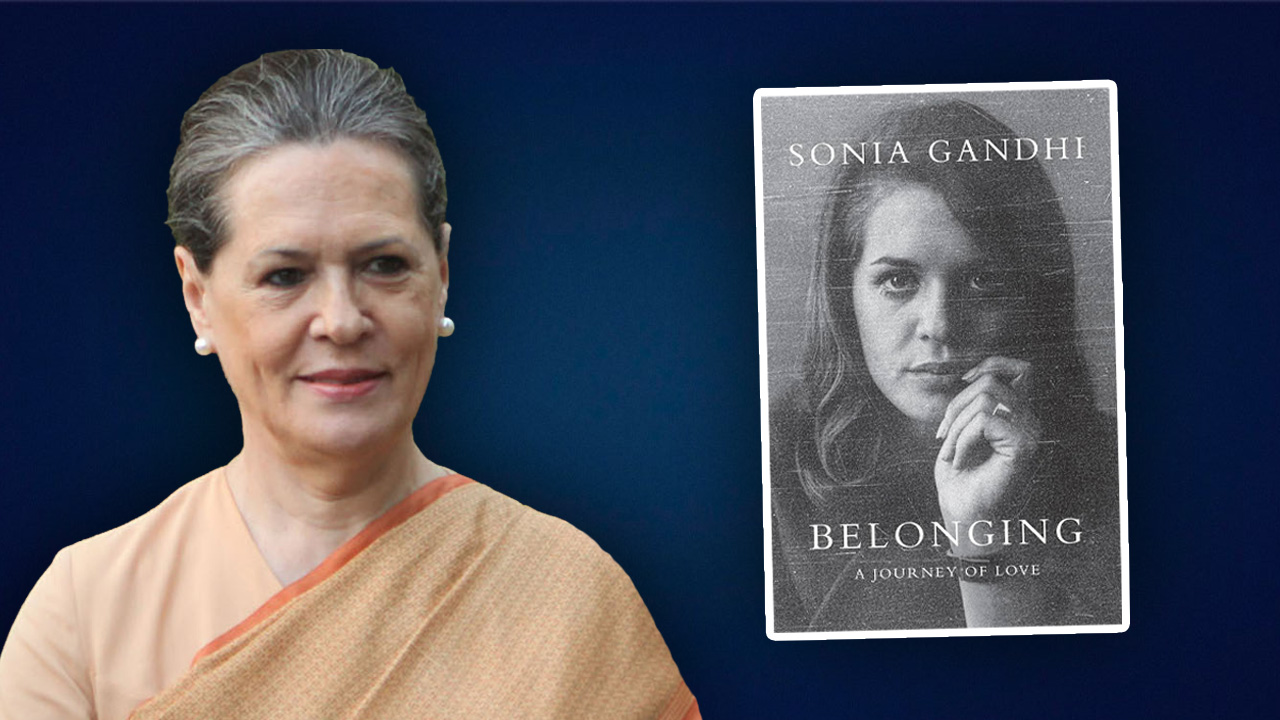
The controversy that has erupted over Sonia Gandhi's memoir raises many questions.

Synopsis: A government ban on a book is an assault on intellectual freedom. But what happens when the censor moves inside the publishing house? There is a world of difference between editing an argument and extinguishing it. Self-censorship leaves none of these traces: there is simply a manuscript that does not appear, an argument that never enters public debate, and eventually, silence.
“Books and other forms of writing have always been objects of terror to those who seek to suppress the truth.”
Nigerian Nobel laureate Wole Soyinka wrote in The Man Died: Prison Notes.
There was a time when a book was banned after it was published. The state would object, a court would intervene, protesters would take to the streets, copies would be seized and the author would be asked to explain himself. Censorship had a face. It had an order, a notification, a police action. One could identify the censor and argue against the censorship.
The more unsettling question today is this: what happens when the censor moves inside the publishing house?
A government banning a book is an obvious assault on intellectual freedom. A publisher quietly deciding that an author’s argument is too politically inconvenient, commercially risky or potentially controversial is a subtler proposition. It may not look like censorship at all. It may arrive disguised as an editorial suggestion, a request for deletion, a demand for qualification or simply a decision not to publish.
But for the reader, the consequence can be identical. The idea never arrives.
This distinction has acquired fresh relevance amid controversies over books dealing with political figures and contentious subjects. The reported disagreements surrounding Sonia Gandhi’s memoir Belonging, including questions over its proposed publication in India, have once again raised the uncomfortable question: can political sensitivities influence what a publisher, in this case Penguin India, is willing to put before readers? The precise circumstances and competing claims need to be established rather than assumed. But the larger question cannot be dismissed merely because the immediate controversy may eventually be resolved.
That question has haunted publishing for centuries.
Few books illustrate it more dramatically than Salman Rushdie’s The Satanic Verses. Published in 1988, the novel triggered protests across several countries and was banned in India soon after publication. The controversy eventually became much larger than the book itself. A work of fiction became a battlefield over religion, artistic freedom, political authority and the limits of offence. The Rushdie affair demonstrated a recurring paradox of censorship: attempts to silence a book can sometimes give it a far larger life than it might otherwise have enjoyed.
The history of African literature offers another stark example.
Kenyan writer Ngũgĩ wa Thiong’o was detained without trial in 1977 after the authorities objected to his politically charged theatre. His experience of imprisonment later became the subject of Detained: A Writer’s Prison Diary. More remarkably, during detention he worked on Devil on the Cross. The state could imprison the writer. It could not imprison the imagination that produced the book.
That is perhaps the most enduring weakness of censorship.
Power can close a printing press; it cannot easily close an idea.
India’s literary history contains its own catalogue of such encounters. Varavara Rao’s Bhavishyattu Chitrapatam belongs to that history. Published in 1986, the poetry collection was subsequently banned by the Andhra Pradesh government, before the ban was eventually withdrawn. Here, censorship followed publication. The book existed, circulated and entered public consciousness before the state attempted to stop it.
The pattern has repeated itself in different forms.
Perumal Murugan’s One Part Woman became embroiled in intense social controversy, eventually pushing the author into declaring the death of his literary persona before a judicial intervention helped restore his freedom to write. Wendy Doniger’s The Hindus: An Alternative History was withdrawn by Penguin India in 2014 following a legal dispute and sustained objections. Taslima Nasrin’s Lajja became a flashpoint over religion, identity and artistic freedom. DH Lawrence’s Lady Chatterley’s Lover once faced obscenity restrictions; Aleksandr Solzhenitsyn’s The Gulag Archipelago confronted Soviet repression.
The books, the authors and the circumstances are different. The underlying anxiety is remarkably similar:
What if people read this and begin thinking differently?
Yet there is an important distinction that must not be lost in the argument for free expression. Publishers are not obliged to publish every manuscript. Editors have every right to demand evidence, correct inaccuracies, challenge weak arguments, remove defamatory material and insist on literary standards. Publication is not a constitutional entitlement to a particular publisher’s imprint.
The problem begins elsewhere.
There is a world of difference between editing an argument and extinguishing it.
A publisher may legitimately say that a claim is inadequately sourced. It may ask an author to substantiate an allegation. It may refuse a manuscript because it does not meet its editorial standards. But if the decisive consideration becomes that an idea might anger a government, offend a powerful constituency, invite online abuse or damage commercial interests, publishing begins to acquire a different character.
It becomes less about opening a window and more about checking which direction the wind is blowing.
That is what makes self-censorship more insidious than conventional censorship.
A government ban creates resistance. A banned book attracts curiosity. A persecuted author acquires readers. A court challenge creates a public record.
Self-censorship leaves none of these traces.
There is no confiscation order. No police raid. No dramatic photograph of books being removed from shelves.
There is simply a manuscript that does not appear.
An argument that never enters public debate.
A paragraph that disappears during negotiations.
An author who is told, perhaps politely, that this is “not the right time”.
And eventually, silence.
The greatest danger is not that publishers will become ideological censors. It is that they may become fear-driven gatekeepers—institutions so anxious about controversy that they begin eliminating controversy itself.
That would be a profound impoverishment of democratic culture.
A society does not become intellectually mature by protecting its citizens from uncomfortable ideas. It becomes mature by giving them the ability to confront, contest and reject those ideas.
The answer to a bad book is a better book.
The answer to a false argument is evidence.
The answer to an offensive proposition is criticism.
The answer to an unpopular idea is not necessarily silence.
The publishing industry therefore carries a responsibility larger than the balance sheet. It is one of the institutions through which a society talks to itself. If publishers begin deciding not merely which manuscripts are good enough to publish but which ideas are safe enough to exist, the boundaries of public thought will contract without anybody formally ordering them to contract.
Yesterday, the state stood at the door of the bookstore.
Today, the fear of the state, the mob, the market or the social-media storm may be standing inside the editorial room.
That is a much quieter form of censorship.
And perhaps the most dangerous kind is the one that leaves no banned book behind—only the books that were never allowed to exist.
Also Read:
Book Essay: “At the risk of being pedantic…?”
The timeless satire of C Northcote Parkinson and what it teaches about our work life today
(Edited by R Rajesh Kumar.)



