

Published Aug 26, 2026 | 5:00 PM ⚊ Updated Aug 26, 2026 | 5:00 PM

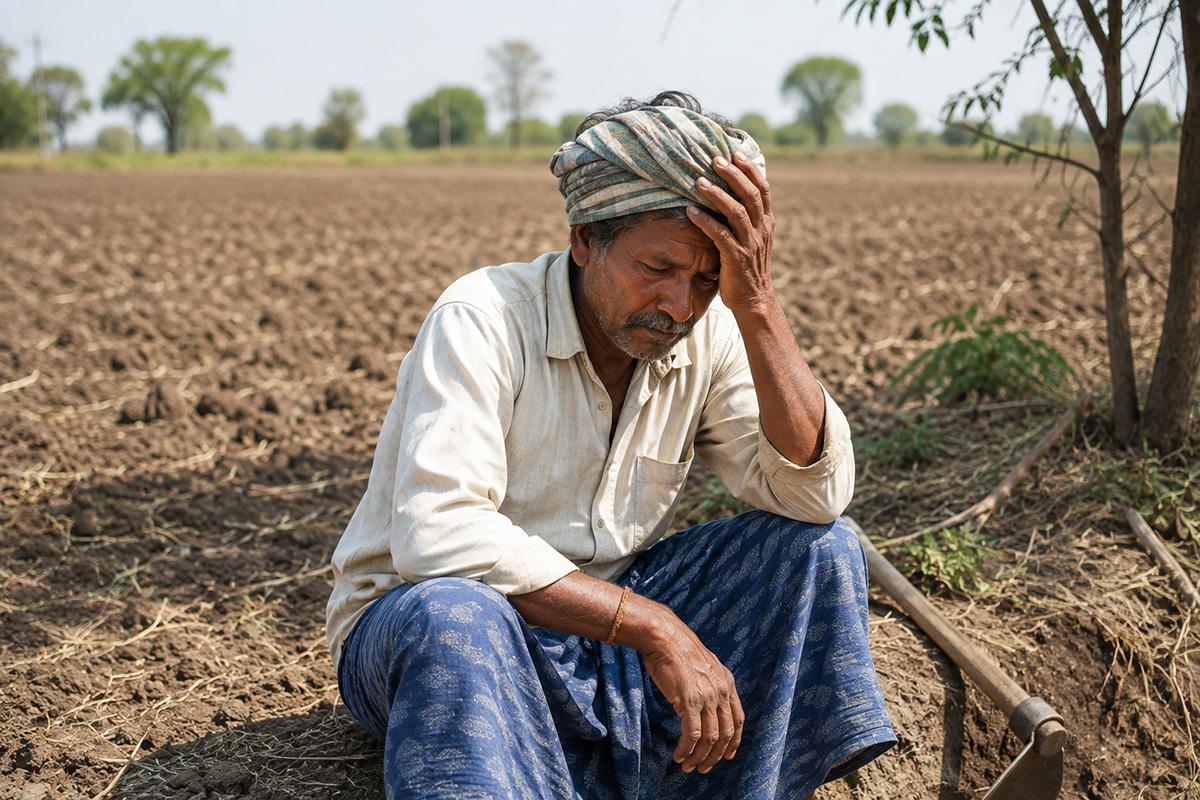
Image used for representational purpose. (AI generated)

Synopsis: The tenant farmers in Andhra Pradesh and Telangana are at the mercy of the landowners and the state at a time when the cost of agriculture and lease rates have risen sharply. Parties forgetting their promises when they come to power are not helping matters.
The lives of tenant farmers who sustain agriculture in the two Telugu states are becoming increasingly difficult.
If agriculture itself is in distress, those cultivating leased land are far more vulnerable than farmers cultivating their own land. As the area under tenant cultivation grows every year, their condition continues to worsen. Rising lease payments and input costs, coupled with declining returns, are pushing tenant farmers into financial distress.
This is the result of political parties coming to power on electoral promises and subsequently going back on their commitments to these farmers. Though tenant farmers strengthen the rural economy, their plight seems to matter little to governments. Government schemes, seed and fertiliser subsidies, bank loans, compensation, loan waivers, support prices and bonuses rarely reach them directly.
The landowners who receive these benefits often do not pass them on to the actual cultivators. Studies conducted separately in Telangana and Andhra Pradesh reveal the extent of their distress. Without government support, tenant farmers cannot overcome their difficulties.
A large number of rural poor in the Telugu states either own no agricultural land or have one or two acres and lease additional land from others. The area under such cultivation is increasing every year. Landowners who cannot cultivate their land themselves lease it out for a fixed amount of money per acre or a specified quantity of grain. Tenant farmers invest their own money and labour, face all the risks of cultivation and, irrespective of the yield, pay the agreed lease to the landowner. Only what remains belongs to them.
Since governments do not officially recognise them, their labour and hardships remain unaccounted for. The benefits of various government schemes intended to support agriculture consequently go to landowners rather than those actually cultivating the land. Governments have repeatedly promised to recognise tenant farmers, issue them cards and extend benefits, but have failed to act. In both Telangana and Andhra Pradesh, their problems appear unlikely to be resolved unless they organise and exert pressure.
According to government figures, around 1.5 crore acres of agricultural land is under cultivation in Telangana, with nearly 70 lakh farmers registered and holding pattadar passbooks. They are beneficiaries of Rythu Bharosa, earlier known as Rythu Bandhu. Among them are farmers who lease additional land, as well as those with no land of their own who cultivate entirely on lease.
A 2022 survey by the Rythu Swarajya Vedika found that 36 per cent of farmers in Telangana were tenant farmers. Subsidised seeds and fertilisers, crop loans, loan waiver benefits, Rythu Bharosa, crop insurance and compensation, support prices and bonuses do not directly reach them. With agricultural services increasingly linked to landowners’ mobile numbers, passbooks and bank accounts, even information and financial benefits related to fertilisers and grain sales reach landowners directly. Tenant farmers receive nothing unless the landowner chooses to share it.
Also Read: The silent anti-incumbency building in rural Andhra
The shortage of land available for lease compared with demand has pushed up lease rates sharply. At the same time, the costs of seeds, fertilisers, pesticides, labour and machinery rentals have risen steeply. Agricultural prices have not increased proportionately, while even support prices are not always available in the market. Tenant farmers therefore face multiple burdens, with no government assistance to cushion them.
Nearly half of Telangana’s rural population does not own even a cent of land. Landlessness is particularly widespread among backward classes, Dalits, minorities and tribal communities, who form a substantial proportion of tenant farmers. A recent survey by the Committee for the Recognition of Tenant Farmers covered 1,836 tenant farmers across 22 districts, 47 mandals and 57 villages.
In Andhra Pradesh, People’s Pulse, in association with the Andhra Pradesh Kaulu Rythu Sangham, surveyed 3,000 tenant farmers across all 26 districts. Though both governments have long promised recognition, implementation remains inadequate. In Andhra Pradesh, only 12.3 per cent of respondents said they had received identification cards, while 87.7 per cent said they had not.
Around 70 per cent of tenant farmers belonged to BC, SC and ST communities. A total of 67.2 per cent identified rising costs of seeds, fertilisers, pesticides, labour and machinery as their main problem. Another 12.5 per cent pointed to rising lease payments, 10.8 per cent to the lack of remunerative prices and another 10 per cent to high-interest private loans and market problems.
In Telangana, tenant farmers reported lease rates of up to Rs 53,000 per acre, with the average at Rs 14,936. The average area under lease cultivation has increased from five acres to 6.7 acres, while the share cultivating more than five acres has risen from 31 per cent to 42 per cent.
Political parties have made promises to tenant farmers during elections only to forget them after coming to power. In Andhra Pradesh, the Telugu Desam-led alliance promised through its Prajagalam manifesto to issue identification cards to tenant farmers, extend welfare schemes and insurance to them, and bring a special law within a year. Those promises remain unfulfilled. Pawan Kalyan, before the elections, held meetings with tenant farmers across the state and extended financial assistance. But he has gone silent now.
In Telangana, the BRS government removed the cultivation column from revenue records in 2017, ending the provision to separately record the actual cultivator. Then Chief Minister K Chandrasekhar Rao openly stated that government schemes would be designed keeping landowners in mind and that there was no intention to recognise tenant farmers. The implementation of the Land Licensed Cultivators Act, 2011 was also virtually halted from 2015.
The Congress, then in Opposition, criticised this policy and promised to support tenant farmers. Before the 2023 elections, then TPCC president and present Chief Minister Revanth Reddy wrote to tenant farmers promising implementation of the 2011 law and extension of all government schemes to them. More than two and a half years after coming to power, there is still no progress.
Whatever the perspective, tenant farmers in both Telugu states are suffering severe losses. They are being forced to carry the double burden of farming and neglect. The governments have to step in, and quickly.
Also Read:
Telangana’s tenant farmers and society’s duty!
Telangana Rising? Not until the farmer can sell
(Edited by R Rajesh Kumar.)



