

Published May 08, 2026 | 8:00 AM ⚊ Updated May 08, 2026 | 8:00 AM

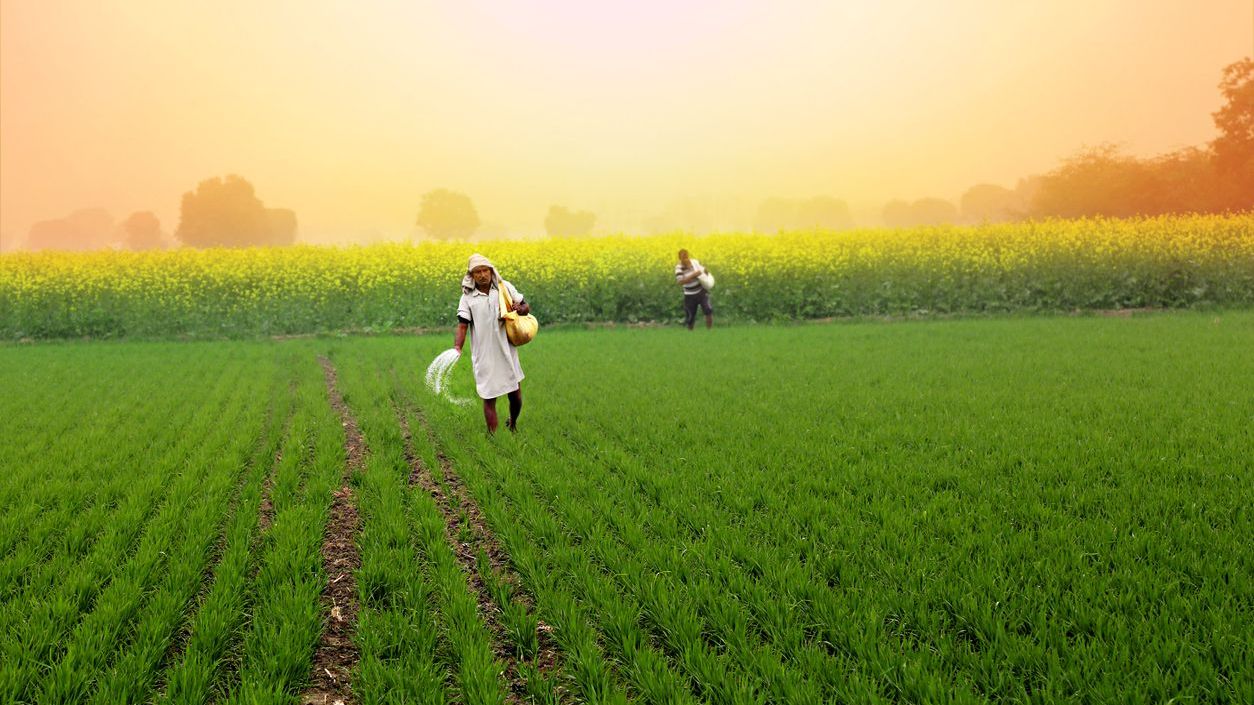
A farmer is spreading fertiliser in his field. (iStock)

Synopsis: Even two and a half years after the Congress formed its government in Telangana, it has not implemented its election promise of supporting tenant farmers. This is not merely a question of political betrayal; it is a life-and-death issue for a major section of Telangana’s rural and agricultural population.
If the simmering discontent among Telangana’s tenant farmers over the last couple of decades and the helplessness that has manifested itself in large-scale suicides are not recognised even now and addressed through appropriate solutions, it is impossible to predict in what direction that unrest may turn.
While all the historical problems faced by Telangana’s tenant farmers continue to exist, the failure of the Congress government to fulfil the promises it has been making since the 2018 elections has only deepened the dissatisfaction and anger of tenant farmers.
When it was in the Opposition, the Congress repeatedly spoke in the Legislative Assembly about the injustice being done to tenant farmers by the then government. During the Bharat Jodo Yatra, Rahul Gandhi met the families of tenant farmers who had committed suicide and promised that tenant farmers would get justice once their government came to power.
In its election manifesto, under the six guarantees, the party promised that a new scheme called Rythu Bharosa would be implemented for the benefit of actual cultivators.
During the elections, the then-Pradesh Congress Committee (PCC) president Revanth Reddy wrote an open letter to tenant farmers stating that it was the Congress government itself that had introduced the Telangana (formerly part of Andhra Pradesh) Land Licensed Cultivators Act in 2011, and assured that once in power, they would provide identity cards and other facilities to tenant farmers as per the law.
Yet, after more than two and a half years in office, all these promises remain exactly where they were made.
Also Read: How Telangana parties become farmer champions while in the opposition
Before examining in detail these broken promises of the Congress, it is necessary to understand the conditions that compelled the party to make those promises in the first place.
Tenant farmers have played an extraordinary role in Telangana society and agriculture. In the feudal social order of the Nizam period, the existence of landlords owning thousands of acres inevitably increased the importance of tenant farmers in Telangana villages.
In the glorious Telangana Peasant Armed Struggle (1946-51), struggles against the eviction of tenants constituted a significant component. The tenancy protection laws introduced by the Hyderabad State government of that period were themselves a response to the peasant armed struggle. Whatever may have been the manner of implementation of those protective laws, at least agricultural land records and pahani registers contained, alongside the name of the landowner, a separate column to record the name of the tenant actually cultivating the land (kast dar, sagudaru).
After the formation of Telangana state, the first government introduced a new system called Dharani in the name of streamlining land records. Legally, it abolished the very possibility of recording the name of the cultivator in pahani records and pattadar passbooks. The then-chief minister openly declared that his government belonged only to landowners and that it would recognise only pattadars as farmers.
Subsequently, the Rythu Bandhu scheme, introduced in the name of support for agricultural operations, was actually implemented as an incentive for landowners. Public money was distributed not for engaging in agriculture, but merely for having one’s name on paper as a landowner.
Whether they depended on agriculture or not, whether they had multiple other sources of income, even if they were living abroad, landowners enjoyed Rythu Bandhu simply because their names existed as pattadars.
Meanwhile, the tenant farmers who were actually cultivating the land disappeared entirely from the records. They did not receive the identity cards mandated under the 2011 law.
Although they were the real cultivators, the absence of their names from official records denied them access to agricultural loans from banks. Consequently, they were forced to borrow from private moneylenders at exorbitant interest rates.
Since their names existed nowhere in official records, they were denied crop insurance and compensation as well. These conditions drove tenant farmers to suicide. Of all farmer suicides in Telangana, 80 percent are those of tenant farmers.
The change in pahani records and passbooks was not merely a technical amendment; it represented a turning point in the political economy of agriculture.
That change benefited the owner, while the class that actually worked in the farm sector was pushed aside. Money flows to the landowner, while expenditure, risk, and uncertainty fall upon the shoulders of the tenant farmer.
In other words, the problem of tenant farmers intensified at three levels. The first is the absence of recognition — their nonexistence in legal and administrative records. The second is economic coercion.
Since they lack land rights, they cannot obtain bank loans and are forced to depend on private debt. The third is bearing the entirety of the risk. If crops fail, prices collapse, or natural calamities strike, the landowner receives fixed rent income, but the tenant farmer suffers total loss.
The Congress has now abandoned all its promises that sought to change this situation — to provide tenant farmers and actual cultivators with legally valid identity cards, to ensure access to bank loans, crop insurance, and other facilities, and to extend Rythu Bharosa to tenant cultivators as well.
This is not merely a question of political betrayal; it is a life-and-death issue for a major section of Telangana’s rural and agricultural population.
In Telangana agriculture, there exists a significant condition in which land ownership belongs to one person while cultivation is carried out by another. This contradiction is not new, but in recent years, government policies, social changes, agricultural productivity, the crisis of farm viability, and changes in the land administration system have made this contradiction sharper and more visible.
Many members of families that once existed as large landowning households in villages have moved to towns and foreign countries due to education, employment, business opportunities, and lifestyle preferences, and have settled there permanently. Many among them have no connection whatsoever with agriculture.
Even though their non-agricultural income sources have expanded, because of the social importance attached to land ownership in our society, they prefer to retain land in their own names. But that land is being cultivated by tenant farmers.
Likewise, because cultivation on small holdings has become unviable, many small and marginal farmers are compelled to lease an additional acre or two along with their own tiny holdings. Thus, in rural areas, there are large numbers of people willing to lease out land and equally large numbers willing to cultivate leased land.
Alongside them, at one level or another, landless poor people too are leasing land and becoming actual cultivators.
The shortcomings of the old system are a separate issue. But at least there existed some administrative recognition of the question: who is actually cultivating the land? Even if it did not provide complete protection, it offered some basis for access to bank loans, crop insurance, crop loss compensation, and a certain degree of government assistance.
Once that column was removed, only landowners remained “farmers” in the eyes of the government. The cultivating tenant farmer — no matter how much land cultivated or for how many years — disappeared. That is why precise statistics are unavailable to anyone, but there is an estimate that 30 to 40 percent of the population dependent on agriculture in our society consists of tenant farmers.
By that estimate, nearly 2.5 million families are tenant cultivators. In other words, this concerns one-fourth of our state’s population and one-third of the rural population. Yet despite being such a massive issue, it has become a problem that nobody cares about.
Against this background, the Congress party’s promise during the 2023 elections to restore recognition to tenant farmers assumed special significance.
Restoring the “cultivator” column in land records, identifying those who actually cultivate the land, and delivering welfare directly to them — these are not merely administrative changes; they are questions of agrarian justice. They are questions of social justice in agriculture.
In the last two and a half years, there have been reports of new legislative proposals and data collection exercises. But none of the changes that were supposed to happen has actually taken place.
Why this delay? The reasons are plainly visible. The ruling establishment is far more concerned about the interests of landlords and landowners than about those of actual cultivators.
Once tenant farmers receive official recognition, questions inevitably arise regarding their rights, protection, and share in welfare. That would challenge the existing landownership-based structure.
Many people say feudal landlordism has disappeared, but one only has to look at the forces preventing the recognition of tenant farmers to understand whether landlordism still exists or not.
Also Read: Telangana to seek Maharashtra’s consent to raise Tummidihatti barrage height
Postponing the issue by citing legal complexities only makes the problem more complicated. Whenever the agrarian crisis is discussed, there is discussion about farmer suicides, debt, and market instability. But nobody speaks about the tenant farmers who bear one-third of that agrarian crisis.
Nobody speaks about the tenant farmer who exists in the most vulnerable condition.
One major reason for this silence is precisely the absence of administrative recognition. Therefore, there is an urgent need to demand the full implementation of the 2011 Licensed Cultivators Act and the provision of identity cards and other facilities to tenant farmers.
Tenant farmers have been demanding this continuously. Society must add its voice to theirs.
The issue of tenant farmers must once again become a matter of public debate. Recording the cultivator in land records, granting minimum legal validity to tenancy agreements, enabling access to bank loans and insurance, and linking welfare schemes to the actual cultivator — these must be treated as immediate measures.
This is not merely about delivering justice to one section; it is about bringing the entire agricultural system closer to reality.
Finally, the fundamental question: Who is a farmer? Is it the owner of the land, or the person who cultivates it? The answer to that question will determine our policies.
Until now, recognition has been given to the name on paper. What about the human being who sheds sweat on the soil? Unless this gap is bridged, it will not even be possible to properly understand, let alone resolve, the agrarian crisis in Telangana.
(Views are personal.)



