
Published Apr 22, 2026 | 9:00 AM ⚊ Updated Apr 22, 2026 | 9:00 AM

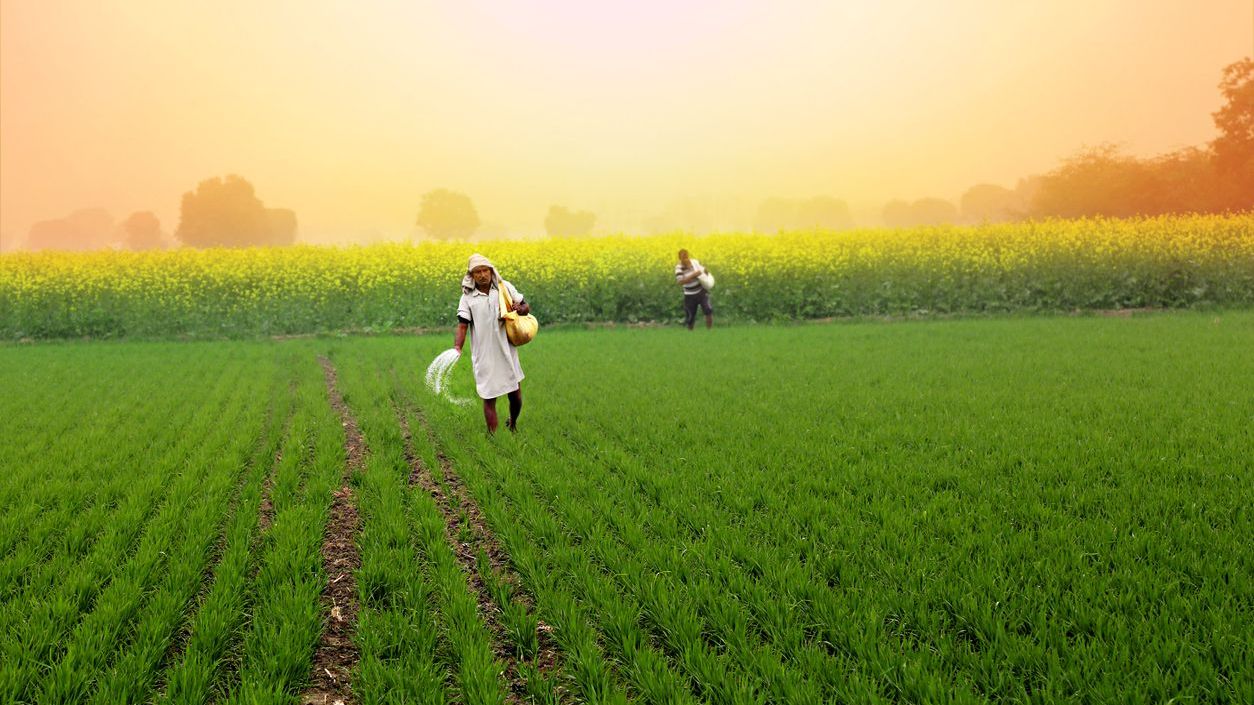
A farmer is spreading fertiliser in his field. (iStock)

Synopsis: Even with the state promising holistic development with the slogan “Telangana Rising”, the farmers in the state are not receiving any tangible benefits. The gains from Telangana’s production-side investments are being quietly absorbed at every stage of a broken marketing chain. The farmer grows more, but earns nothing more.
A state’s agricultural transformation is incomplete as long as its markets remain broken — and its farmers remain unheard.
We keep hearing Rythu Bandhu, Kaleshwaram, and Rythu Bhima in Telangana. The state government is promising real, visible investments in the farmer’s income support, irrigation and insurance.
However, “Telangana Rising” cannot remain a mere political rhetoric. For many in the countryside, it has to mean something tangible. Yet for all this ambition, there is a telling silence at the heart of agricultural policy: nobody asked the farmers where they sell, or how, or what that experience costs them.
That silence is not incidental. It is structural. The gains from Telangana’s production-side investments — better seeds, more water, expanded acreage — are being quietly absorbed at every stage of a broken marketing chain. The farmer grows more, but earns nothing more.
The infrastructure of post-harvest trade: the mandis, the procurement centres, the roads to the market, the very spaces where grain meets money, remains a study in neglect, opacity, and institutional failure.
Also Read: Is urban India casteless? In Telangana, discrimination doubles, Adivasis fare worse
The trouble begins before the farmer even reaches the market. In villages across Telangana, common property lands — gomal, tank bunds, village paths — that farmers once used for drying paddy and pulses have been progressively encroached upon and privatised.
With nowhere to spread grain, farmers dry on roadsides, exposing their harvest to vehicle exhaust, road debris, and accidents. The same grain arrives at procurement centres, moisture-laden or contaminated, where it is rejected or downgraded. The farmer is penalised for an infrastructure failure that the state created and refuses to fix.
At the procurement centres, the humiliation continues. Farmers wait 12–48 hours in the open sun — no shade, no drinking water, no toilet. Women farmers, who constitute a large share of agricultural labour across Telangana’s fields, wait in spaces that were clearly never designed with them in mind.
There are no moisture meters visible to farmers, no weighing transparency, and no posted rates. Commission agents fix prices collectively. Handling fees are deducted without sanction. Payment is delayed — sometimes for weeks — while the agent earns interest on funds that belong to the farmer. The farmer who grew the food the state depends on is, at the end of this process, treated as a petitioner in her own market.
The Minimum Support Price (MSP), supposed to provide a price floor, arrives as something closer to a paper promise. MSP notifications reach farmers after sowing decisions have already been made; in some years, after harvest begins. Effective procurement is limited to paddy and maize. For red gram, groundnut, cotton, and minor millets — crops that hundreds of thousands of Telangana farmers depend on — the gap between MSP and actual market price in distress years can reach 20–40 percent.
The price, meanwhile, is set in distant commodity exchanges in Mumbai, where institutional traders take speculative positions that depress futures prices, cascading down to the spot price the farmer receives at the yard gate. The farmer is a price-taker in a market she did not design and cannot influence.
Even the funds meant to fix this are missing in action. Market cess — collected from farmers and traders at every regulated market yard — is supposed to fund market infrastructure. Instead, it is routinely diverted to general state revenues or left unspent. There is no public accounting of how much has been collected, where it went, or what it built. The farmer pays a levy for a system that does not serve her.
Telangana’s 107-odd regulated market yards function largely as they did a generation ago: Bare trading floors, no grading equipment, no assay labs, no cold storage, no processing infrastructure of any kind. Farmers arrive with raw produce and leave with raw prices. Every rupee of value addition — cleaning, drying, grading, packaging — is captured downstream, by traders and processors who perform these steps in the farmer’s absence and at the farmer’s expense.
For perishables, the loss is even more visceral. Post-harvest losses for vegetables run between 30 and 40 percent in the summer months. Without cold chain infrastructure at the farm or first-mile level, the farmer cannot wait for better prices. She must sell at the first opportunity, to whoever is present, at whatever they offer.
Glut conditions — a bumper harvest — produce price crashes that cold storage could buffer, but nothing currently does. The more she grows, the more she loses.
Behind this lies another trap that rarely enters policy discussion: Input dealers who have become informal moneylenders. Farmers constrained by poor access to institutional credit borrow from the same dealer who sells them seeds and pesticides.
The interest is embedded in inflated input prices. The debt is recovered at harvest time, compelling distress sales — often to the same network. The marketing outcome is not discovered in a market; it is predetermined by the loan.
There is a dimension to this failure that goes almost entirely unaddressed: the urban consumer’s right to quality. Telangana’s agricultural markets offer no meaningful distinction between organic and conventional produce, no clean and well-maintained retail space, no grading information, and no direct connection to the grower.
A consumer in Hyderabad who wants to buy certified organic vegetables, or simply wants to know that the produce she is buying was handled hygienically and graded honestly, has no accessible way to do so.
This is a market failure in the straightforward sense — a willing buyer, a willing seller, and an institutional system that prevents them from meeting on fair terms.
The solution is close at hand, and it requires less money than imagination. In Bengaluru, Pune, and cities across the world, weekly farmers’ markets in municipal open spaces have become commercially successful and socially valued. They are not charity. They are smart infrastructure, sited in affluent neighbourhoods where consumers have both the income and the inclination to pay a premium for freshness, traceability, and direct provenance.
Hyderabad has no shortage of such neighbourhoods. What it lacks is the willingness of its municipal authorities to designate space.
A vegetable grower from a peri-urban village may need a selling spot for three hours on a Tuesday morning — a mat, a few crates of tomatoes and brinjals, a space that is officially sanctioned and does not require a bribe to occupy. That is all. Yet urban local bodies, town panchayats, and municipal authorities across Telangana provide no such space.
The farmer defaults to the roadside, where she is technically illegal, perpetually precarious, and prey to civic enforcement. This denial of space is not confined to Hyderabad. In Warangal, Nizamabad, Karimnagar, and in mandal towns and large villages across the state, the same exclusion operates — often more completely, because smaller towns lack even the informal tolerance that large cities extend.
Urban master plans in Telangana do not earmark land for agri-market use. As cities expand, this omission hardens into permanence: land prices rise, options close, and the farmer is pushed permanently to the margin of the city she feeds.
Also Read: Telangana orders expeditious repairs of Kaleshwaram barrages
Underneath all this is a failure of process. Telangana’s agricultural policy has been generous but paternalistic — designed for farmers, not with them. There has been no systematic consultation regarding the marketing chain: no large-scale participatory survey of what farmers experience between harvest and payment, no platform where organic growers, tribal forest produce collectors, women vegetable sellers, or smallholder pulse farmers could describe their daily reality to the people who design the system they navigate.
This is not a procedural nicety. Consultation is how you learn that procurement centres have no toilets, that mandi timings exclude women with field responsibilities, and that the moisture meter reading is invisible to the farmer standing on the other side of the counter. It is how policy stops being blind.
A State Agricultural Marketing Advisory Council — with farmer representatives, FPO leaders, women’s SHG federations, and tribal community voices, empowered to shape marketing policy — is the institutional form this consultation needs to take. Alongside it: A social audit of every mandi, every procurement centre, every rupee of market cess collected in the farmer’s name, with results published and acted upon.
Telangana is rising. But a state truly rises only when its food growers can sell with dignity, its consumers can choose with knowledge, and the space between farm and table is no longer a corridor of exploitation.
The reforms this requires are not large. A paved drying yard and a moisture meter in every village.
A procurement centre where a woman farmer can use a toilet. A weekly vegetable market in a municipal park, with clean premises and basic grading, where a farmer from twenty kilometres away can sell her organic produce directly to the person who will eat it for a few hours, once a week, in a space the city has chosen to offer. Market cess accounts opened to public scrutiny. A price commission that knows what it actually costs to grow food in Telangana.
None of this is beyond Telangana’s ambition or its resources. All of it requires the one thing that production-side investment does not demand: the discipline to listen to the farmer, all the way from seed to sale.
(Views are personal. Edited by Muhammed Fazil.)



