
Published Aug 18, 2026 | 12:00 PM ⚊ Updated Aug 18, 2026 | 12:00 PM

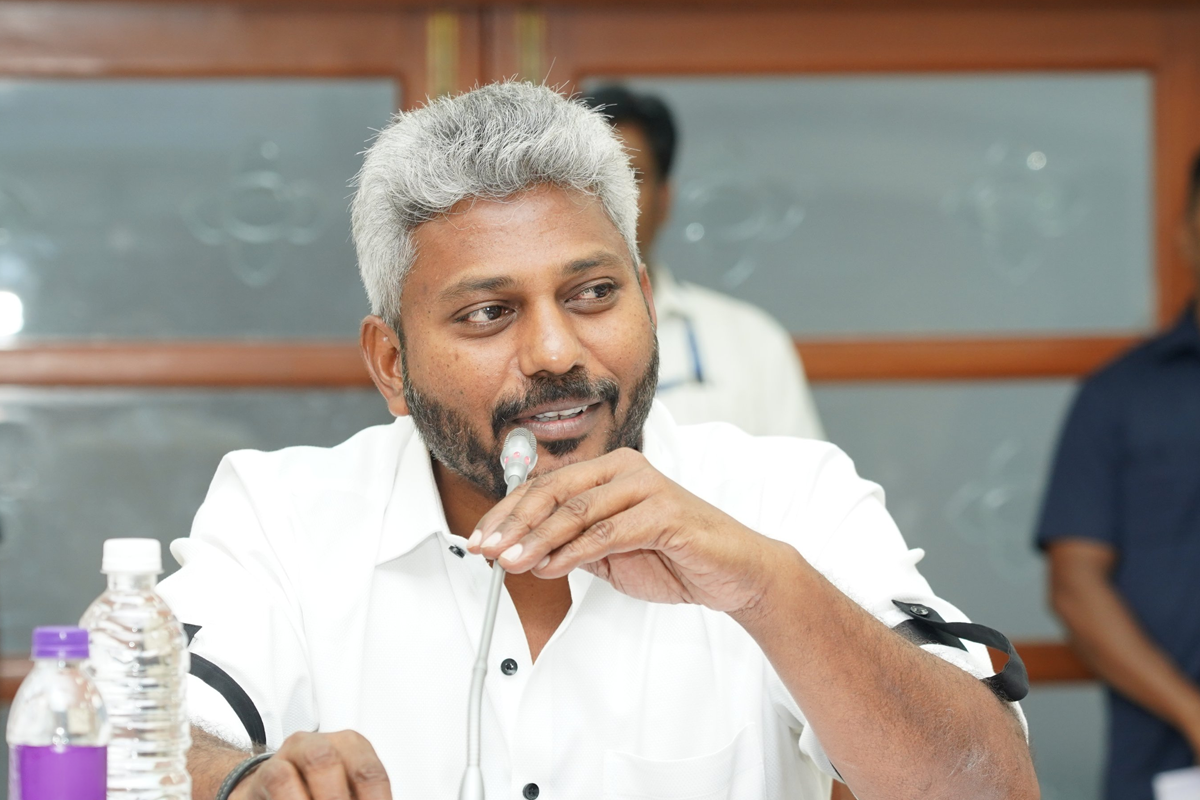
Tamil Nadu Finance Minister N Marie Wilson.

Synopsis: The Tamil Nadu Finance Minister’s reference to Christianity in an Assembly debate over his Tamil raises questions about when personal faith should be invoked and when it should not. The bigger point is to ensure that secularism is applied consistently, regardless of the religion being cited.
A recent exchange in the Tamil Nadu Assembly raises a question that goes beyond the quality of Tamil spoken by a minister. It concerns the place of personal faith in public office and the way secularism is being practised in Tamil Nadu.
The controversy erupted when the MDMK MLA TM Rajendran asked Finance Minister N Marie Wilson to improve his Tamil. Other legislators also felt that Wilson’s colloquial style was difficult to follow. However, Wilson defended himself by saying he had his own way of speaking and could not easily change it. The Finance Minister was entitled to make that argument. Tamil has several registers, and colloquial Tamil is part of the language.
But then religion made its way into what was an argument over language. Wilson invoked Christianity, saying that his faith had taught him the language of love and empathy. He then contrasted this with Tamil scholars, suggesting that they could not understand this language in the same way and that studying Tamil could not teach what Christianity had taught him. That reference was unnecessary and raised a more important question about why and how religion is brought into public political discourse.
The question it raised is simple. What did Christianity have to do with the way a minister speaks Tamil? There is nothing wrong with a public representative speaking about his faith. A minister does not cease to be a person of a certain faith after entering public office. But religious belief is a matter of individual conscience. It should not be introduced into an unrelated legislative argument as a source of special moral or intellectual authority.
The episode also deserves scrutiny for another reason. Would the political response have been the same if a minister had made a similar comparison involving other scriptures? Suppose a minister had been criticised for speaking poor or difficult Tamil and had replied that the Gita had taught him the language of love, while Tamil scholars who criticised him could never understand that language. Would Dravidian parties have treated the statement with the same restraint?
The question is worth asking because Tamil Nadu’s political tradition has long placed considerable emphasis on rationalism, social reform, and the separation of religious authority from public life. The state has also witnessed strong political opposition to the use of religion in public affairs when it is perceived as challenging the principles associated with the Dravidian movement.
The silence over the present episode is therefore striking. Parties that regularly invoke Tamil language and culture had an opportunity to make a simple point: criticism of someone’s Tamil should be answered on linguistic grounds, and religious belief need not be brought into the discussion. The limited political objection to the religious comparison raises questions about whether the same standard would have been applied if another religion had been invoked.
This suggests a wider problem with the way secularism is being applied in contemporary politics. Secularism becomes meaningful only when its principles are applied consistently. It cannot depend on which religion is invoked or which political camp invokes it.
The issue is also visible in the recent budget proceedings. The Finance Minister was seen carrying a rosary while presenting the Budget. Agriculture Minister R Vinoth visited Tirumala before presenting the Agriculture Budget. These acts may reflect genuine personal faith. There is no constitutional reason why an elected representative should be prohibited from praying or carrying a religious object.
However, the concern becomes genuine when personal religious identity becomes closely associated with the performance of a constitutional office. A minister may pray before undertaking an important responsibility. That remains a personal matter. The issue arises when a religious symbol or ritual is presented alongside the exercise of public authority, because the two can then appear connected in the public mind.
Saying, “My faith teaches me compassion” is a statement about personal belief. Saying that one’s faith provides a form of understanding that others, including scholars of another tradition, cannot possess moves towards a claim of moral or intellectual superiority. The latter has no place in a legislative debate unless religion itself is the subject of discussion.
This is where the Tamil language episode becomes more significant than it initially appeared. Tamil has a special place in Tamil Nadu’s political culture. Governments and political parties regularly emphasise its antiquity, literary tradition, and contemporary importance. The Assembly has itself taken steps to strengthen the public role of Tamil, including making Tamil Thai Vazhthu the opening song at government functions.
That commitment should include how Tamil is discussed and defended in the Assembly. If a minister’s Tamil is criticised, the response can address whether colloquial Tamil is legitimate, whether legislative language should be accessible, and whether different forms of Tamil should be accommodated. These are serious questions. Bringing religious faith into the argument moves the discussion away from them.
Also Read | Budget analysis: Can Tamil Nadu become a $1.5 trillion economy with less government spending?
There is also a constitutional dimension here. Indian secularism does not require public representatives to hide their faith. The Constitution protects freedom of conscience and religion. At the same time, the state cannot privilege one religion. Public institutions must therefore ensure that religious belief does not become a basis for exercising or legitimising public authority.
The public sphere, therefore, requires some restraint in the use of religious identity. Of course, this restraint should apply to everyone. A Hindu minister invoking the Gita to establish moral authority should face the same scrutiny as a Christian minister invoking the Bible for the same purpose. A Muslim minister should be subject to the same standard if Islamic belief is introduced into an unrelated legislative argument. The principle has to be independent of the religion involved.
That is why the present silence deserves attention. If political parties object to religious symbolism only when it comes from their opponents, secularism becomes a political tactic rather than a constitutional principle. Tamil Nadu’s Dravidian parties have historically had a strong position on this question. They should therefore be held to a higher standard of consistency.
From our archives | Mind your language, Kamal! Tamil-Kannada debate is academically fascinating but practically futile
There is a further danger in normalising religion in the language of public office. Once religious identity becomes a routine part of political presentation, citizens may gradually begin to read public officials through their religious identities. That can affect how political authority is understood.
A minister’s competence, constitutional responsibility, and policy decisions should remain the primary basis on which public office is judged. The answer, therefore, is not to demand that politicians conceal their beliefs. Nor is it to treat every religious reference as a violation of secularism. That would be neither practical nor consistent with constitutional freedoms. Personal faith is legitimate. Religious practice is legitimate. Religious belief can be discussed in public life. But when an unrelated legislative issue is being debated, faith should not be presented as a source of superior moral or intellectual authority.
The Tamil Nadu Assembly has a particular responsibility here because of the state’s political history. The Dravidian movement challenged the idea that religious authority should dominate public reasoning. Its contemporary political heirs should be careful not to dilute that principle through selective silence. The real question raised by the recent episode is therefore not whether a minister is entitled to his faith. He is. The question is whether political parties are prepared to defend secularism as a consistent principle when doing so may be politically inconvenient. When faith enters the Assembly, the answer should not depend on whose faith it is.
Also Read:
The politics of forgiveness: Prime Minister Modi and the burden of example
Vijay’s June 23 Assembly speech: When performance trumped governance
(Edited by R Rajesh Kumar.)



