
Published Sep 04, 2026 | 7:15 AM ⚊ Updated Sep 19, 2026 | 6:53 PM

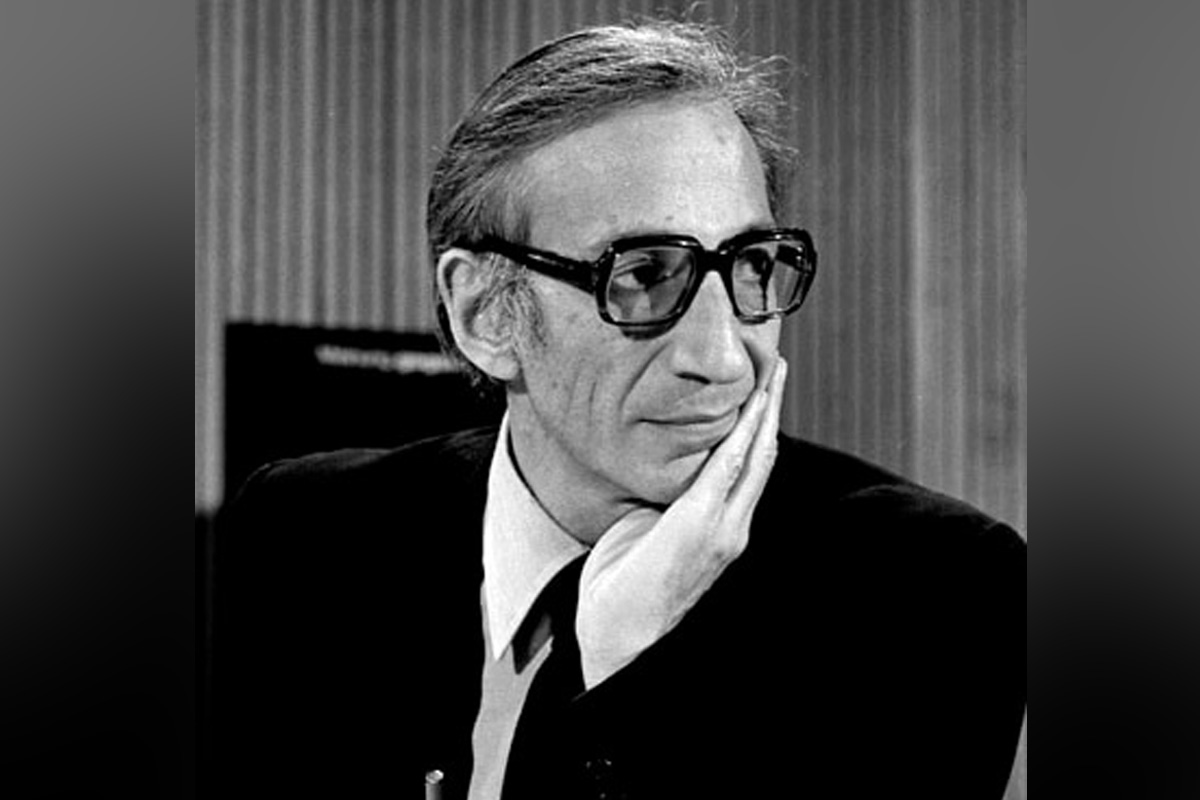
Ivan Illich was not against progress—he was against progress that robs people of dignity.

Synopsis: In 1978, the author met Ivan Illich in Kerala and found in him “a scout from the future”, warning about the traps of “progress” we now call normal. On Illich’s 100th birth anniversary, his questions about education, healthcare, technology and energy have a huge bearing on India’s present realities.
In April 1978, I received an unusual call from my Director at the Centre for Development Studies in Trivandrum. His voice, hushed and in Malayalam, crackled through the intercom: “John, can you come over? There is a gentleman here who seems to be an important person and wants to meet you!”
I entered to find a tall, unshaven man in wrinkled clothes, barefoot, with the air of a wandering monk.
“Ah, you are John? The fishers at a boatyard on Vizhinjam beach told me about you. I’m Ivan Illich.”
My heart raced. This was the man whose books had already upended my understanding of education, health, and technology. And here he was, not in a European lecture hall, but in Kerala, asking about fishers, village libraries, and the People’s Science Movement.
Months later, I found him again on the banks of the Ganges, speed-learning Hindi from a guru in Varanasi. Between those two encounters, I realised: Illich was not just a philosopher—he was a scout from the future, warning us about the traps of ‘progress’ we now call normal.
On September 4, 2026, we will mark his 100th birth anniversary. Yet, remarkably few in India have heard of him. This is a loss, for his words speak directly to the crises we face today.
Ivan Illich (1926–2002) was an Austrian Catholic priest-turned-philosopher, born in Vienna to a Jewish mother and a Catholic father. Deeply influenced by Paulo Freire and Arnold Toynbee, he worked in New York and Puerto Rico before his critiques of institutional power made him a heretic to both the Church and the academy. By the 1970s, he was a global nomad—debating Sufis in Iran, studying grassroots movements in Kerala, and learning Hindi from a guru in Varanasi.
His four seminal books from the 1970s read today not as period pieces but as urgent survival manuals for our century.
Deschooling Society (1971) exposed how institutional schooling substitutes certification for true learning, manufacturing obedient workers rather than curious minds. “The pupil,” he wrote, “is thereby ‘schooled’ to confuse teaching with learning, grade advancement with education, a diploma with competence, and fluency with the ability to say something new.”
Tools for Conviviality (1973) drew a crucial distinction between technologies that amplify human agency and those that create dependency. “Industrial tools,” Illich wrote, “replace competence with demand.” The major threat to human dignity, he warned, “is not the machine but the institutionalisation of the machine.”
Energy and Equity (1974) demonstrated how speed, beyond a certain threshold, erodes community and creates inequality. “Civilisation has a speed limit,” he wrote. “Beyond a certain point, more energy means less equity.”
Medical Nemesis (1975) laid bare medicine’s paradox—how hospitals and medical systems generate new forms of sickness even as they treat others. “The medical establishment,” he declared, “has become a major threat to health.”
Together, these works form a diagnostic framework for understanding how our most trusted institutions can become instruments of control.
Illich was not against progress—he was against progress that robs people of dignity. Today, his voice is urgent.
Look at education. In July 2026, millions of students took to the streets over the NEET paper leak, giving birth to the self-mocking “Cockroach Janata Party” and forcing the education minister to resign. What drove this fury was not just one leak, but the cumulative despair of a generation trapped in a system that promises salvation but delivers only anxiety.
Turn to healthcare. In 2026, as India’s public health spending remained stuck at 1.2% of GDP, patients in Kerala’s Government Medical College Hospital lay on the floor for want of beds. The casualty ward, designed for 50 patients, routinely handles over 150. The system we have built does not heal; it manages.
Take technology. A Goldman Sachs report suggests that generative AI threatens up to 12% of non-agricultural jobs in India. The concern is not just job loss—it is the erosion of human agency. As the fishermen of Kerala discovered, tools that promised liberation have become invisible chains.
Examine energy and speed. Across India, from the wetlands of Tamil Nadu to the fragile coasts of Goa, bulldozers clear land for airports. In Gujarat, a bullet train takes shape. In Kerala, hillsides are carved open for highways that promise speed but deliver collapse. Each project exacts a price paid by the many for the convenience of the few.
In each of these domains, Illich saw the pattern half a century ago. He was a diagnostician, not a prophet of doom. He believed in human possibility—but only if we had the courage to question the tracks we are on.
Over the coming parts, we will explore each of Illich’s four themes in depth—education, healthcare, technology, and energy—and examine their bearing on India’s present realities. We will ask the questions Illich gave us: Are we educating citizens or manufacturing compliant workers? Are we healing or commodifying suffering? Are our technologies serving human flourishing or creating new forms of enslavement? Whose time are we saving, and at whose expense?
The map Illich drew remains before us. The question is whether we will have the courage to read it.
Also Read:
Withdrawing consent: Gene Sharp and the Cockroach uprising
The timeless satire of C Northcote Parkinson and what it teaches about our work life today
Vizhinjam tango: Kerala footed the bill—the coast is paying the rest



