

Published Jul 14, 2026 | 8:00 AM ⚊ Updated Aug 10, 2026 | 11:19 AM

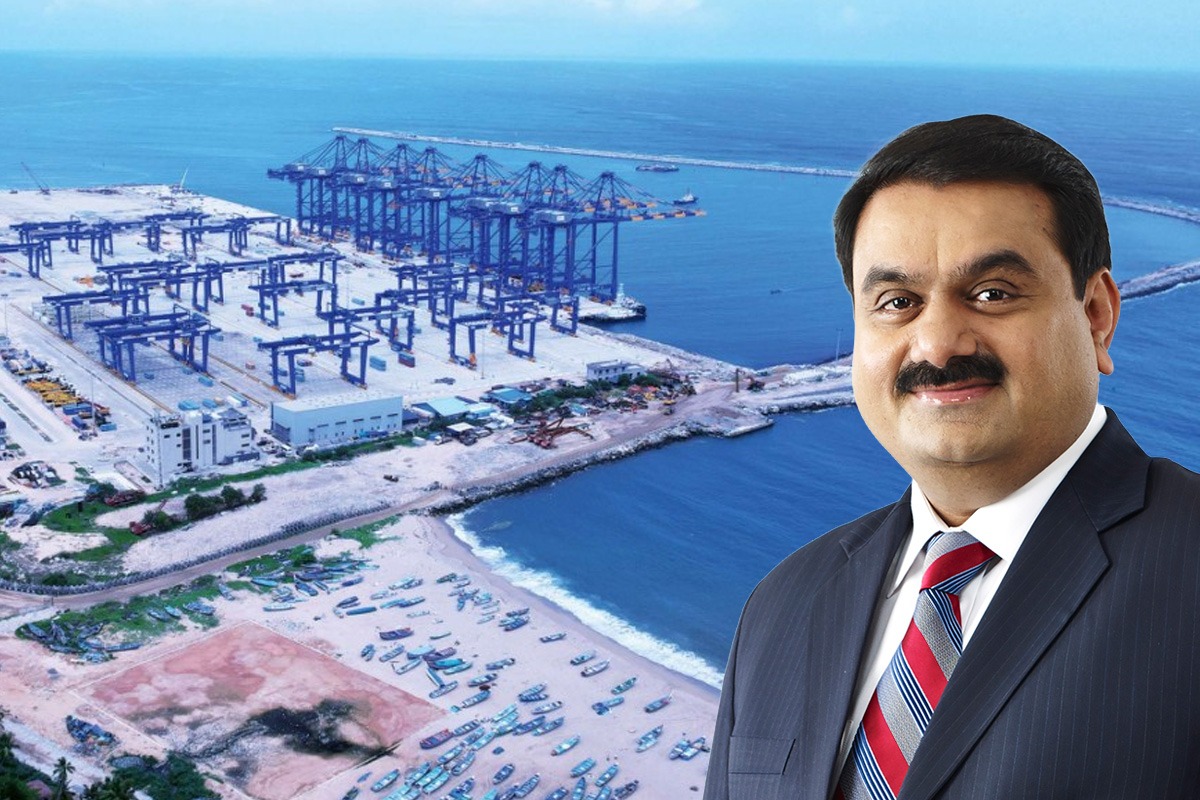
How does the Vizhinjam port that is "still to get its head above water" command a valuation of ₹27,000 crore?

Synopsis: When it comes to the Vizhinjam port, both the UDF and LDF have strengthened the Port’s ability to command high valuation in multiple ways, including pouring in ₹5,500 crore of public money. But Vizhinjam will not be a Singapore and will not be able to generate “lakhs of jobs” as politicians are claiming since it is only a transshipment hub and not a gateway port. To set the mistakes right, the Government of Kerala must ensure that “Common-user port” becomes a binding, enforceable legal obligation, not a talking point. Five other critical action points too need to be implemented.
Kerala has been sold a dream: a world-class port that will create lakhs of jobs, transform the state into a maritime powerhouse, and rival Singapore.
The reality is different. On June 30, 2026, Adani Ports and Special Economic Zone (APSEZ) announced that it was selling 49 per cent of the Adani Vizhinjam Port Private Limited (AVPPL) shares to the world’s largest shipping line—Mediterranean Shipping Company (MSC)—for ₹13,000 crore.
How does a port that is “still to get its head above water” command a valuation of ₹27,000 crore?
Well, Vizhinjam is largely financed through government grants and receives a large proportion of its revenue (68.6 per cent in FY 26 and 54 per cent in FY 25) as Operation and Maintenance (O&M) support from the Government of Kerala. It is the result of a concession agreement that a constitutional auditor called “one sided, with a substantial advantage to the Adani group,” and a corporate partnership that has systematically transferred Kerala’s public wealth into private hands. Put simply, the port is already a limited-risk, high-value proposition for any investor.
Before examining the financial and ecological costs of the Vizhinjam port, it is essential to understand what kind of port it is—and what it is not.
Vizhinjam is not a “gateway port” that handles imports and exports for Kerala’s industries. It is primarily a “transshipment port”—a hub where containers are transferred from one large vessel to another. Most of the cargo passing through it will never enter or leave the Indian market. It is foreign cargo, handled by foreign ships, destined for foreign ports.
A gateway port generates extensive backward linkages—logistics, warehousing, manufacturing, and trade finance—that create broad-based employment and revenue. A transshipment port generates primarily direct port employment and handling fees and taxes. It is footloose: shipping lines can shift their business elsewhere with relative ease.
The evidence is already visible. Recent reports reveal that the storage yard at Vizhinjam is “almost full with empty containers”—so congested that the port cannot even capitalise on a surge in demand caused by the Hormuz blockage.
When Kerala’s politicians promise “lakhs of jobs” and compare Vizhinjam to Singapore, they are confusing a transshipment hub with a gateway port. Singapore is a mixed port with a captive industrial hinterland built over sixty years. Vizhinjam, in its first phase, is a container transfer station. The two are not comparable—and the promises made on this false comparison are not credible.
Adani’s own BSE filing of June 30, 2026, lays out the numbers. AVPPL has a net worth of just ₹2,814 crore and total income of ₹843 crore. The port’s core operational revenue is only ₹440 crore, and the balance comes as O&M fee from the government of Kerala. Adani had invested ₹4,400 crore in Phase 1.
In the deal with MSC, the company’s total valuation was pegged at ₹27,000 crore—a near 900 per cent premium over the current book value. MSC’s subsidiary, Terminal Investment Limited (TiL), will now buy 49 per cent for roughly ₹13,000 crore. As mentioned earlier, the port is “still to get its head above water” financially. High valuation for such a port can only be achieved if the earnings stream is nearly risk-free, which is indeed the case as seen from the share of income that comes from the Government of Kerala and the level of grants that the company has received or is expected to receive.
For Adani, this means a triple return on its investment of ₹4,400 crore in under two years. But for Kerala—which has poured ₹5,500 crore of public money into land acquisition, breakwaters, and connectivity—this deal represents the single largest transfer of public wealth to a corporate monopoly in the state’s history. The state must also spend an additional ₹1,700 crore on rail connectivity within two years.
The transaction structure reveals the strategy. TiL will invest in two tranches: an initial USD 539 million for the 49 per cent stake, with the remaining USD 858 million invested upon completion of the port’s expansion by December 2028. Adani will retain 51 per cent equity and hold the majority of board seats. In plain English: Adani is cashing out its Phase 1 investment through the stake sale, while using MSC’s money to fund Phase 2. Once Phase 2 succeeds, Adani retains 51 per cent of a much larger asset. The state of Kerala gets nothing from this monetisation.
The Adani-MSC Tango
The BSE filing confirms that this is not a one-off transaction. It is the third major collaboration between APSEZ and MSC, following joint ventures at Mundra and Ennore ports. APSEZ CEO Ashwani Gupta explicitly stated: “I am delighted to expand APSEZ’s long-standing partnership with MSC to Vizhinjam.”
The filing lists the strategic advantages: “enhanced volume visibility,” “higher share of Bangladesh cargo,” and “strengthening presence on East Africa trade routes.” MSC will direct its vast shipping network to Vizhinjam, capturing market share from rival hubs like Colombo, Singapore, and Dubai.
This is precisely the anti-competitive concern that has drawn regulatory scrutiny elsewhere. The European Commission recently opened an in-depth Phase II antitrust investigation into MSC’s proposed acquisition of a terminal stake in Barcelona, finding that the deal “may significantly reduce competition” and allow MSC to give itself “preferential treatment” while offering competitors “higher prices, late access to the berth, limited availability of cranes and storage space.”
The same dynamic now threatens Vizhinjam. MSC already handles more than 95 per cent of the port’s container traffic. With a 49 per cent stake, MSC will effectively lock in control of India’s most strategically located transshipment hub for the next 60-plus years, squeezing out competition.
The most tangible evidence of the Adani-MSC tango is the cabotage controversy. Cabotage rules reserve domestic cargo movement for Indian-registered ships. The Ministry of Shipping relaxed the rules in 2018, but an official review committee found that the relaxation failed to attract transshipment traffic and severely harmed Indian shipping companies. When the Ministry finally decided to withdraw the relaxation, MSC publicly threatened to abandon transshipment at Vizhinjam. “MSC threatened to shift the transshipment hub out of Vizhinjam port if the cabotage relaxation was reversed,” a Delhi-based official confirmed. Within days, the central government capitulated, extending the relaxation to October 2026.
Worse, when an old, unseaworthy MSC vessel—the MSC ELSA 3—sank off the Kerala coast in May 2025, a vessel the Shipping Ministry later admitted in court was unfit for service, the state Chief Secretary, under the previous LDF government, wrote to the Centre requesting no criminal action against MSC. The reason? It would “disrupt port operations.” The safety of the sea, the lives of coastal communities, and the rule of law were sacrificed to avoid inconveniencing a corporate cartel.
Greenpeace India’s investigation revealed that 80 of 90 Swiss-owned vessels scrapped in South Asia over nine years belonged to MSC—a pattern of deploying ageing vessels under flags of convenience, shifting the burden of risk onto vulnerable coastal nations.
This windfall was not earned through operational efficiency. It was manufactured through two successive governments systematically gutting the concession agreement.
In 2016, the Comptroller and Auditor General (CAG) of India reviewed the Vizhinjam concession agreement and rendered a devastating verdict. The CAG found that the project structure had been modified after the bidding process to benefit the sole bidder. Government-funded costs were enhanced without any reduction in Adani’s viability grant.
Adani was permitted to mortgage state land for private borrowing and allowed to extend sub-leases beyond the concession period. The contract included a termination payment—thirty times the last month’s revenue—payable even at the normal end of the agreement. And a traffic-adjustment clause ensured Adani could not lose either way: for every 2 per cent shortfall in traffic, the concession period grew by a year, while excess traffic shortened it by only six months.
The CAG observed that “in spite of 67 per cent investment by the state, the financial benefit accruing to the state was not commensurate with its investments.” Yet no corrective action was taken.
Vizhinjam is the only PPP port in India where the concessionaire pays zero revenue share to the government for the first 15 years. In ports like Vallarpadam and Ennore, revenue share from Year 1 is over 30 per cent. Vizhinjam pays nothing until 2034—and even then, it starts at a paltry one per cent.
The operational period tells the same story. The standard 30-year term was extended to 40 years by the UDF government. The CAG flagged this extension as a loss of ₹29,000 crore to the state exchequer.
The employment generated by the Vizhinjam port was reported by Kiran Adani to be about 2000—both direct and indirect—with a further 5,000 promised by the decade’s end. And the income in 2025 was estimated at ₹843 crore.
Compare this with the potential erasure of the coastal ecosystem, the fishing population, their homes, the fish they harvest and the income they generate.
Thiruvananthapuram District, even in 2020-21, had a marine fisherfolk population of nearly 1.73 lakh persons and a total active marine workforce—fishers and allied workers— of about 60,000 people. The district’s annual marine fish production is in the region of 57,000 metric tonnes, and valued at over ₹1020 crore—more than that of the port!
Their traditional fishing grounds are being destroyed, and their access to the sea is being legally curtailed. The port has accelerated coastal erosion, swallowing occupational and tourist beaches of the district.
The 2022 report titled “Our Beaches, Our Sea: Heritage of Fishing Communities and Usufruct of all Citizens” was a comprehensive investigation by the Janakeeya Padana Samithi (JPS) on the impact of the Vizhinjam Port. It documents that, once port construction started in 2016, as many as 289 houses were swallowed by the sea across seven villages until 2022, with 790 cents of land lost. The rehabilitation cost was estimated at ₹92 crore.
This report also documents that the Vizhinjam Bay itself hosts an amazing marine biodiversity of 1,200 marine species because of the 15 rocky reefs. Many of these reefs were destroyed or severely damaged by dredging. The annual loss of ecosystem services is estimated at ₹2,027 crore—including fisheries, beach tourism, coastal protection, and biodiversity.
For the first time, women from fishing communities are being forced to work as domestic helpers due to loss of fishing income. Young people are migrating abroad or turning to the drug trade due to a lack of employment.
The sea was historically treated as a “community commons”—a shared resource for all. Through these contracts, the state is converting it into “State Property” and then into “Corporate Private Property” for Adani and MSC.
The CAG report from 2016 covered the original agreement signed by the UDF government. Yet when the LDF came to power, it did not renegotiate the flawed agreement. Instead, it compounded the errors. In February 2024, the LDF government signed a Supplementary Concession Agreement that formally extended the concession period from 40 to 45 years—with an additional 25-year extension clause, potentially giving Adani control for up to 85 years.
The agreement kept the revenue share unchanged: zero for the state until 2034, then a paltry 1 per cent starting that year. Adani had approached the state seeking concessions because it had failed to meet the original 2019 completion deadline. The state had leverage—it could have demanded a fair revenue share from Day 1 of the new phases or an equity stake in the port company. Instead, it gave Adani more time, a longer concession period, and released it from arbitration claims, while extracting a token ₹219 crore commitment deposit.
Both governments have then systematically transferred public wealth to private hands. The CAG’s warning in 2016 was ignored. The LDF’s opportunity to fix the agreement was squandered. And now, Kerala’s fishing communities are paying the heavy price.
Adani’s conduct in Vizhinjam is part of its broader global pattern. In the United States, the company, in May 2026, paid USD $275 million to settle the US Department of Treasury–Office of Foreign Assets Control (OFAC) sanctions for violations relating to importing Iranian-origin LPG—ignoring red flags that included falsified shipping documents and prices “sufficiently below the predominant market rate.” On the same day, the Justice Department dropped a criminal bribery case against Gautam Adani after a campaign that involved political connections and nearly 500 pages of expert opinions.
The company that cannot comply with US sanctions law is now being entrusted with India’s most strategic port.
The Vizhinjam transaction is not a one-off mistake. It is a systematic transfer of public wealth, ecological resilience, and community rights to a corporate duopoly whose global conduct has been repeatedly questioned.
While the Chief Minister has made it clear that the AVPPL’s stake sale to MSC will be examined before a decision is made, we suggest that he go further and call for a comprehensive, independent forensic audit of the concession agreements, the valuation methodology, the environmental impact assessments, and the rehabilitation packages. That audit should be judged against a simple standard: does Kerala, and do the communities who lost their commons, end up owning a real stake in what those commons became?
On present evidence, the answer is no—and putting it right means action on six fronts.
Revenue-sharing terms must be renegotiated to match the state’s 67 per cent investment, with Kerala earning a share from Year 1 of every phase, not a schedule that pays it nothing until 2034 and starts at a mere 1 per cent even then.
The Kerala government must hold real equity in AVPPL itself, rather than a fixed viability grant, so the state shares in the upside it is currently watching Adani and MSC divide between them.
All government correspondence with Adani and MSC over the cabotage relaxation and the MSC Elsa 3 disaster must be fully disclosed.
The fishing families whose livelihoods have been destroyed need a standing community trust, funded from port revenues on an ongoing basis, not one-time payouts.
“Common-user port” must become a binding, enforceable legal obligation, not a talking point.
And Parliament must scrutinise the Adani-MSC partnership for its implications for national maritime security.
None of this happened at the time the deal was struck. Without a course correction along these lines, Vizhinjam will stand as a monument to corporate greed, built on the submerged livelihoods of Kerala’s fishing communities.
The question is no longer if the port will succeed, but who owns the sea—and at what cost to the people who have lived by it for centuries.
AJ Vijayan has been a researcher and activist from Kerala’s fishing community for over five decades. For over a decade, he has been the foremost—often solitary—voice contesting the Vizhinjam Transshipment Port, documenting its adverse ecological, socio-economic and financial impacts on the state’s coastal population.
John Kurien is a reflective development practitioner who has spent five decades with fishing communities in Kerala and several Asian countries. He was a Professor at the Centre for Development Studies, Thiruvananthapuram.
(Views are personal. Edited by R Rajesh Kumar.)



