
Published Aug 24, 2026 | 3:00 PM ⚊ Updated Aug 24, 2026 | 5:10 PM

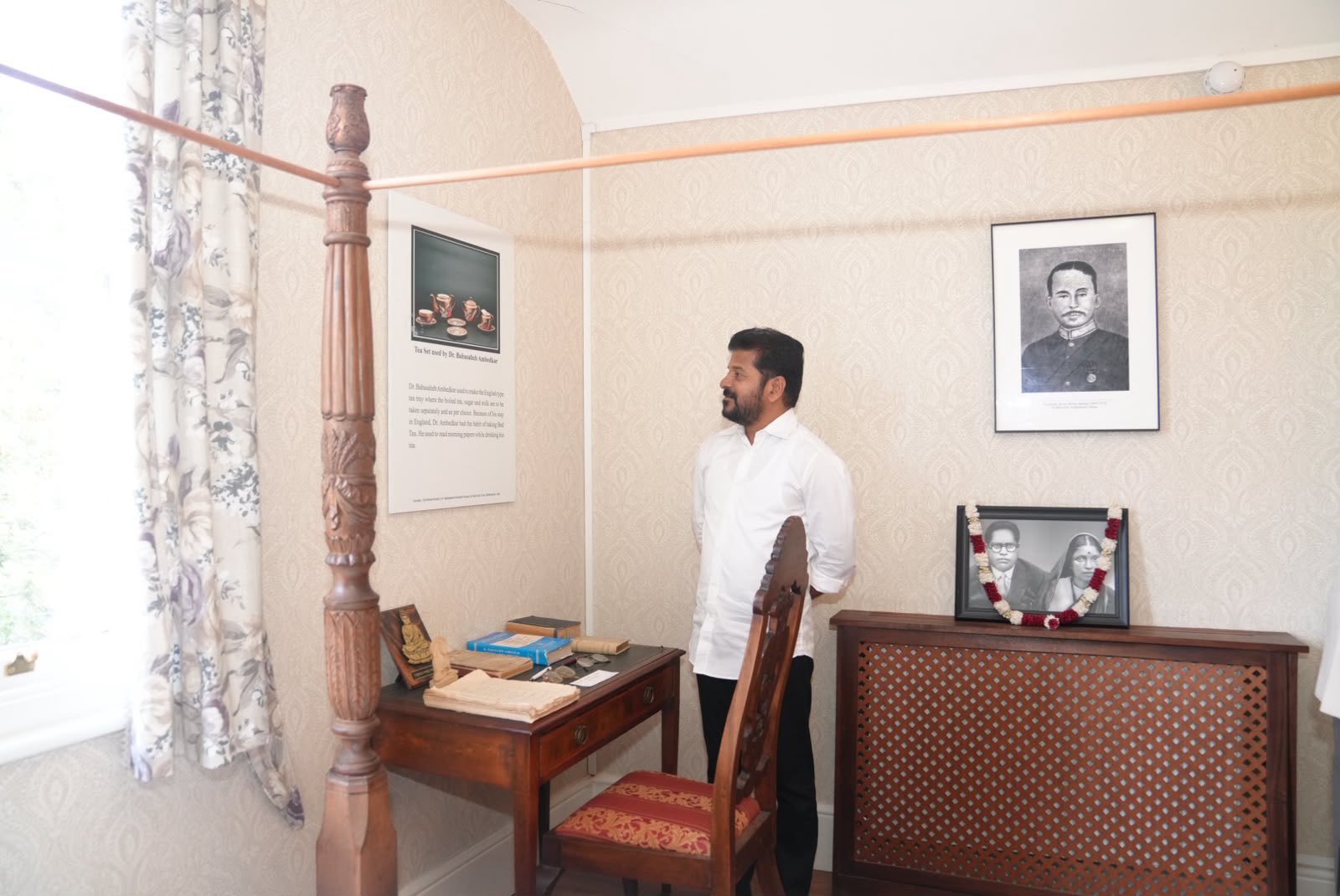
Revanth Reddy needs to look within his own party for answers. (Photo | x.com/revanth_anumula)

Synopsis: Revanth Reddy’s government might not be under immediate threat, but factionalism, delivery gaps and an aggressive digital ecosystem are steadily intensifying the political pressure on him.
For Telangana Chief Minister Revanth Reddy, the most difficult battle may no longer be outside his Congress party. It may be within it.
Less than three years after the party came to power in Telangana, internal dissensions, competing ambitions and public squabbles are beginning to sit alongside a second, more consequential challenge—the growing gap between the promises that brought the Congress to power and the expectations of the people. Now, an increasingly aggressive ecosystem of social media platforms and YouTube channels that can amplify every disagreement, allegation and administrative failure within minutes is further complicating the political landscape.
The Congress came to power in 2023 by presenting itself as an alternative not merely to the Bharat Rashtra Samithi but to the style of governance associated with it. Revanth Reddy’s campaign was built around change, guarantees and the promise of a more responsive administration. That mandate gave the new government considerable political capital. The question now is whether internal friction is consuming that capital faster than governance can replenish it.
The signs of strain within the Congress cannot simply be dismissed as routine factionalism. Disagreements among Ministers, legislators and senior leaders, complaints about coordination, competing claims to political influence and occasional public exchanges have repeatedly drawn attention. Congress has historically accommodated multiple power centres, and differences within a large political organisation are not inherently unhealthy. But when disagreements become public, they begin to affect perceptions of authority. A government cannot project administrative coherence when its political leadership appears preoccupied with settling its own equations.
The problem is compounded by the ambitions that naturally emerge after an electoral victory. Ministers and legislators begin to calculate their individual political futures. Organisational leaders seek greater influence. Senior leaders assert the power of their constituencies. Aspirants look beyond the immediate term. Unless the Chief Minister is able to keep these competing interests within an effective political framework, factional competition can slowly become a governance problem.
That brings the larger question of performance into focus.
The Congress made sweeping commitments to farmers, women, youth and other sections. The government has implemented several significant measures and has achievements to cite, including the crop-loan waiver, welfare expenditure and government recruitment. But political promises are ultimately judged not by government announcements but by the experience of beneficiaries.
For farmers, questions surrounding the reach, timing and implementation of schemes such as Rythu Bharosa, along with expectations relating to crop bonuses and support for tenant farmers and agricultural labourers, continue to provide political ammunition to the Opposition. It would be inaccurate to describe the government simply as “anti-farmer”; its expenditure and interventions in the agricultural sector contradict such a sweeping characterisation. But the perception that important assurances remain incomplete can be politically damaging.
The youth question is sharper still. Government recruitment has provided some relief, but the aspirations of Telangana’s educated young population extend far beyond public-sector jobs. They want timely examinations, predictable recruitment calendars, private-sector employment and an economy capable of absorbing educated manpower. The government risks losing the political narrative if every employment question is reduced to the number of government appointments made.
And then there is the new battlefield: social media.
Political communication in Telangana is no longer controlled by newspapers, television channels and party press conferences. YouTube channels, independent commentators, influencers and social media activists have created an alternative political ecosystem. Their reach can be enormous, their response time immediate and their narratives difficult for conventional political machinery to contain.
This is not necessarily a negative development. Social media can expose genuine failures, question those in power and widen democratic participation. But it also rewards speed, confrontation and sensationalism over verification. A ministerial disagreement, an angry exchange in the Assembly, a farmer’s grievance or an allegation of corruption can be edited into a short video and circulated far beyond its original context.
For a government already facing internal disagreements, this can be particularly damaging. What might once have remained an intra-party dispute can now become a public spectacle. What might have been an unverified allegation can acquire the appearance of fact through repetition. Equally, the government cannot dismiss the entire ecosystem as “fake news” without risking the impression that it is unwilling to engage with uncomfortable questions.
This makes the handling of corruption allegations particularly important. Allegations of irregularities in contracts, tenders, land transactions and government projects have become a recurring feature of political discourse. These allegations must be handled with caution. An Opposition charge is not evidence, and political accusations cannot be converted into findings of guilt. But neither can every allegation be dismissed as propaganda. A government that came to power promising clean administration has a particular obligation to subject credible allegations to transparent and independent scrutiny.
The political pincer is consequently tightening. Internal dissension weakens organisational cohesion. Unfulfilled or delayed promises erode public confidence. Employment anxieties alienate the young. Corruption allegations raise questions about probity. Social media and YouTube can then connect all these grievances into a single political narrative.
Yet Revanth Reddy is not facing an immediate threat to his government. The Congress retains a strong Assembly majority. The BRS is still attempting to recover from defeat, while the BJP is seeking to enlarge its political footprint. There is no ready-made alternative capable of converting every government weakness into an immediate electoral challenge.
The danger is subtler: the gradual erosion of political authority.
The response cannot be another cycle of political counter-attacks. The Congress needs tighter internal discipline, faster delivery of major promises, greater transparency in governance and a more credible employment strategy. It also needs to understand that the new political battlefield cannot be conquered merely through traditional publicity machinery. The government must learn to communicate directly, respond quickly to legitimate criticism and, above all, produce evidence of performance.
The Congress once benefited from public impatience with the previous government. It cannot afford to become complacent about the same impatience now.
The pincer around Revanth Reddy is not yet closed. One arm is inside his party, another is being shaped by public expectations, while a rapidly expanding digital ecosystem is tightening the pressure from outside. Whether these forces remain separate grievances or converge into a broader political backlash will depend on how effectively the Chief Minister restores cohesion, credibility and delivery.
For now, the question is not whether the government can survive criticism. It is whether it can prevent criticism from acquiring a life of its own.
Also Read:
Fifth-grader from Telangana who made social media stop and listen—and what he teaches us
Promises kept, promises broken: How the Congress government in Telangana has fared
(Edited by R Rajesh Kumar.)



