

Published Jul 31, 2026 | 2:39 PM ⚊ Updated Jul 31, 2026 | 3:18 PM

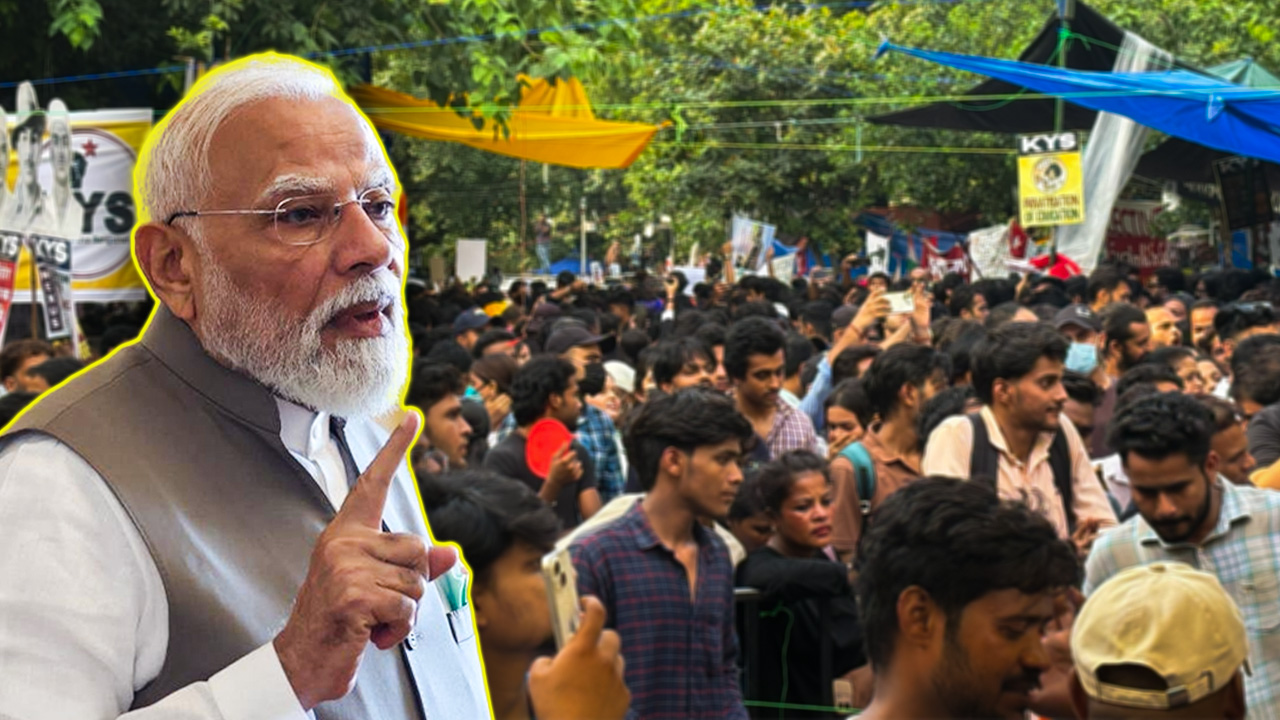
Winning over Gen Z may prove a big challenge for PM Modi.

Synopsis: Gen Z seized the narrative in the manner only they could during the recent protests that forced the government to bow down. Now, the Centre is trying to win them over with “appeals to the youth” even as some arms of the government and the party go on the attack. But such hollow attempts won’t do anymore…
First came neglect, then came an iron-fisted crackdown and finally came the yielding by the Narendra Modi government over protests against a broken examination system, primarily by India’s young—the Gen Z. The protests compelled the BJP to do something it never does: force a resignation from a reluctant senior minister.
But for a party that cannot take a loss lying down, the BJP is doing everything it knows to regain the narrative.
While the Centre cracks down on Instagram content and accounts questioning, mocking, criticising the government or its policies, PM Modi is asking colleagues to join in on his reel-making journey to “appeal to youth”. While friendly media villainises protestors and whitewashes police brutality and sermonises the youth, BJP cadres across the country are filing cases against young protestors for their “objectionable language”.
BJP’s MPs like Kangana Ranaut are making crass comments aimed at shaming the young women of India. Senior RSS ideologues are calling for young protestors to be shot dead. BJP’s ‘young faces’ like Bansuri Swaraj and Tejasvi Surya, meanwhile, are using what they think is “cool GenZ language” in their parliament speeches, interspersing it with “Delulu, Clocking it, FOMO”.
All of it is aimed at the young and the restless—GenZ—who, along with their online and offline presence, brought the mighty Narendra Modi government to its knees with the resilience, humour and blind courage that only the young possess. The attempts simply aren’t landing.
One only needs to see the comments, responses and “stitch coming” videos for BJP MPs’ comments and parliament speeches, RSS members’ statements and PM Narendra Modi’s own reels. No wonder the government is going all out to censor content on Instagram—the platform of India’s GenZ.
Days after Dharmendra Pradhan resigned and handed a big victory to young protestors, the BJP decided to come out with an ad campaign to firefight GenZ’s mockery and dismissal of the BJP and the Modi government. It achieved the opposite.
𝐏𝐚𝐬𝐭 𝐯𝐬 𝐏𝐫𝐞𝐬𝐞𝐧𝐭: 𝐓𝐡𝐞 𝐑𝐞𝐚𝐥 𝐓𝐚𝐥𝐤 💯
पहले का इंडिया… स्कैम, ब्लास्ट और अस्थिरता।
आज का इंडिया… हाथ में स्मार्टफोन, मेट्रो, एक्सप्रेसवे, नए एयरपोर्ट्स और IIT, IIM, AIIMS का तेज़ विस्तार।
दशकों तक रुका विकास, अब तेज़ रफ्तार से आगे बढ़ रहा है। जब देश मजबूत… pic.twitter.com/mpn53MKoru
— BJP (@BJP4India) July 28, 2026
The ad showed an ‘all-knowing’ older man, seemingly in his late-thirties, lecturing ‘young unaware’ youth.
The ad captures the BJP’s problem perfectly.
The older man in his late-thirties lecturing young men and women yet to cast their first vote is the BJP’s quintessential target voter—or has been all these years. A generation has changed.
The contempt, anti-incumbency, distaste that millennials perhaps felt for the UPA, which aided the BJP led by Modi in 2014, is the same contempt Gen Z feels for the BJP now, except that their contempt is compounded by disgust towards communal politics, compromised media and moral corruption by those in power.
The BJP has been the only party and Narendra Modi has been the only prime minister that Gen Z has seen in power all their self-aware life.
Even the eldest among Gen Z, born in 1997, were 17 years old when the BJP came to power, and Narendra Modi first became Prime Minister in 2014. The youngest ones, born in 2014, are just about 12 years old now. If familiarity breeds contempt and conventional wisdom that the young challenge established hierarchies and authorities are taken at face value, one only needs to add anti-incumbency to the mix, and you will see that it isn’t a surprise that India’s Gen Z has contempt for the BJP and Narendra Modi. The reality, however, is more nuanced.
“Whataboutery” was a great tool for the BJP to appeal to its vote bank and constantly blame previous governments dating back to Jawaharlal Nehru. Millennials and Generation X could be swayed by it since they saw other parties and people in power. If there was no memory of it, a WhatsApp text chain could create one convincingly. If a WhatsApp forward couldn’t do it, the friendly mainstream media could sow seeds of hate, villainise anyone inconvenient and manipulate public opinion.
The same whataboutery, media narratives, and WhatsApp forwards have zero impact on Gen Z. For one, TV news has lost all credibility among India’s young. News content creators have become the go-to source of news and views for the young. For a generation raised on videos, WhatsApp forwards are passe. Rebellious, resilient and argumentative, India’s Gen Z isn’t blindly mimicking their familial or societal political and ideological choices.
Other than ideological preference, opposition parties benefit from voters who are tired of seeing the party in power do little to nothing to make a difference to their lives. For a majority of vocal GenZers, that party in power is the BJP.
India’s government-friendly newsrooms may want to hype the PM and his men instead of holding them accountable, celebrate Modi’s temple visits or foreign medals instead of asking questions about broken systems, failing economy, growing distress, joblessness, communal tensions and compromised institutions, but India’s young are holding the government responsible for it all in their own witty, audacious style.
In a way, the BJP’s obsessive need to control the narrative with the help of mainstream media that asks no tough questions or demands accountability seems to have compelled a whole section of Indians to circumvent the system. Digital platforms became the avenue to vent, ask questions, ridicule and call out hypocrisies, and helped young Indians find their voice.
When youngsters spilled onto the streets earlier in July, it wasn’t just about the NEET paper leak. It was a collective expression of contempt against a government in power for three terms that has failed to give answers, take questions, uphold transparency and look beyond electoral math. Just borrowing their lingo for parliament speeches, making reels for ‘friends’ on Instagram won’t suffice if the government, or even the opposition parties, truly intend to win the trust of India’s young.
(Edited by R Rajesh Kumar.)



