
Published Oct 01, 2026 | 3:22 PM ⚊ Updated Oct 01, 2026 | 3:22 PM

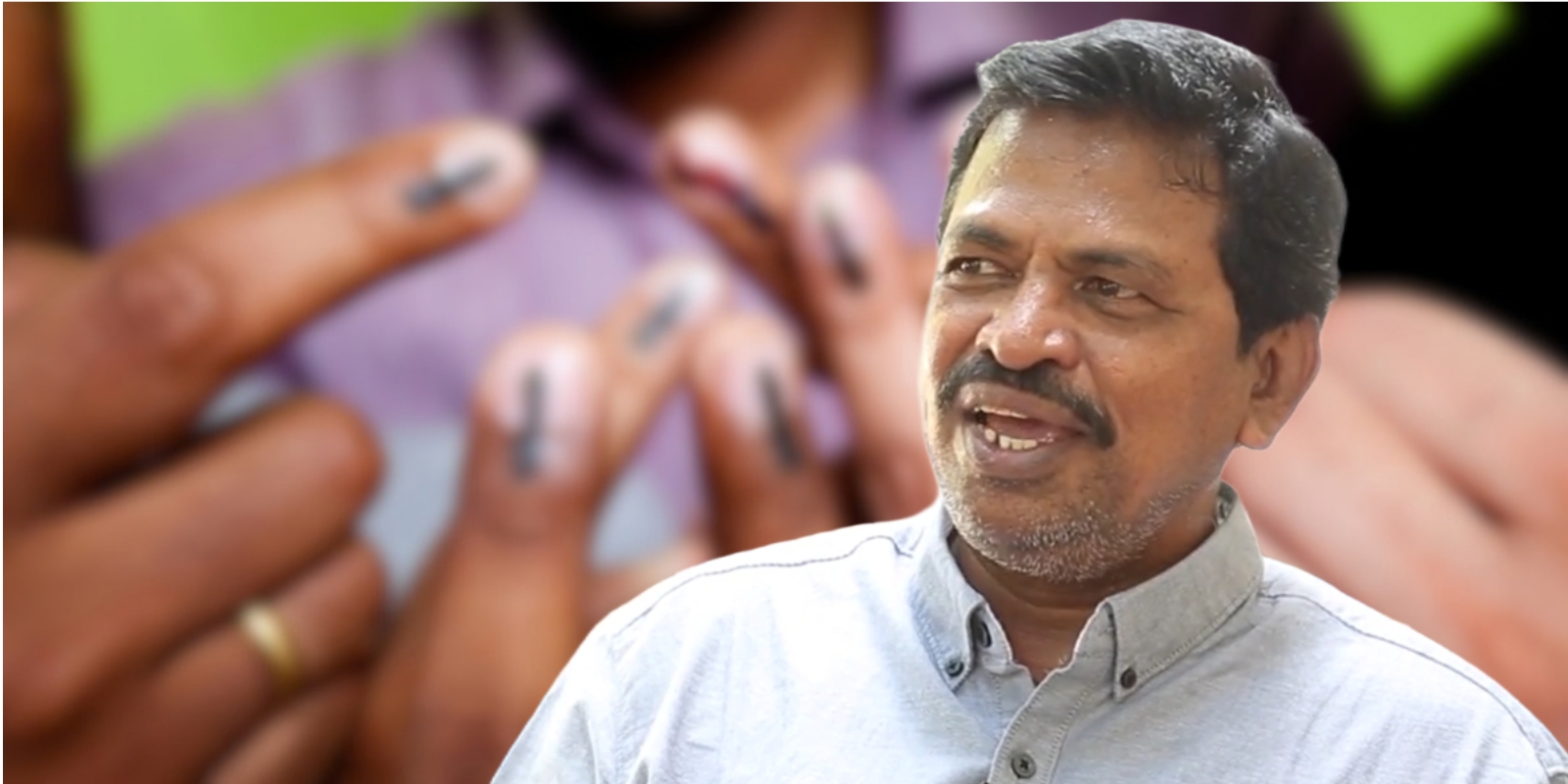
Lanka Papireddy (Screengrab/ iDream/youtube)

Synopsis: More than 760 Maoists have surrendered their arms since 2024. Their senior leaders have articulated a shift from armed conflict to contesting elections. With the CPI and CPI(M) reaching out and Jana Telangana preparing to contest Graduate MLC elections, the question is whether this coming together matures into a genuine third alternative.
Are the people of Telangana viewing parliamentary parties owing allegiance to Communists as the third alternative in the wake of the Maoist downfall? This question has acquired renewed significance following the near-complete disintegration of the CPI (Maoist) armed presence in the state.
Between 2024 and mid-2026, more than 760 cadres surrendered their arms. Among them were Politburo member Tippiri Thirupati alias Devji, Central Committee members Malla Raji Reddy alias Sangram and Pulluri Prasad Rao alias Chandranna, together with the entire leadership of the Telangana State Committee.
By April 2026, the state police formally declared Telangana free of active armed Maoist formations. The organisational apparatus that had long linked northern Telangana with the Dandakaranya region stood neutralised, while rehabilitation measures providing monetary assistance, housing support and reintegration facilities facilitated the transition of former underground cadres into civilian life.
The surrenders, however, did not signify the renunciation of ideology. Senior leaders who emerged from the forests have consistently articulated a distinct position: they seek to remain Maoists in conviction and political orientation, yet within the framework of the Constitution.
After he met Chief Minister A Revanth Reddy, Devji publicly called for the withdrawal of the ban on the CPI (Maoist). He declared: “When we say we will work legally, automatically PLGA (People’s Liberation Guerrilla Army) will not exist.”
He further clarified: “Dissolving the military wing is different from dissolving the party.”
On his personal decision to surface, Devji stated: “I will continue my political life of struggle, using my ideology and what I believed for decades.”
Sangram and Chandranna expressed parallel views.
Chandranna, after forty-five years underground, emphasised the continuation of the struggle for the people through open and democratic channels. Collectively, these leaders have advocated the transformation of the movement into a constitutional political entity rather than the abandonment of its ideological foundations.
Their stance represents not a surrender of principle but a deliberate shift from armed conflict to contesting elections under the Constitution.
This orientation has created fresh opportunities for both established Communist parties and newly emerging formations.
The CPI and the CPI(M), which have experienced marked electoral decline since the bifurcation of the state, have extended formal invitations to surrendered cadres to participate in democratic politics and to reinforce mass organisations. Their organisational strength, nevertheless, remains confined largely to limited pockets in Khammam and Nalgonda, while their capacity to attract the younger generation continues to be constrained.
A meeting of Communists convened under the leadership of Chandrakumar acquired particular relevance in this setting. The assembly brought together representatives of parliamentary Left parties and progressive activists to examine the consequences of the Maoist collapse and the prospects of constructing a broader democratic alternative.
Participants considered the means by which the experience and commitment of former revolutionaries — especially those who insist upon remaining Maoists within a constitutional framework — might be integrated into open politics without the legal and political liabilities of the proscribed organisation. The deliberations highlighted the imperative of Left unity, the necessity of addressing persistent questions of land rights, employment and social justice, and the requirement of formulating a programme clearly distinguishable from both the ruling Congress and the opposition Bharat Rashtra Samithi.
Concurrently, the proposed Jana Telangana Party has emerged as the most tangible expression of former revolutionaries entering the electoral arena. Spearheaded by Lanka Papireddy (Lachchanna), advocate Balla Ravindranath and Gurijala Ravindar Rao, the party draws principally upon cadres who devoted decades to the revolutionary movement and have subsequently returned to civilian life. Progressive elements associated with the Congress and the Bharat Rashtra Samithi, together with civil-rights activists, are reported to be associated with the initiative.
Although the Devji-Sangram-Chandranna group is not formally affiliated with this formation, the party’s appearance reflects the same underlying impulse: to pursue social justice through democratic instruments. Jana Telangana is preparing to contest the forthcoming Graduate MLC elections in constituencies encompassing Warangal, Khammam, Nalgonda, Hyderabad, Ranga Reddy and Mahabubnagar.
Its policy orientation rejects an exclusive emphasis upon GDP growth and large-scale projects, and instead prioritises free education and healthcare, employment for the youth, and the freedom to question authority as authentic indicators of development. An application for formal registration with the Election Commission is anticipated in the near future.
The convergence of the Chandrakumar-led meeting, the outreach of the CPI, the explicit constitutional orientation articulated by Devji, Sangram, Chandranna and their colleagues, and the organisational efforts of Jana Telangana suggests the possible emergence of a renewed democratic Left formation grounded in both parliamentary tradition and the practical experience of former revolutionaries. Whether this coming together matures into a genuine third alternative will depend upon several decisive factors.
The electorate of Telangana has repeatedly demonstrated a preference for parties capable of delivering concrete welfare measures and administrative competence. Ideological pedigree alone will prove insufficient. Sustained organisational work focused upon land, irrigation, education and employment, conducted free from the legacy of violence, will ultimately determine political relevance.
The chapter of armed Maoism in Telangana has concluded with the giving up of weapons. The question that now confronts the state is whether Communists and former revolutionaries — many of whom continue to identify themselves as Maoists operating within the constitutional framework, as Devji’s own statements affirm — can inaugurate a new chapter on the terrain of democratic politics and present the electorate with a coherent and non-violent alternative.
The months ahead, marked by the Graduate MLC contests and continuing efforts towards Left unity, will furnish the first substantive indications.
Also Read:
After 1,000 days in office, Revanth bets on ‘visible impact’ taking on KCR’s infra legacy
Telangana tangle: When thieves fall out, the truth comes out!
Bypolls are not referendums: What 12 years of electoral data in Telangana and Andhra Pradesh reveal
(Views are personal. Edited by R Rajesh Kumar.)



