
Published Sep 24, 2026 | 7:00 AM ⚊ Updated Sep 24, 2026 | 9:51 AM

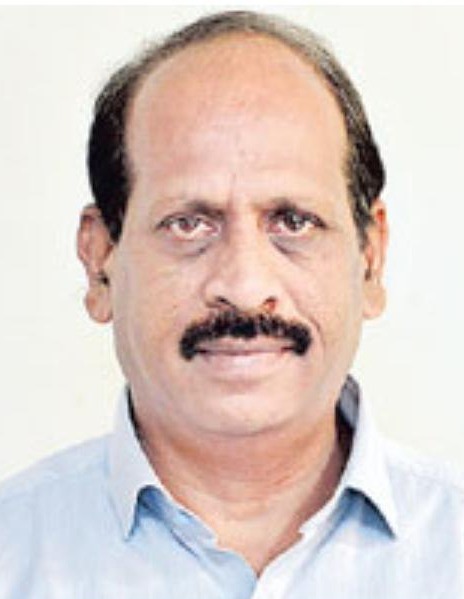
Former Khairatabad MLA Danam Nagender moved the Supreme Court against his disqualification by the Telangana HC, but to little avail. (File photo)

Synopsis: Electoral outcomes in Telangana and Andhra Pradesh over the past twelve years show that by-election and local body election results have frequently diverged from subsequent Assembly election verdicts. The experiences of Nandyal, Telangana’s by-elections and local body elections, and Jubilee Hills show why a by-election or local body election cannot automatically be treated as a referendum on a state government’s performance.
A People’s Pulse Research Organisation analysis of electoral outcomes in Telangana and Andhra Pradesh over the past twelve years finds that by-election and local body election results have frequently diverged from subsequent Assembly election verdicts. The evidence raises an important question: can these elections really be treated as a referendum on the performance of a state government?
The political spotlight in Telangana is once again turning towards Khairatabad. Following the Telangana High Court’s decision disqualifying sitting MLA Danam Nagender on September 18, the constituency is heading towards a by-election, subject to the ongoing legal process. Nagender, through senior advocate Mukul Rohatgi, moved a petition on September 21 challenging the verdict in the Supreme Court.
At the same time, Andhra Pradesh is preparing for its local body elections. Naturally, political circles and sections of the media have begun looking at these elections as possible indicators of the broader political mood in the two Telugu states.
Some are even describing the Khairatabad by-election as a referendum on the Telangana government. But is a by-election really a referendum? Can the result of a local body election genuinely be treated as a verdict on the performance of a state government? People’s Pulse Research Organisation examined the results of by-elections, local body elections and subsequent Assembly elections in both Telugu states from the period following bifurcation, along with relevant pre-bifurcation electoral trends. The findings present a considerably more complicated picture.
The constituency has not followed a permanently fixed political preference. Since 2009, Danam Nagender has represented the constituency three times, winning in 2009 as a Congress candidate and in 2018 and 2023 as a BRS candidate. BJP’s Chintala Ramachandra Reddy won in 2014, when BJP and TDP were allies.
The vote shares have also fluctuated considerably. Congress secured around 39.1 per cent in 2009 but fell to around 22.4 per cent in 2014. BRS reached 44.6 per cent in 2018, while BJP secured 36.9 per cent in 2014. The constituency’s own electoral history therefore demonstrates that voter preferences can change significantly from one election to another.
The experience of Nandyal in Andhra Pradesh provides an even stronger illustration of why a by-election should not automatically be interpreted as a referendum. In the 2017 Nandyal by-election, the then ruling Telugu Desam Party candidate Bhuma Brahmananda Reddy defeated YSRCP candidate Silpa Chandra Mohan Reddy by more than 27,000 votes. The contest attracted enormous political attention, with YSRCP president YS Jagan Mohan Reddy spending an extended period in the constituency and personally leading the campaign. Despite the intensity of the campaign, TDP won comfortably.
Yet when the people of Andhra Pradesh went to the polls in the 2019 Assembly election, the political picture was completely different. YSRCP won Nandyal and went on to win 151 of the state’s 175 Assembly seats, while TDP was reduced to just 23 seats. The party that had won the Nandyal by-election with a substantial margin was decisively defeated in the subsequent Assembly election. The Nandyal example makes one point particularly clear: the circumstances that determine a by-election need not be the same that determine an Assembly or general election.
During its tenure, YSRCP achieved overwhelming victories in several local body elections. In the 2021 rural local body elections, YSRCP-backed candidates won a large majority of ZPTC (Zilla Parishad Territorial Constituency) and MPTC (Mandal Parishad Territorial Constituency) seats and secured control of all 13 zilla parishads. The party also performed strongly in urban local body elections. If these results were treated as a direct measurement of the government’s statewide popularity, one might have expected the same political dominance to continue into the 2024 Assembly election.
Instead, the 2024 verdict was dramatically different. YSRCP won only 11 of the 175 Assembly seats, while the TDP-led alliance won 164. The contrast between the two sets of results is one of the clearest examples in recent Andhra Pradesh politics of why local body victories cannot automatically be converted into predictions of general election outcomes.
Telangana’s experience since 2014 tells a similar story. During the BRS government’s tenure, seven Assembly constituencies went to by-elections: Narayankhed, Palair, Huzurnagar, Nagarjuna Sagar, Dubbak, Huzurabad and Munugode. BRS won five of these contests, while BJP won Dubbak and Huzurabad.
On the surface, these results indicated considerable electoral strength for the ruling party. However, the 2023 Assembly election produced a fundamentally different outcome, with Congress coming to power.
The Palair experience is particularly revealing. BRS leader Thummala Nageswara Rao won the 2016 by-election, but lost the same constituency in the 2018 Assembly election. A victory in a by-election, therefore, did not guarantee continued support in the next general election.
The same distinction was visible in Telangana’s local body elections. In the 2019 rural local body elections, candidates backed by the then ruling TRS won thousands of gram panchayats and dominated the ZPTC and MPTC contests. Yet four years later, the BRS lost the Assembly election, and the government changed hands. Grassroots electoral dominance at one point in time did not become a permanent political mandate.
The November 2025 Jubilee Hills by-election offers another recent reminder. BRS had won the constituency in the 2023 Assembly election, but Congress subsequently won the by-election with a margin of 24,729 votes. The BRS campaign saw an intensive mobilisation of the party’s senior leadership, with BRS working president KT Rama Rao (KTR) and senior leader T Harish Rao, along with the wider BRS organisational machinery, actively campaigning in the constituency. Yet the party lost a seat it had won only two years earlier. The episode demonstrated once again how quickly the political equation in a single constituency can change.
The historical record before bifurcation also deserves attention. Between 2009 and 2014, the Telugu Desam Party faced difficult results in several by-elections in undivided Andhra Pradesh and even lost deposits in some contests. Yet after the formation of the new state of Andhra Pradesh, TDP emerged as the largest party in the 2014 Assembly election. A weak performance in by-elections therefore did not prevent a substantially different outcome in the subsequent general election.
The answer lies partly in the nature of these elections. A by-election is fought in one constituency and usually arises because of a specific event such as the death, resignation or disqualification of a sitting legislator. Local candidate popularity, sympathy, personal relationships, factional equations, campaign intensity and the perception that a ruling party representative may bring development to the constituency can all influence voter behaviour.
Local body elections are even more closely connected to everyday local issues. Roads, drainage, welfare delivery, personal relationships, local leadership and access to government officials can matter considerably. A voter may support one party in a panchayat or municipal election for reasons that have little connection with the issues that ultimately determine their vote in an Assembly election.
There have also been repeated allegations by political parties across the two states regarding money power, intimidation and misuse of official machinery during elections. Such allegations need to be assessed individually and should not automatically be treated as facts. At the same time, they underline an important point: the political environment surrounding a by-election or local election can be very different from that of a statewide general election.
This brings the discussion back to Khairatabad and Andhra Pradesh’s forthcoming local body elections. The Khairatabad result will undoubtedly provide useful information about the political mood of that constituency. The Andhra Pradesh local body elections will likewise reveal important information about the organisational strength and grassroots support of political parties across local constituencies. But neither result, by itself, can establish the political mood of an entire state.
The electoral record examined by People’s Pulse Research Organisation provides enough evidence to question the practice of treating every by-election or local body election as a referendum. Nandyal did not presage the 2019 Andhra Pradesh Assembly election. YSRCP’s dominance in local body elections did not presage its performance in 2024. BRS’s victories in several Telangana by-elections and local body contests did not prevent the change of government in 2023. Jubilee Hills subsequently demonstrated that even a constituency that voted one way in a general election can vote differently in a by-election.
For political parties, particularly those in power, the larger lesson is therefore not simply about winning every election. Elections should also be treated as opportunities to understand what voters are actually communicating. A free, fair and impartial election provides a government with something more valuable than a temporary victory: an authentic measure of public sentiment.
Khairatabad may become an important political contest. Andhra Pradesh’s local body elections may also generate significant political discussion. But calling either a statewide referendum would go beyond what the electoral evidence can establish. A by-election reflects the political choices of a constituency at a particular moment. A local body election reflects grassroots political dynamics. A general election brings together a much wider range of issues, leadership choices, alliances and public concerns.
The central finding of this People’s Pulse Research Organisation study is simple: winning a by-election or dominating local elections does not guarantee victory in a general election. Political parties that mistake a temporary electoral victory for a permanent public mandate risk misunderstanding the very voters whose mandate they seek.
Also Read:
Telangana’s quiet double-engine Sarkar — Part 3: What the Congress and BJP protect
Even a dead worker’s family wasn’t spared: The decline and fall of Telangana’s police
Ageing India, faster-ageing Telangana: Opportunity or trouble?
(Edited by R Rajesh Kumar.)



