

Published Sep 28, 2026 | 3:30 PM ⚊ Updated Sep 28, 2026 | 3:53 PM

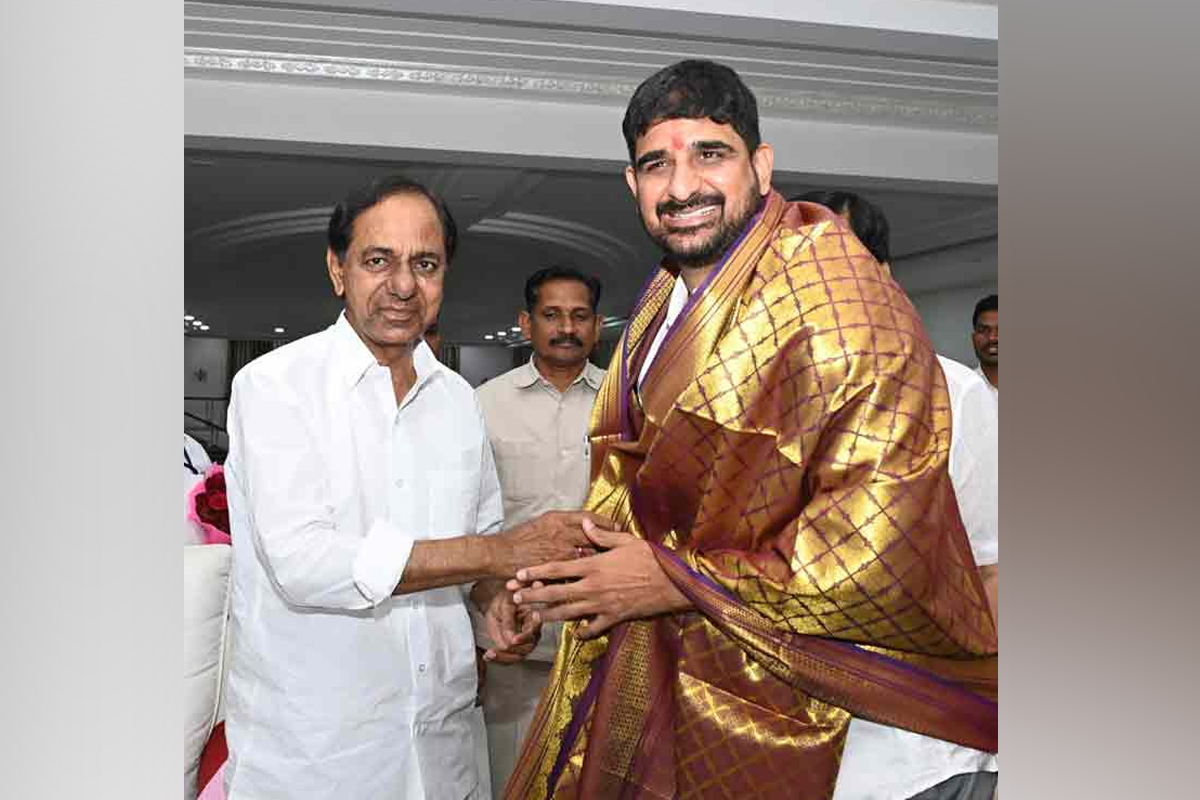
File photo of BRS chief KCR shaking hands with Padi Kaushik Reddy, as he assumed charge as the Government Whip in Telangana Legislative Council.

Synopsis: The Kaushik Reddy proceedings raise a larger constitutional question: can an Ethics Committee’s inquiry into an MLA’s conduct ultimately bring his membership to an end? The issue is where Telangana draws the line between legislative discipline and an electoral mandate.
The proceedings against Huzurabad MLA Padi Kaushik Reddy before the Telangana Legislative Assembly’s Ethics Committee have opened a larger constitutional question than the immediate controversy surrounding his conduct: can an Assembly committee, acting on allegations of misconduct, ultimately bring an elected MLA’s membership to an end?
The answer requires a careful distinction between disciplinary action inside the legislature and constitutional disqualification from an elected office. An Ethics Committee may examine the conduct of a legislator, seek an explanation, scrutinise evidence and place its findings or recommendations before the competent authority or the House. But the committee’s proceedings, by themselves, do not automatically extinguish an MLA’s membership or make his constituency seat vacant.
The Kaushik Reddy case has assumed significance precisely because the issue is not merely about parliamentary etiquette or Assembly decorum. It concerns the limits of legislative disciplinary power when the proposed consequence could affect the electoral mandate of an entire constituency.
The controversy arose from the March 29 Assembly proceedings, during which allegations were made regarding Kaushik Reddy’s conduct, including an altercation involving Congress MLA Kadiyam Srihari. The matter was subsequently taken up by the Ethics Committee, which sought Kaushik Reddy’s explanation. The committee’s proceedings have since continued, with the hearing being deferred after members sought fuller video material relating to the incident.
That procedural stage is important. An inquiry into alleged misconduct cannot, by itself, be treated as a finding of constitutional disqualification. Nor can an adverse finding by an Ethics Committee automatically translate into the loss of an Assembly seat.
The Constitution provides specific grounds under which a member of a State Legislative Assembly can be disqualified. Article 191 deals with such disqualifications, while the Tenth Schedule establishes a separate mechanism for disqualification on grounds of defection. Statutory provisions can also create disqualifications in specified circumstances. None of these should be casually conflated with an Ethics Committee inquiry into conduct inside the House.
This distinction becomes even more important when the possibility of expulsion enters the discussion.
Legislatures possess substantial powers to protect their privileges, authority and functioning. In exceptional circumstances, legislative bodies have exercised the power to expel members. But expulsion is an extraordinary measure because it does not merely punish an individual legislator. It removes the representative chosen by voters and consequently affects the representation of an entire constituency.
The Supreme Court, in cases like Special Reference No. 1 of 1964 (Keshav Singh’s case) and Raja Ram Pal v. Honourable Speaker, Lok Sabha (2007), has recognised legislative powers of privilege while also subjecting their exercise to constitutional limitations. Its jurisprudence makes clear that legislative privilege cannot become an unlimited reservoir of power capable of being invoked without regard to constitutional principles, procedural fairness or the nature of the alleged misconduct.
This is where the Kaushik Reddy controversy enters more sensitive territory. If the Ethics Committee recommends disciplinary action, the next question is not simply whether the House is angry with the member. The question is what punishment is legally available, who is authorised to impose it and whether the proposed punishment is proportionate to the conduct established.
There is a substantial difference between reprimanding, censuring or suspending an MLA and permanently removing him from the Assembly. The latter effectively interrupts the electoral mandate given by the people of Huzurabad and ordinarily leads to the need for a fresh electoral process.
The history of legislative expulsions also shows why courts have been cautious about allowing legislatures to use disciplinary powers without clear constitutional boundaries. The power to maintain order is essential to the functioning of a democratic legislature. But the power to remove an elected representative cannot be treated as an ordinary disciplinary tool.
That does not mean an MLA enjoys immunity from legislative discipline. Membership of an elected House carries responsibilities as well as privileges. An MLA who violates the rules of the House or engages in conduct that undermines legislative functioning can legitimately face disciplinary proceedings. The Assembly must be able to protect its dignity and ensure that proceedings are conducted in an orderly manner.
But the severity of the consequence matters.
A disciplinary action directed at conduct inside the House is one thing. Terminating the membership of the elected representative is another. The further the proposed punishment moves towards extinguishing the electoral mandate, the greater the constitutional scrutiny that can reasonably be expected.
Therefore, in the Kaushik Reddy matter, the Ethics Committee’s role should not be misunderstood. The Committee can inquire, assess and recommend within the authority conferred upon it. But it cannot simply declare that an MLA has ceased to represent his constituency merely because it has found his conduct objectionable.
If the matter ultimately reaches the Assembly for consideration of a severe penalty, the constitutional questions will become sharper: Was the procedure fair? Was the conduct sufficiently connected with the functioning and privileges of the House? Was the proposed punishment authorised by law and the Assembly’s rules? Was the punishment proportionate? And, crucially, was the extraordinary step of removing an elected representative justified by the nature of the misconduct established?
These questions are larger than Kaushik Reddy himself.
An Assembly must have the authority to discipline its members. At the same time, the electoral mandate cannot be treated as collateral to every disciplinary dispute within the House. The Constitution creates different routes for disqualification, and those routes cannot be replaced by political expediency or procedural shortcuts.
The Kaushik Reddy proceedings could therefore become an important test of where Telangana draws the line between legislative discipline and electoral representation. The issue is not whether an MLA can ever be removed. It is whether the particular institution seeking to remove him possesses that power, whether it follows the prescribed procedure and whether the circumstances justify such an exceptional consequence.
The Ethics Committee can examine conduct. The Assembly can exercise its legitimate disciplinary authority. But the transformation of an ethics proceeding into the termination of an elected mandate is a far more serious constitutional step.
That distinction will ultimately matter more than the political heat surrounding the controversy.
Also Read:
After 1,000 days in office, Revanth bets on ‘visible impact’ taking on KCR’s infra legacy
Telangana tangle: When thieves fall out, the truth comes out!
Bypolls are not referendums: What 12 years of electoral data in Telangana and Andhra Pradesh reveal
(Edited by R Rajesh Kumar.)



