
Published Sep 03, 2026 | 7:00 PM ⚊ Updated Sep 03, 2026 | 7:00 PM

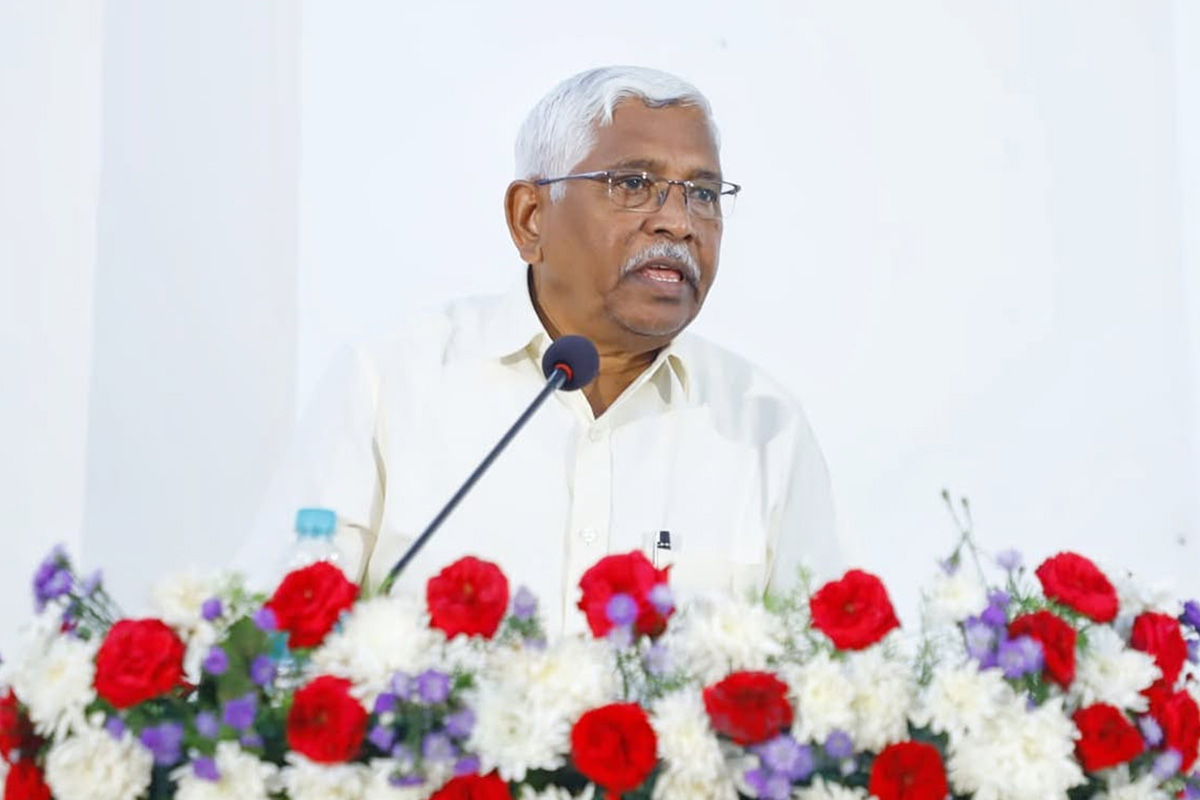
Silence or excessive caution from a figure of Professor Kodandaram's standing would be costly. (Special Arrangement)

Synopsis: The obligation to insist on those standards cannot be suspended simply because the party in power has changed. Professor Kodandaram still has a necessary role in that unfinished business.
In the collective memory of Telangana, few figures command the quiet moral authority that Professor M Kodandaram still does.
As the long-time convenor of the Telangana Joint Action Committee, he stood at the centre of the final, decisive phase of the statehood struggle. He was neither the most charismatic orator nor the most ruthless political operator. What he offered was something rarer: intellectual coherence, organisational patience, and a refusal to allow the movement to be reduced to the ambitions of any single party or personality. For large sections of the population—especially those who participated in the long agitation—he remains a living symbol of the idea that Telangana was meant to be more than a change of flag and capital.
That history now confronts him with an uncomfortable question. With the Congress government in power since late 2023, and with Kodandaram himself having been nominated to the Legislative Council under the Governor’s quota, should he continue to play the role of public critic and conscience-keeper? Or does proximity to power, and the fact that the present dispensation displaced the earlier Bharat Rashtra Samithi (BRS) regime he long opposed, require a more muted, accommodative stance?
The answer, if one remains faithful to the logic of the movement he once led, is clear.
The watchdog role does not expire with a change of government. It is not a partisan instrument to be discarded once “our side” is in office. It is a permanent obligation owed to the people who fought and, in many cases, died for a different kind of state.
Kodandaram himself articulated this principle years ago.
After statehood in 2014, when the then-ruling Telangana Rashtra Samithi (TRS) sought to wind up the Telangana Joint Action Committee (TJAC), he resisted, arguing that the committee’s larger responsibility was precisely to safeguard the interests of Telangana’s people in the new political order. The organisation, he said, would continue as a non-partisan watchdog, constructive rather than purely confrontational. That was not the language of a man preparing for power. It was the language of someone who understood that the real test of any Telangana government would be its fidelity to the democratic and egalitarian aspirations that had animated the struggle.
Those aspirations have not been fully met. The BRS years were marked by centralisation of power, allegations of surveillance and suppression of dissent, and a growing sense among many movement veterans that the fruits of statehood were being concentrated in a narrow circle. The Congress victory in 2023 was, in significant measure, a rejection of that style of governance.
Yet the early years of the new government have not been free of controversy. Delays in releasing a credible job calendar, persistent questions around certain tenders and administrative decisions, and a perceptible accumulation of public impatience have already begun to generate negativity—something Kodandaram himself has publicly noted. These are not the complaints of the opposition alone; they are the kinds of grievances that the original movement claimed to address.
In this context, silence or excessive caution from a figure of Kodandaram’s standing would be costly.
First, it would reinforce the widespread cynicism that political actors speak the language of principle only when out of power. Second, it would deprive the present government of a credible internal corrective voice. Governments rarely improve when criticism comes solely from declared adversaries; they improve when those who share their broad political space still feel free to point out drift, inefficiency, or the quiet return of old habits. Third, and most importantly, it would abandon the constituency that still looks to him—the torchbearers of the statehood struggle and ordinary citizens who believed Telangana would be governed differently.
None of this requires Kodandaram to become an obstructionist or to join the ranks of permanent opposition. Constructive criticism is not the same as hostility. Raising questions about employment generation, institutional autonomy, transparency in contracts, and the protection of democratic space is entirely consistent with supporting a government against the return of the previous regime. In fact, it is the only form of support that is ultimately useful. Uncritical endorsement helps no one for long; it merely postpones the accumulation of public discontent.
There are practical risks, of course. A government under pressure may prefer loyalists to independent voices. Nominated positions can create expectations of reciprocity. The political culture in much of India still treats public disagreement from allies as a form of betrayal. Yet Kodandaram’s distinctive capital has always been his relative distance from the ordinary scramble for office. That capital is finite. Once spent in the service of political convenience, it cannot easily be recovered.
The deeper issue is one of consistency. If the original demand was for a more responsive, less arbitrary, and more accountable form of rule in Telangana, then the obligation to insist on those standards cannot be suspended simply because the party in power has changed. The people who marched in the million marches, who observed bandhs, who lost years of education and employment, and who in some cases paid with their lives, did not do so in order to install one set of rulers in place of another. They did so in the hope that power itself would be exercised differently.
Professor Kodandaram is now in a position—by virtue of his history, his moral authority, and his institutional perch—to help keep that hope alive. He need not abandon political judgment or pretend that all governments are equal. He can continue to regard the present dispensation as preferable to the alternative while still refusing to treat it as exempt from scrutiny. That is not disloyalty. It is fidelity to the movement’s original premise.
Telangana’s political class has shown a recurring tendency to treat the statehood struggle as a completed chapter, useful mainly for ceremonial remembrance. The true custodians of that struggle are those who insist that its democratic and egalitarian content remains unfinished business. In that unfinished business, Professor Kodandaram still has a necessary role. He should play it—openly, steadily, and without apology. The people who once trusted him to speak for them have a right to expect no less.
Also Read:
Honeymoon over for Revanth Reddy’s government as focus shifts from promises to delivery
Telangana’s Section 22A controversy: Whose land? Who prohibits? Who encroaches?
Telangana’s CURE Bill 2026: The many flaws in the law that makes illegal buildings pay
No Krishna can save this Kurukshetra: Telangana Congress tears itself apart



