
Published Nov 22, 2026 | 1:03 PM ⚊ Updated Nov 22, 2026 | 1:03 PM

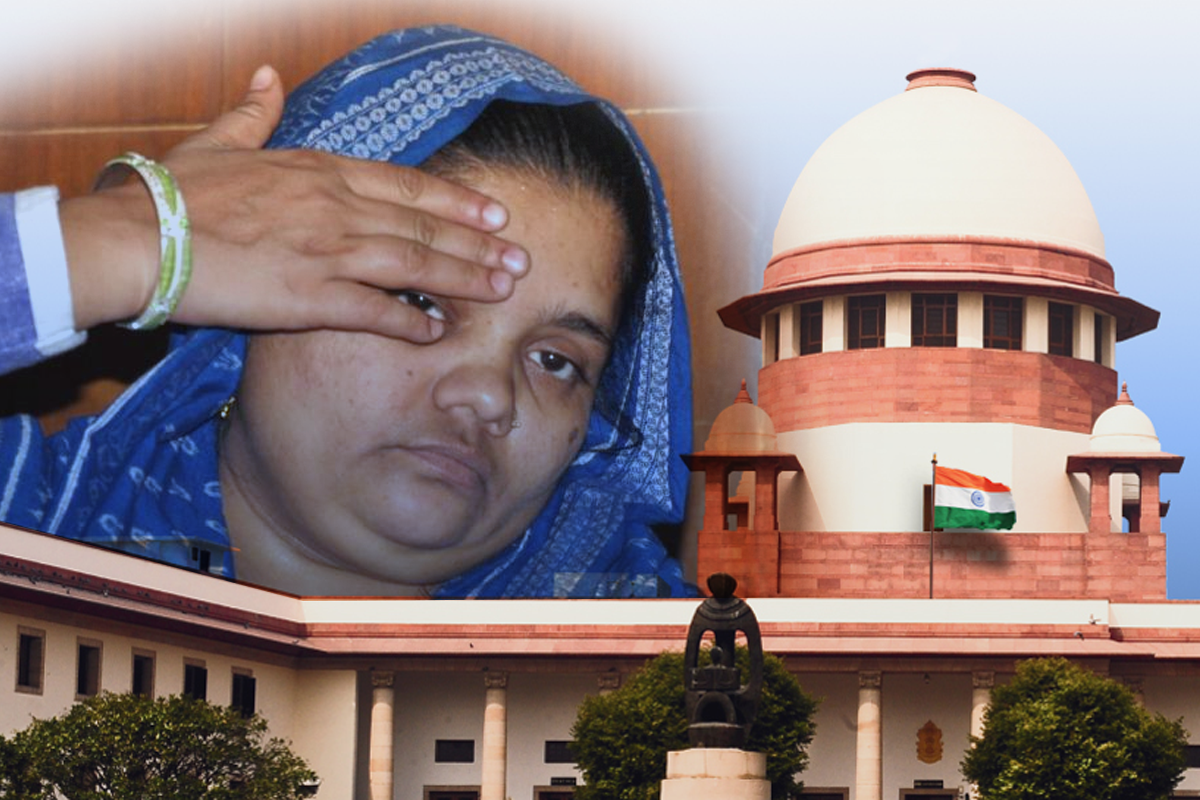
Bilkis Bano has lived for twenty-four years in constant fear for her life, moving from house to house far from Gujarat.

On October 28, a Supreme Court bench of Justices MM Sundresh and Prasanna B Varale stayed the life sentences of two convicts in the Bilkis Bano case — Bipin Chand Kanaiyalal Joshi and Pradeep Ramanlal Modhiya. The judgment was delivered unilaterally, without even hearing Bilkis Bano or her lawyers, and without giving them any notice.
For nearly twenty-four years, Bilkis Bano, a survivor of gang rape, has waged an extraordinary battle for justice. The events that scarred the history of the nation took place during the 2002 Gujarat communal riots.
On March 3, 2002, a mob attacked the Muslim community in Randhikpur village of Dahod district, where Bilkis Bano lived. As she and her family fled for their lives, the frenzied crowd set upon them.
Bilkis was then twenty-one years old and five months pregnant; she also had a three-year-old daughter. The mob caught her relatives and, before her eyes, slaughtered fourteen people, including her mother, her sister and her little daughter. They gang-raped Bilkis with brutality. Some of the attackers were people she knew — neighbours.
Severely injured and left for dead, she somehow escaped and survived.
Naked and covered in wounds, Bilkis managed to reach a refugee camp, where her husband Yakub Rasool later found her. From that day, she has demanded, simply and firmly, that those who committed these atrocities against her, her child and her family be punished according to the law.
Her husband has stood steadfastly beside her throughout this long struggle. At every step, she has faced threats from politicians, the accused and the police. She has endured relentless mental trauma, insecurity and financial hardship.
It is no ordinary matter for a survivor to challenge the most powerful individuals and institutions. The man who was Chief Minister of Gujarat at the time of the riots is today the Prime Minister of India; another key figure is the Union Home Minister.
Meanwhile, Bilkis Bano has lived for twenty-four years in constant fear for her life, moving from house to house far from Gujarat. After the latest Supreme Court order that has allowed two of the convicts to walk free on bail, she has said: “These developments fill me with great anxiety and fear.”
When Bilkis first went to the police station to file a complaint, the police dismissed her. Even after social organisations intervened, the case was not properly registered. Evidence was destroyed, and false records were created — charges later levelled by her lawyers. Eventually, she approached the Supreme Court. She sought a CBI investigation and the transfer of the case out of Gujarat, saying she had no faith that justice would be done there. In December 2003, the Supreme Court ordered a CBI investigation, and the following year shifted the trial to a Mumbai court.
In 2008, a special court in Mumbai convicted eleven men and sentenced them to life imprisonment. Several policemen and doctors were also found guilty of destroying evidence. In all, twenty people were charged.
The convicts appealed. In 2017, the Bombay High Court upheld both the convictions and the life sentences. When the matter reached the Supreme Court, the Court, surprisingly, left the power to grant remission with the Gujarat government.
On 15 August 2022, Independence Day, the BJP government in Gujarat released all eleven convicts under a remission policy, claiming they had shown good behaviour and had already served fourteen years. That same day, the Prime Minister stood on the Red Fort and spoke of schemes such as Beti Bachao and Nari Shakti for the protection and empowerment of women — even as the men who had raped Bilkis Bano and murdered her family walked free, garlanded, celebrated with sweets and slogans, as though they were freedom fighters returning from prison.
The early release of the convicts shocked and angered many across the country. Bilkis Bano challenged the remission in the Supreme Court. Several others from civil society, including CPI leader Subhashini Ali, MP Mahua Moitra and lawyer Asma Shafique Shaikh of the National Federation of Indian Women, also approached the Court.
On January 8, 2024, the Supreme Court quashed the remission. A bench of Justices BV Nagarathna and Ujjal Bhuyan held that because the trial had taken place in Maharashtra, only the Maharashtra government had the authority to decide on remission; Gujarat, which had no connection with the trial, had none. The Court used strong language to condemn the Gujarat government’s decision. It dismissed Gujarat’s review petition and ordered the convicts to surrender within two weeks. For a brief moment, it seemed that some sense of justice still survived in the higher judiciary. That moment did not last.
Now, two judges of the same Court have granted bail to two of the life convicts, noting that they have already served seventeen years and that one of them has a serious disability. This raises a basic question: do the courts still apply the principle of equal justice for all?
Why had the judicial system shown no comparable generosity to Professor GN Saibaba, who was 90 per cent disabled and imprisoned, or to the eighty-four-year-old Pastor Stan Swamy, who had to beg for a straw to drink water? Both men are now dead.
Why are rapists and murderers repeatedly given parole, bail and remission that reduce life sentences to fourteen or seventeen years? Such selective justice is possible only where crime itself has become a form of power. Public faith in the judiciary is steadily eroding.
This pattern is not confined to the Bilkis Bano case. In the Naroda Patiya massacre, in which ninety-seven Muslims were killed, a special court convicted former minister Maya Kodnani, Bajrang Dal leader Babu Bajrangi and thirty-two others. A Gujarat court later acquitted Maya Kodnani and seventeen more.
In the Gulberg Society massacre, in which sixty-nine people, including former MP Ehsan Jafri, were brutally killed, a special SIT court convicted 24 of the accused but let thirty-six others walk free. Zakia Jafri, widow of the murdered MP, spent years pursuing a case alleging a high-level conspiracy involving the then Chief Minister Narendra Modi and senior officials. In 2022, a court accepted the SIT’s clean chit and dismissed the case. Zakia Jafri died in 2025, exhausted by her long fight.
In the Best Bakery case (fourteen dead) and the Sardarpur case (thirty-three dead), too, justice treated the victims with the same indifference.
Muslims played a significant role in India’s freedom struggle and provided leadership. Yet the secular, democratic values of equality without discrimination of caste, religion or gender that the Constitution proclaims are being steadily undermined. Open hostility and hatred towards Muslims, and their treatment as second-class citizens, have become normalised. The Sachar Committee report, which examined the condition of Muslims and recommended reforms, has been quietly shelved; few even speak of it any longer.
In wars and communal conflicts across the world, women of the targeted community are singled out for sexual violence. In patriarchal societies, women are treated as the property of men; violating them is seen as a way of humiliating and terrorising the entire community and claiming victory over it. The same ideology routinely brands survivors as the guilty ones and subjects them to stigma.
As a result, over ninety per cent of rape survivors never come forward. When the perpetrators are powerful, the struggle for justice becomes even harder.
In such circumstances, the fact that Bilkis Bano and her husband have continued for twenty-four years to question the injustice done to them and to demand accountability is itself remarkable.
Can a system that grants bail and remission to men who have served less than seventeen years for gang rape and multiple murders truly be said to have delivered justice to Bilkis Bano? Having lost everyone she loved, and living for twenty-four years under a sentence she never committed, will she ever find relief? Once again, in the name of justice, a grave injustice has been done to her.
Also Read:
India’s largest dam project ever: Why Arunachal’s indigenous communities are fighting back
Democracy’s shame: Delhi Police’s violence reverberates across India
(Views are personal. Edited by R Rajesh Kumar.)



