

Published Nov 15, 2026 | 9:30 AM ⚊ Updated Nov 15, 2026 | 9:30 AM

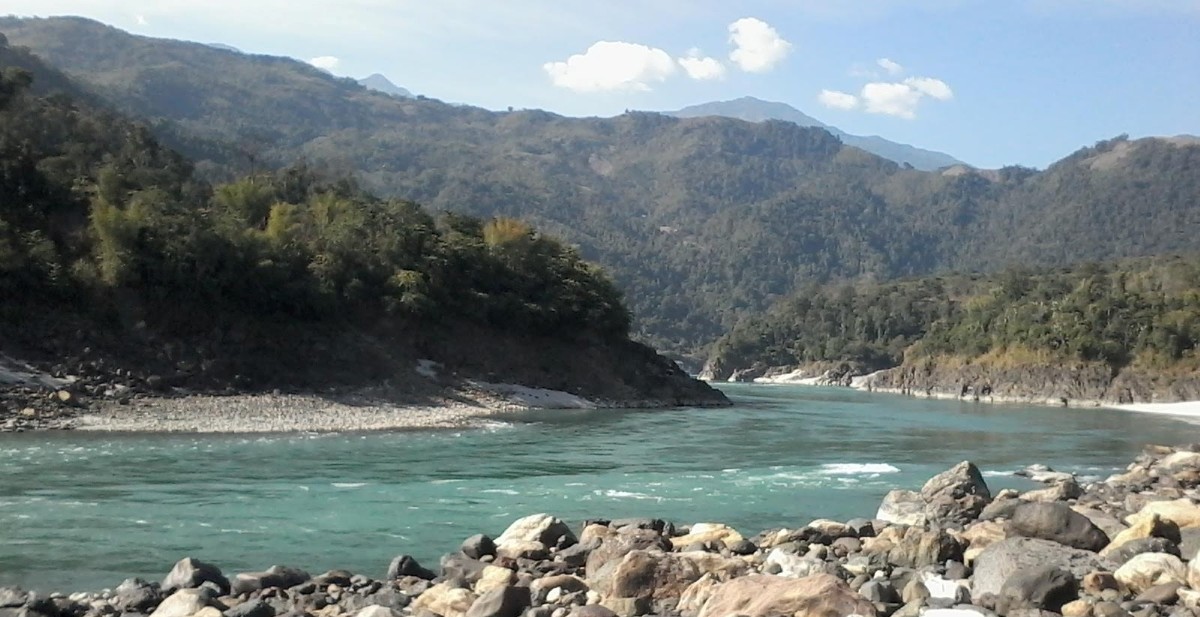
Siang River (Wikimedia Commons)

Protests by indigenous communities in Arunachal Pradesh against the construction of the Siang Upper Multipurpose Project (SUMP) — the largest of its kind in India’s history — have once again intensified after years of sustained opposition.
The region, predominantly inhabited by Adivasi tribes — including the Adi, Galo, Nyishi, Idu and Mishmi — is now marked by heightened tension. Organisations such as the Siang Indigenous Farmers’ Forum (SIFF), Adi Bani Kebang United, Adi Galo Welfare Society, All Upper Siang District Students’ Union (AUSDSU), Siang People’s Forum (SPF) and the Lower Siang Dam Affected People’s Forum, among others, are strongly opposing the dam and continuing their agitation.
Estimates suggest that the project could displace between 1.25 lakh and 1.5 lakh indigenous people.
Of the 27 villages facing submergence, 20 lie in Upper Siang district and seven in Siang district. Another 56 villages would be affected. Even Yingkiong, the headquarters of Upper Siang district, faces the risk of flooding. Roughly 11 per cent of Arunachal Pradesh’s total population could be displaced.
A place where people live cannot be treated merely as land.
Their history, cultural roots, way of life, religious beliefs, emotions and memories are deeply intertwined with the soil, the river and the environment. Generations of labour have created agricultural fields, orchards and livelihoods that are at risk of being submerged. Forced displacement breeds insecurity and destroys human lives; those uprooted will never regain the lives they once knew.
The Siang basin and the Eastern Himalayan region form an area of exceptional biodiversity, rich forests and rare wildlife, fed by multiple river systems. It is also a sensitive zone prone to earthquakes, glacial melt from the nearby Himalayas and sudden floods. Environmentalists have repeatedly warned that building large reservoirs in such terrain is extremely dangerous.
Around 2008, the then UPA government proposed a major dam on the Siang. The proposal gradually evolved into an 11,200 MW multipurpose hydropower project — the largest in the country.
Once it became clear that the project was moving towards implementation, local communities launched large-scale protests from 2017 onwards, blocking survey work. Although construction was temporarily halted, the government never fully abandoned the proposal.
The river, known as the Yarlung Tsangpo in China and Tibet, enters Arunachal Pradesh and is called the Siang. In 2020, reports that China planned a massive 60,000 MW project at Medog triggered fresh urgency in India. The Chinese project was framed as a threat to national security, and the need to intercept floodwaters released from upstream was cited as justification for pushing ahead with the Siang dam.
In April 2022, the Centre asked the National Hydroelectric Power Corporation (NHPC) to conduct surveys assessing the technical, economic and social implications of the project and to identify affected villages. The process lacked transparency.
Heavy deployment of central armed forces in survey areas, alleged intimidation of residents and the signing of memorandums of understanding under pressure fuelled widespread distrust. The BJP government’s refusal to heed public opposition and its efforts to suppress dissent further inflamed public anger.
On October 23, all organisations fighting the Siang dam in Arunachal Pradesh jointly called a 12-hour statewide bandh. Young people turned out in large numbers.
In East Siang’s Pasighat, the bandh turned violent. Protesters allegedly set fire to the NHPC office, a police station and the houses of two MLAs, and attacked the residence of the state BJP president. Police made several arrests.
Protest leaders maintained that while they were staging peaceful demonstrations, unidentified individuals entered the scene, threw explosives and created chaos. This was deliberate, they alleged, and intended to discredit and suppress a legitimate movement.
On October 31, police used force against a demonstration by the Youth for Change and other groups outside Arunachal Bhawan in New Delhi. Women protesters reported sexual violence. Indefinite protests and padayatras have now been called across the state. A 36-hour bandh was also observed on November 2.
Local Adivasi communities accuse central paramilitary forces, the Rapid Action Force and the Arunachal Police of intimidation and excesses. Many protesters face cases under the Arunachal Pradesh Unlawful Activities (Prevention) Act (APUAPA), 2014. Activists and leaders from villages facing submergence — Geku, Riga, Yujing, Simong and others — have already been arrested under the Act by the ruling BJP government.
“There is no point in the government talking about dialogue while pointing guns at us, filing false cases and detaining us,” said SIFF (Siang Indigenous Farmers’ Forum) leader Dubit Siram. “First, withdraw all cases, release those arrested unconditionally and withdraw the forces.”
Villagers across the region have put up banners declaring “No survey, no dam” and are confronting the government.
Although Chief Minister Pema Khandu has expressed willingness for talks, movement leaders have refused to negotiate. Meanwhile, BJP MLAs have openly declared that the Siang dam will not be stopped under any circumstances.
Activists allege that mainstream media has been subjected to undeclared censorship that keeps the real facts of the project and the protests out of public view. Internet services have been disrupted and thousands of social-media posts deleted. They further claim that the government has paid private media agencies crores of rupees for counter-propaganda designed to portray public support for the project and to present it as essential for national security.
Large dams have long faced resistance worldwide. The Narmada Bachao Andolan, led by Medha Patkar against the Sardar Sarovar Dam, continued for decades. More than 2.5 lakh people were displaced across Gujarat, Madhya Pradesh and Maharashtra; hundreds of villages, farmland and forests were submerged — yet the project was not stopped.
In seismically active Uttarakhand, the Tehri Dam on the Bhagirathi displaced a lakh people despite 25 years of local resistance.
Similar concerns surround the Mullaperiyar Dam on the Periyar in Kerala, proposed dams on the Cauvery in Karnataka, and the Tipaimukh multipurpose hydroelectric project on the Barak in Manipur. All these projects have inflicted serious harm on the environment and on people’s livelihoods. The Siang multipurpose project now proposed in Arunachal Pradesh would be the largest of them all.
These actions also raise questions about the spirit of Article 371(H) of the Constitution, which provides special constitutional safeguards for Arunachal Pradesh.
People suspect large-scale financial irregularities behind the project. They believe the BJP government is using such schemes to transfer public funds worth crores to big construction companies, generate commissions and benefit a handful of people, while showing scant concern for the lives of Adivasis and ordinary citizens or for the environmental risks involved.
Given their lived experience, the people of the Siang submergence zone have every reason to hold this view.
Also Read:
The cosmetic tweaks to the Agnipath scheme offer little relief to contract soldiers
Is democracy banned in universities? How Jamia became ‘a police camp’ before sanity prevailed
(Edited by R Rajesh Kumar.)



