

Published Nov 17, 2026 | 11:07 AM ⚊ Updated Nov 17, 2026 | 11:07 AM

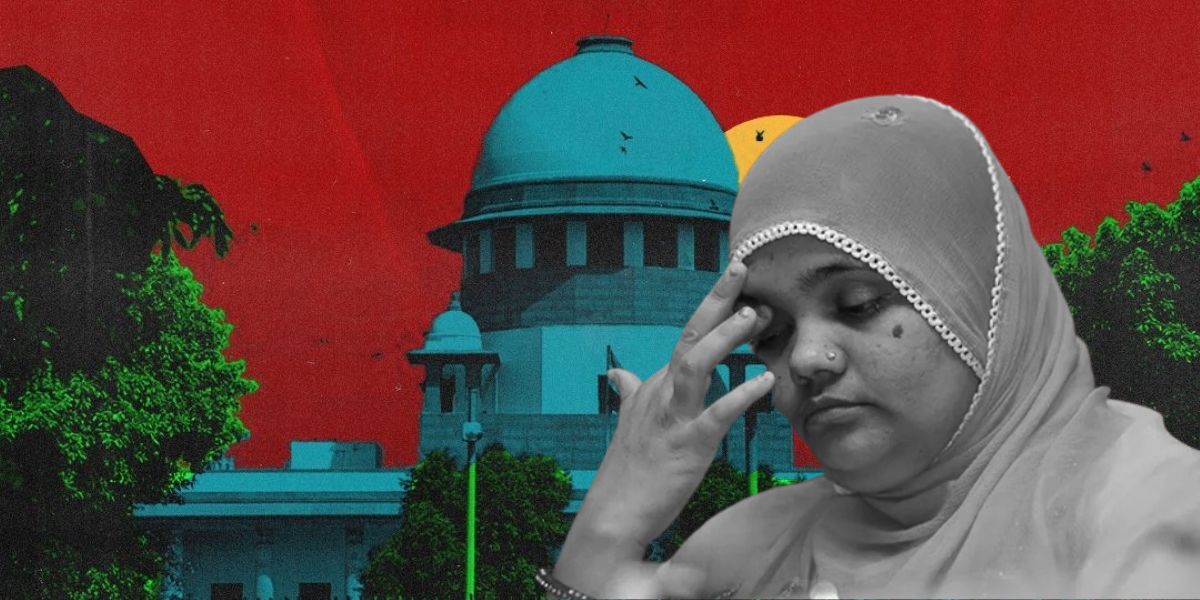
Supreme Court to hear pleas challenging remission of Bilkis Bano gang rape case convicts on 27 March.

Synopsis: Bilkis Bano has vowed to challenge the Supreme Court’s 28 October order suspending the life sentences and granting bail to two of the 11 men convicted in the 2002 gang-rape and murder case. The Bench said the two convicts had spent more than 17 years in prison and one of them had a severe handicap. Bano said the order was a fresh blow to the justice she had fought for over 24 years.
Weeks after the Supreme Court suspended the life sentences and granted bail to two of the 11 men convicted in the 2002 Bilkis Bano gang-rape and murder case, survivor Bilkis Bano said she was unable to believe that the court had passed the order without hearing her and vowed to challenge it.
In a statement issued on Monday, 16 November through senior advocate Shobha Gupta, Bano said the order was a fresh blow to the justice she had fought for over 24 years.
“I make this statement even when words come slowly through fresh tears of pain, shock and disbelief. I still cannot believe that once again, for the second time, an order has been passed by the Supreme Court without calling me up and without hearing me,” she said.
“I was a young girl, just 19 years old, when my world, my baby daughter, my family, my home, my trust in humanity was brutally wrenched from me. For 24 long years since that day, I have stood up to fight for justice – for myself and for women everywhere – again and again and again. For 24 years I have searched for and found reservoirs of courage I did not know I had, only because a million voices of support and solidarity came my way. I have walked to courtroom after courtroom, and been grateful each time I was vindicated; each time my faith in the idea of justice was restored. I have rebuilt from the rubble of my life, with the love of family and friends. I have yearned for peace. I have learned to smile.”
Bano said she was scared for herself, her family and her children.
“Yet today I find myself losing the very justice I had fought so hard to win. Familiar fears are resurfacing. I am scared once again. For myself, my family, and my children. And I am scared of losing faith in justice, yet again. How could the honourable Supreme Court simply suspend the sentence of the men who did this to me? How could they not even inform me? How could they not even make sure my voice was heard in their courtroom?” she wrote.
“I will fight this order. I must. I do this for my children, who do not deserve to live haunted by these fears and scars for the rest of their lives. I do this for my 3-year-old Saleha who deserved to live, and whose memory demands justice. I do this for women everywhere. Because no woman, no survivor, no citizen should have to endure this eternal test of belonging and equality, and fight for justice for the rest of her life.”
Also Read: Norwegian journalist Helle Lyng, who questioned Modi during his Oslo visit, denied entry into India
The 28 October order was passed by a Bench of Justices M M Sundresh and Prasanna B Varale on petitions filed by Bipinchand Kanaiyalal Joshi, alias Lala Doctor, and Pradip Ramanlal Modhiya. The two convicts had challenged the Bombay High Court’s 4 May 2017 judgment upholding their convictions and life sentences.
The two men were convicted under Sections 143, 147, 302 read with Sections 149, 376(2)(e) and 376(2)(g) of the Indian Penal Code in Sessions Case No. 634 of 2004, arising from FIR No. 59 of 2002 registered at Godhra Town police station in Gujarat’s Panchmahal district.
The defence submitted that the convicts had spent more than 17 years in prison, that one of them had not been named in the FIR and was implicated nearly three years after the incident, and that the other was severely handicapped. The Additional Solicitor General opposed their pleas, maintaining that the trial court and the High Court had considered the relevant evidence, particularly given the seriousness of the offences.
The Bench said the two convicts had spent more than 17 years in prison and one of them had a severe handicap. It also said the appeals raised issues of fact and law that remained to be decided.
“Having heard the parties, suffice it to state that the appellants have been under incarceration for a period of more than seventeen years, and also the fact remains that one of the appellants has a severe handicap. Certainly, there are issues to be decided in the appeal, both on fact and law,” the order reads.
“In view of the above and considering the issues involved in this appeal, we suspend the sentence and grant bail to the appellants on such terms and conditions as may be imposed by the concerned Trial Court.”
Bano was five months pregnant when she and 16 members of her family were attacked by a mob of 20 to 30 men armed with sickles, swords and stones as they fled their home in Randhikpur village, Gujarat, amid the anti-Muslim pogrom that followed the Godhra train burning in 2002.
Fourteen members of Bano’s family were killed, including eight minors. Twelve men were convicted of gang-raping Bano, her mother and her cousin Shamim, who had given birth two days before the attack.
In January 2008, a trial court sentenced 11 men to life imprisonment for the rapes and murders. A policeman was also convicted of falsifying evidence.
On 4 May 2017, the Bombay High Court upheld the life sentences of the 11 men. It also overturned the acquittal of seven other accused, including Gujarat police personnel and doctors at a government hospital, who faced charges of suppressing and tampering with evidence.
On 15 August 2022, the Gujarat government granted remission to all 11 convicts and released them from prison.
On 8 January 2024, the Supreme Court struck down the remission orders, holding that the Gujarat government was not competent to grant remission. It directed the 11 men to surrender within 15 days. All 11 surrendered at the Godhra sub-jail on 21 January 2024.
(Edited by Dese Gowda)



