
Published Sep 11, 2026 | 7:05 AM ⚊ Updated Sep 11, 2026 | 7:05 AM

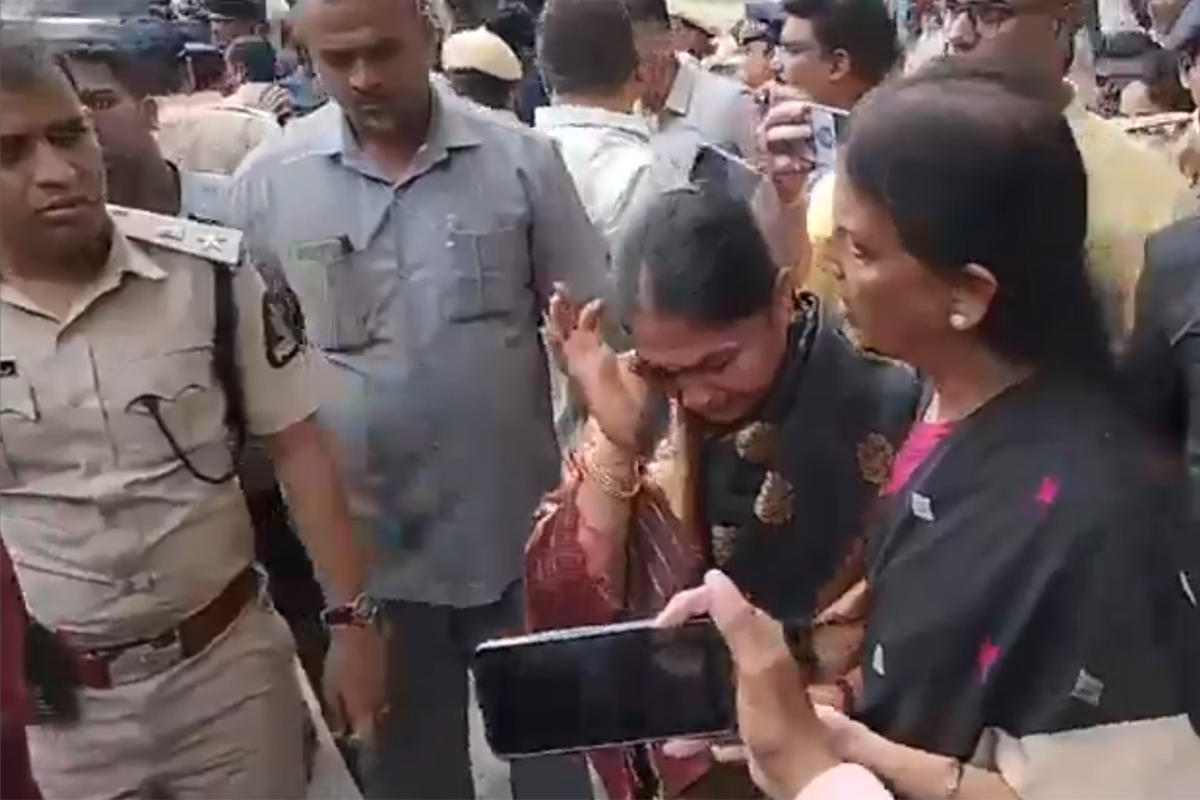
BRS MLA Sunitha Laxma Reddy ln tears at Telangana Assembly premises after being 'manhandled'. (Videograb)

Synopsis: The recent scenes inside the Assembly, the confrontation outside it, the controversy over alleged remarks against the Speaker and the developments at Erravelli are not isolated episodes. More disturbing was the reported sprinkling of turmeric water as “purification” of the road used by Dalit Congress protesters.
Decency and decorum were once the invisible grammar of political life. Leaders could disagree fiercely over ideology, policy and power without reducing opponents to objects of personal hatred. In Telangana, that grammar appears to be breaking down.
The recent scenes inside the Assembly, the confrontation outside it, the controversy over alleged remarks against the Speaker and the developments at Erravelli are not isolated episodes. Together, they reveal an erosion of the restraints that give democratic politics its dignity.
The Assembly is meant to be the highest forum for democratic debate. The government must defend its record; the Opposition must scrutinise it. Yet recent proceedings were overshadowed by protests, personal allegations, emotional exchanges and disciplinary action.
The controversy over alleged derogatory remarks against Speaker Gaddam Prasad Kumar was particularly troubling. The Speaker becoming emotional was a reminder that constitutional offices are occupied by human beings, but also that words spoken in political anger can wound institutions as well as individuals. If the allegations against Opposition members are established, insulting the Chair cannot be defended as political exuberance.
But institutional dignity is not a one-way obligation. The government must respect the Opposition’s democratic space. Allegations of excessive force against legislators, including women members, cannot simply be dismissed as political theatre. Police action involving elected representatives must be proportionate, transparent and accountable. A majority gives a government the authority to govern; it does not give it the right to treat dissent as disobedience.
Protest is indispensable to democracy, but it loses moral force when it becomes abusive, physically confrontational or deliberately provocative.
The disturbing part is that the conflict did not end with the Assembly. It moved into the streets and eventually reached Erravelli, where Congress activists sought to protest near the farmhouse of former Chief Minister K Chandrashekar Rao, demanding an apology over the alleged remarks against the Speaker. BRS supporters gathered in response, and the confrontation between rival groups required police intervention.
A legislative dispute had become a street battle.
More disturbing was the reported sprinkling of turmeric water as “purification” of the road used by Dalit Congress protesters. Whatever explanations the political camps may offer, the symbolism cannot be brushed aside. Telangana cannot claim to be a modern, socially conscious State while tolerating conduct that appears to attach impurity to the presence of people from a particular social group.
This cannot be reduced to another Congress-BRS skirmish. In a society that has spent decades fighting caste discrimination and defending human dignity, suggesting that a public space requires purification after being used by members of a particular community is profoundly unsettling.
The incident exposes the danger of allowing political rivalry to absorb every aspect of public life.
The Congress government must recognise that an electoral majority provides the authority to govern, not unlimited moral authority. The BRS, equally, must recognise that Opposition status does not absolve it of responsibility. Protest is a democratic right; abuse, intimidation and physical confrontation are not.
The wider political environment makes this deterioration more dangerous. Television rewards confrontation; social media rewards outrage; political ecosystems reward statements that produce instant reactions. A carefully reasoned criticism rarely travels as far as a personal insult. Political language consequently becomes harsher, more theatrical and less restrained.
Young people watching these spectacles are being given an unfortunate lesson in democratic behaviour: that the loudest voice is the strongest argument and humiliation is an effective political weapon.
Telangana’s political history was shaped by struggles for dignity, equality, representation and self-respect. Its public life should reflect those values rather than erode them. Fierce debate is not a threat to democracy. The inability to conduct it without crossing lines of personal dignity and institutional respect is.
Decency does not mean weakness. Decorum does not mean surrender. They are the restraints that allow political adversaries to fight fiercely without destroying the arena in which they fight.
The immediate confrontations will pass. That should concern parties before the damage spreads.
That is why Telangana’s political class must pause before the next confrontation becomes another spectacle.
The question is no longer simply who insulted whom, who protested more aggressively or who gained a temporary political advantage. If political rivalry continues to replace argument with abuse, protest with confrontation and disagreement with social humiliation, what will remain of the dignity of democracy when decency and decorum disappear from its political dictionary?
Also Read:
Revanth Reddy government: A hundred has become a thousand—adding a zero!
The unfinished mandate: Why Professor Kodandaram must remain Telangana’s watchdog
Telangana MLA Komatireddy Rajagopal Reddy’s criticism of the media raises larger questions



