

Published Nov 14, 2026 | 7:30 AM ⚊ Updated Nov 14, 2026 | 7:30 AM

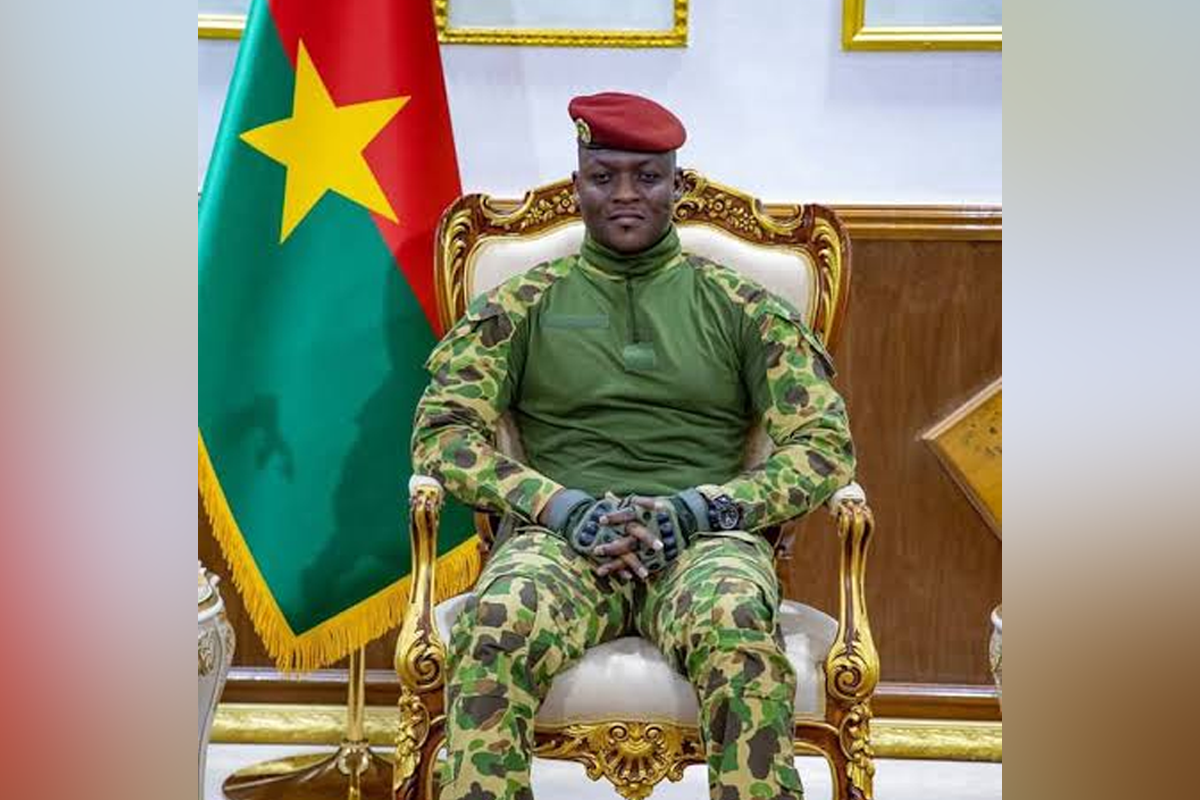
Captain Ibrahim Traoré. (Photo | facebook.com)

On June 30, 1960, at the Palais de la Nation in Léopoldville, modern African liberation collided head-on with European paternalism.
King Baudouin of Belgium took the rostrum to address a newly emancipated Congo, framing independence not as a sovereign triumph, but as a benevolent imperial gift. With unblinking condescension, the young monarch lauded the “genius” of his ancestor, King Leopold II — the man whose personal rubber-and-ivory fiefdom had halved the Congo’s population through systemic mutilation and forced labour — and warned the assembly against “hasty reforms.”
Prime Minister Patrice Lumumba shattered the polite diplomatic protocol. Seizing an unscripted podium, Lumumba delivered a blistering counter-address: independence was won, he declared, not through Belgian charity, but through a fight of “tears, fire, and blood,” enduring eighty years of “harassing work,” systemic racism, and the daily indignity of “insults and blows.”
Six months later, in the chill of a Katangan night in January 1961, Lumumba was tied to a tree and executed by a firing squad overseen by Belgian officers, his body subsequently dissolved in acid to obliterate the very memory of his defiance. Two years after that, in Lomé, Sylvanus Olympio of Togo was gunned down steps from the United States embassy after daring to sever ties with the colonial franc.
Whenever an African leader insisted that political liberty was meaningless without economic emancipation, the response was swift and lethal.
None embodied this tragic continuum more acutely than Thomas Sankara, the Burkinabè revolutionary assassinated in 1987 after just four years of striving to de-link his nation from the extractive web of Françafrique.
This violence was the inevitable outcome of an imperial enterprise that had long operated as an extractive machine. Long before the Cold War, intelligence services orchestrated palace coups; European powers had normalised mass extraction under the guise of a “civilising mission.” The tens of millions who perished across the continent — brutalised under Leopold’s rubber terror, or exploited in colonial plantations and mines — were sustained casualties of a system that Western historiography persistently downplayed as administrative excess rather than calculated economic predation.
The elimination of Lumumba, Olympio, and Sankara established a rigid imperial rule: formal flags and national anthems were permitted, but genuine sovereign control over raw materials and central banks was non-negotiable.
Four decades after Sankara’s murder, that rule is being openly challenged once again in Ouagadougou. At the helm sits another youthful, beret-clad army officer: Captain Ibrahim Traoré.
With sharp oratory, vast popular backing among West African youth, and explicit Sankarist framing, Traoré has cast himself as the vanguard of a second independence movement across the Sahel. Yet as tensions escalate, the historical parallel looms large: can Traoré dismantle the covert and economic machinery that destroyed his predecessors, or is he tracing the same perilous arc toward martyrdom?
To understand the scale of Traoré’s confrontation with Paris, one must look at the structural levers France retained after the 1960 wave of formal decolonisation. Chief among them is the CFA franc.
Originally created in 1945 as the Franc des Colonies Françaises d’Afrique, the currency effectively locked fourteen sovereign nations into the French monetary orbit. These countries were required to deposit half their foreign-exchange reserves with the French Treasury. The 2019 reforms abolished this requirement for the eight members of the West African Economic and Monetary Union (WAEMU), including Burkina Faso. However, the arrangement continues to apply to the six countries in the Central African monetary union.
While Paris guaranteed convertibility pegged to the French franc (and later the euro), African central banks forfeited independent monetary policy. They were unable to devalue to boost exports, prevented from deploying sovereign credit to build domestic manufacturing, and locked into a mechanism that enabled French multinationals to repatriate capital without exchange-rate risk.
This financial grip was reinforced by exclusive commercial rights.
French corporations enjoyed privileged access to infrastructure tenders and mineral deposits — gold, uranium, phosphates — under bilateral defence and cooperation agreements. Independence, as Baudouin had envisioned it, remained conditional: Africans governed the day-to-day administration, while external actors retained control over the ledger.
Recognising that political sovereignty without economic self-determination is merely symbolic, Captain Traoré has moved systematically to uproot the pillars of Françafrique.
French troops, stationed under the banner of counter-insurgency operations that failed to arrest the spread of regional jihadist networks, were ordered to leave. French state-backed media networks were taken off the air, and bilateral military treaties were revoked.
More critically, the administration has targeted resource governance. Traoré has launched audits of foreign mining concessions, reclaimed national stakes in gold deposits, and prioritised the construction of domestic processing facilities to retain value within Burkina Faso.
Burkina Faso, alongside Mali and Niger, has severed ties with the Western-leaning Economic Community of West African States (ECOWAS) to consolidate the Alliance of Sahel States (AES). A central objective of this pact is monetary sovereignty — laying the groundwork to abandon the CFA franc in favour of a regional currency. By funding massive infrastructure internally, as exemplified by the Faso Mêbo initiative, where domestic capital is mobilised to construct major transit highways, Traoré is attempting to demonstrate that public works do not require the fiscal supervision or debt conditionalities of Paris, Brussels, or the Bretton Woods institutions.
Yet the structural hazards facing Traoré remain formidable.
Sankara was not toppled by an overt Western invasion; he was betrayed from within his own inner circle, led by his confidant Blaise Compaoré, working in tacit alignment with regional and international interests. Traoré operates in an equally precarious domestic environment, contending with insurgent violence that controls swathes of territory, repeated coup conspiracies, and internal elite factions whose commercial survival is tied to older trade routes.
Furthermore, diversifying external alliances toward Moscow and Beijing, while helpful in mitigating immediate diplomatic and military pressure, presents its own strategic tests. Real nonalignment requires avoiding new forms of extractive dependency or asymmetric security reliance.
The crucial difference between long-term survival and tragic repetition will depend on institutional resilience. Sankara’s transformative social reforms were ultimately vulnerable because they relied heavily on exceptional personal leadership and lacked the institutional scaffolding capable of surviving a betrayal at the top.
If Traoré’s revolution remains anchored purely to a military command structure, the familiar levers of destabilisation — covert factionalism, capital flight, and economic isolation — will find room to manoeuvre.
For now, the Burkinabè leader has shown no appetite for compromise, disregarding warnings from traditional diplomatic partners. His stance reflects the enduring principle articulated by Mozambican revolutionary leader Samora Machel: “When the West starts to praise me, understand that I have betrayed Africa.”
By that historical standard, Traoré remains uncompromised. The hostility directed at him from former colonial capitals is clear evidence that his project challenges the bedrock of neo-colonial influence.
Whether he can establish the institutional depth and regional stability needed from here to survive where Lumumba, Olympio, and Sankara fell will decide not only his personal fate, but the trajectory of sovereign development across the Sahel and Africa.
Also Read:
Beyond the crown: Prince William’s Earthshot moment in India and quest for relevance
The twin paradox: How Sri Lanka revived tourism amid crisis while Keralam lost momentum
A country between empires: Lessons from the Serbian election surprise for young Indians
(Faisal CK is Deputy Law Secretary to the Government of Keralam. Views are personal. Edited by R Rajesh Kumar.)



