
Published Nov 12, 2026 | 7:00 AM ⚊ Updated Nov 12, 2026 | 7:07 AM

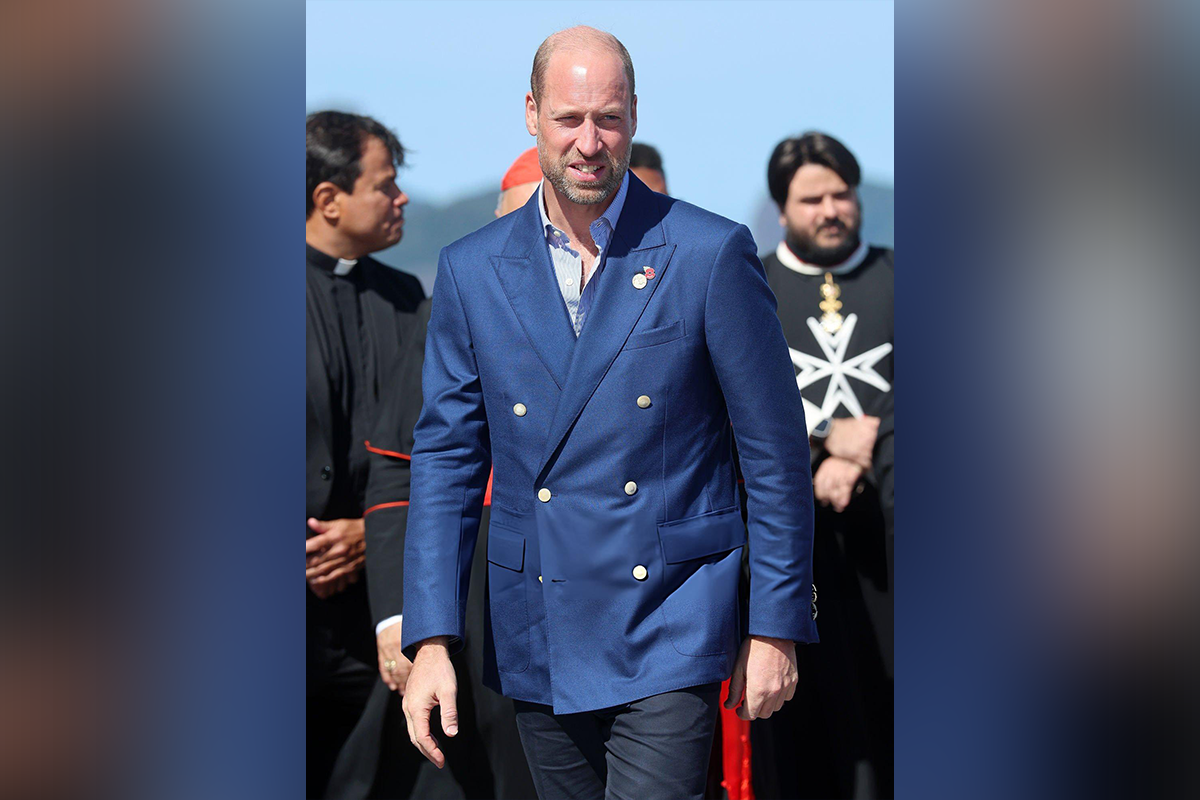
Prince William

The Prince of Wales arrives in Mumbai this month carrying an ambitious environmental project, the Earthshot Prize. But his visit has significance beyond the awards themselves. It is part of a broader effort to give the future British monarch an international identity that reaches beyond royal ceremony, family history and constitutional tradition.
For Prince William, the challenge is to establish a role that is recognisably his own, rather than simply that of the eldest son preparing to inherit the throne. His father, King Charles III, spent decades developing an interest in environmental issues before becoming monarch. William has taken that commitment into a new generation, combining environmental advocacy with the international reach and media appeal of the House of Windsor.
Founded in 2020, the Earthshot Prize seeks to identify and support practical solutions to the world’s environmental problems. Five winners will each receive £1 million at the Mumbai awards ceremony on November 17. The initiative has five objectives: protecting and restoring nature, cleaning the air, reviving the oceans, building a waste-free world and fixing the climate.
India is a particularly significant choice of host. It is a country where the consequences of environmental pressures are visible in everyday life, from urban air pollution and waste management to the demands of economic development and energy consumption. Yet it is also a country producing innovative responses to these challenges.
India has established a particularly strong presence in the Earthshot programme. Seven Indian initiatives have reached the finalist stage, while four Indian projects have previously won the prize. The 2026 programme also includes a substantial youth initiative, involving nearly a million students across 15,000 schools in 24 states.
For William, this offers an opportunity to associate the monarchy with a country whose environmental choices will have consequences far beyond its borders. It also places him before an audience that is both increasingly influential internationally and deeply familiar with the British royal family.
That familiarity is complicated by history. The British monarchy was once closely associated with the imperial system through which Britain ruled India. Today, the relationship is very different. India is an independent and increasingly influential power, while the British royal family is a constitutional institution with no governing role in the country. Yet the Windsors continue to attract considerable interest among Indian audiences, for whom royalty remains an enduring subject of fascination.
William’s visit will combine environmental advocacy with opportunities to engage with India’s formidable popular culture. It is an approach that reflects a broader change in royal public relations: the recognition that traditional ceremonial appearances are no longer sufficient to reach audiences accustomed to the immediacy and informality of contemporary media.
A striking illustration came last month when William made a surprise appearance on the BBC’s The Graham Norton Show. Joining actors Cate Blanchett and Hannah Waddingham and environmentalist Robert Irwin, he discussed the Earthshot Prize, his children’s enthusiasm for The Celebrity Traitors and his own interests in films and music.
It was a departure from the carefully controlled format of traditional royal interviews. William was not addressing a formal audience or delivering a speech on constitutional responsibilities. He was sharing a sofa with entertainers, exchanging jokes and presenting a more informal side of his personality.
The appearance was not accidental. It was part of the effort to promote Earthshot and reach audiences who might otherwise have little interest in royal engagements. William became the first royal to appear on Norton’s programme, a small but revealing indication of how far the conventions of royal communication have shifted.
The future king is also navigating a complicated family landscape. His younger brother, Prince Harry, has chosen a very different path, relinquishing his senior royal role and establishing a separate life in the United States with Meghan, Duchess of Sussex.
The contrast between the brothers has become a continuing subject of international media attention. William represents institutional continuity, while Harry has sought to construct a public identity outside the traditional royal establishment. Their respective wives, Catherine and Meghan, have also become subjects of relentless comparison.
Social media has intensified this rivalry in the public imagination. Every appearance, interview, charitable engagement or family photograph can be turned into a contest over popularity and authenticity. Who appears more approachable? Who attracts more attention? Who seems to have the stronger connection with the public?
Such comparisons may be uncomfortable for the royal household, but they are part of the environment in which the next generation of the monarchy must operate. The very publicity that sustains global interest in the Windsors can also expose family divisions and undermine attempts to project continuity.
Britain is not alone in confronting these questions. Europe’s other monarchies have also had to reconcile inherited status with changing public expectations.
In the Netherlands, King Willem-Alexander and Queen Máxima discovered in 2020 how quickly royal privilege could become a liability. Their decision to holiday in Greece during the COVID restrictions provoked such public criticism that they cut short their trip and returned home. The King subsequently acknowledged that he had misjudged the public mood. It was a reminder that informality and accessibility do not exempt royalty from the expectations placed on ordinary citizens.
Denmark has taken a different route. Queen Margrethe II’s decision to abdicate in January 2024, after 52 years on the throne, allowed her son to become King Frederik X in a carefully managed generational transition. His accession, with his Australian-born wife Mary becoming queen, offered an opportunity to present the monarchy to a new generation while preserving continuity.
Spain provides perhaps the most instructive comparison. King Felipe VI inherited the throne in 2014 from his father, Juan Carlos I, at a time when the monarchy’s reputation had been damaged by financial and personal controversies. Felipe made integrity and transparency central to his accession, subsequently introducing reforms to the royal household’s finances and conduct. His experience illustrates how a monarchy may need to rebuild public confidence rather than assume it will automatically pass from one generation to the next.
There is no single formula for royal survival. Each institution must negotiate its own relationship with the public, balancing tradition, personal visibility and accountability. Britain’s challenge is magnified by the global fascination with the Windsors, but the underlying question is shared across Europe’s royal houses: how does an institution based on inherited privilege demonstrate its relevance to a society that increasingly expects public figures to justify their position?
William’s environmental work provides one possible answer. Earthshot gives him a platform on which to promote innovation, international cooperation and practical solutions to problems that transcend national boundaries. It also allows him to develop a public role that is not simply an extension of his father’s reign.
But there is a distinction between being popular and being respected. A successful television appearance may make a prince more approachable. A glittering awards ceremony in Mumbai may generate international headlines. Neither, on its own, establishes the deeper public confidence required of a constitutional monarch.
That confidence depends on the institution’s ability to demonstrate purpose, continuity and a meaningful relationship with the society it serves. William will eventually inherit not merely a title but an institution whose future legitimacy will depend on how successfully it adapts to a changing Britain.
His Mumbai visit will therefore be watched on several levels. There will be the environmental achievements being celebrated, the international personalities attending the awards and the opportunities to showcase India’s contribution to climate innovation. There will also be the less tangible question of how successfully the future king can present himself as a figure with relevance beyond the boundaries of the United Kingdom.
The Windsors have spent generations learning how to command the public gaze. William’s challenge is to ensure that the attention he attracts serves a purpose beyond celebrity.
The Earthshot Prize may help him do that. But the ultimate test of a future monarch will not be how comfortably he sits on a television sofa or how many cameras follow him through Mumbai. It will be whether, when the cameras turn away, the institution he inherits still commands public confidence.
Also Read:
Sixth extinction: Humanity’s assault on Earth’s biodiversity
If it’s the Cockroach Janta Party now, it was Pigasus then: Story behind a rare US-India bond
The Sea speaks Malayalam: The 122 words that sailed back with Vasco da Gama from Calicut
(Shyam Bhatia is an Indian-born British journalist and a former diplomatic editor of The Observer in London. He is also the author of The Quiet Correspondent, published earlier this year by Juggernaut.)



