

Published Aug 07, 2026 | 7:00 AM ⚊ Updated Aug 07, 2026 | 7:00 AM

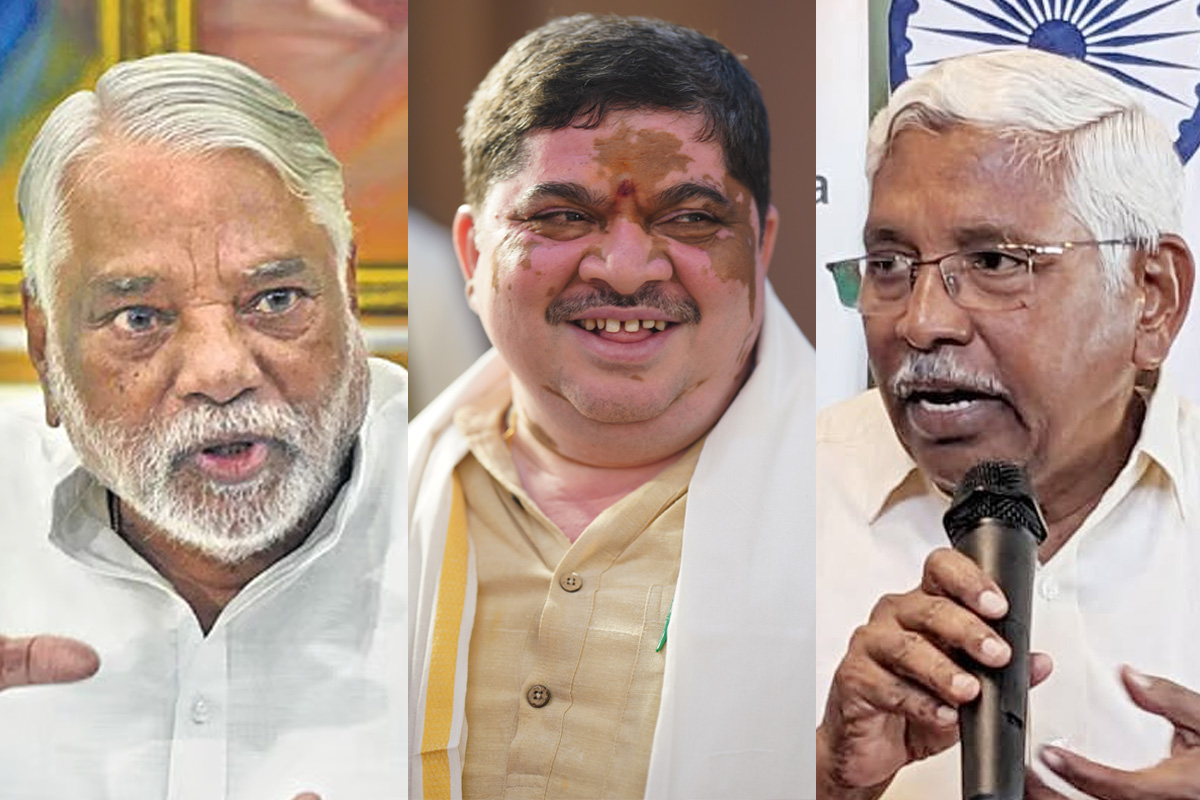
K Keshava Rao, Ponnam Prabhakar and M Kodandaram.

Synopsis: The Telangana movement was driven by ideals and involved nearly 10 million activists. Any attempt to identify its participants and officially reward them is an exercise fraught with danger and could dishonour the icons it seeks to celebrate…
Twelve years after the formation of Telangana, the state government has finally appointed a high-level committee to identify participants in the Telangana statehood movement. Constituted under a Government Order issued on May 15, the committee is chaired by the government’s adviser K Keshava Rao and includes Minister Ponnam Prabhakar, MLCs M Kodandaram and Addanki Dayakar, former MLC Ramulu Naik and Congress leader Mothe Shoban Reddy. The Secretary of the General Administration Department (Political) serves as its convener.
The committee has been entrusted with identifying Telangana movement activists, preparing authenticated lists of activists and martyrs, recommending awards, honours and other forms of recognition, and determining which categories of participants should be officially recognised.
At its first meeting, the committee resolved to identify those who lost their lives in the movement, those who suffered permanent disabilities, those implicated in criminal cases or imprisoned during the agitation, and those who built and sustained the movement at the grassroots. It invited suggestions from the public and announced consultations with activists in Hyderabad and district headquarters.
Over the past two-and-a-half months, a wide range of organisations and individuals have appeared before the committee. They include families of martyrs; Joint Action Committees formed during the movement; representatives of employees, workers, students, teachers, women, cultural organisations, writers, lawyers, artists, political parties and the Telangana diaspora. Veterans of the 1969 movement have also demanded that they be included in the recognition process.
It is still unclear what the final outcome of this exercise will be. Yet the consultations have at least reopened a discussion on Telangana’s distinct political aspirations, the extraordinary mass struggle waged to achieve them, and the immense sacrifices made by countless people. Even if not comprehensively, they have provided an opportunity to revisit a remarkable chapter in Telangana’s history. Many of those who participated in the movement are no longer alive; many others have withdrawn into silence or become indifferent to official initiatives. Several organisations that played significant roles during the movement have since disappeared, fragmented or taken different political paths. Inevitably, therefore, the representations before the committee cannot fully capture the movement’s diversity.
Whether the government or the committee fully recognises it or not, the task they have undertaken is extraordinarily complex. It is virtually impossible to complete it without omissions, controversy or dissatisfaction. The exercise is bound to remain partial and contested.
There are historical, philosophical, cultural, political and practical reasons for this. At least a few deserve attention.
First, a broad-based people’s movement cannot be measured simply by identifying its participants and rewarding them with honours or financial benefits. When the Government of India decided during the Silver Jubilee of Independence to identify freedom fighters and award each of them a Tamra Patra and a monthly pension, the scheme eventually became notorious for large-scale fraud. Hundreds, perhaps thousands, of bogus “freedom fighters” emerged. People who had not even been born during the freedom struggle, or who had merely been children, produced fabricated records claiming imprisonment, prosecution or participation in the movement. If police records or certificates from political leaders become the principal basis for recognition, similar abuses are almost inevitable.
Second, those who participate in people’s movements generally do not do so expecting personal rewards after victory. They participate out of conviction, believing that their sacrifices will help create a better future. Social values may have changed since the anti-colonial struggle, but even today many activists willingly endure repression, imprisonment, violence and even death for ideals rather than personal gain. To compensate such sacrifices with cash payments may itself become a form of disrespect.
Third, the composition of the committee has already drawn criticism for lack of representation to Muslims and women. The Telangana movement was extraordinarily broad-based, involving people from every social section. Such a diverse movement cannot be evaluated through the prism of present-day political alignments or party interests. At the very least, the body entrusted with recognition should be impartial and capable of acknowledging every section’s contribution. Even where committee members themselves participated in the movement, can they rise above political loyalties and recognise all contributions fairly? The absence of students, unemployed youth, employees, women, Muslims, Adivasis, artists, writers, journalists and lawyers in the committee raises doubts about whether their contributions will receive due recognition. Whether represented on the committee or not, every political current and every participating group must be treated impartially.
Fourth, the Telangana movement stretched from the Mulki agitation of 1952 to statehood in 2014, passing through several distinct phases. The committee has not clarified which phase forms the basis of recognition. The indications suggest that only the later phase is under consideration. Even if earlier milestones such as the Mulki agitation, the Fazal Ali Commission, the Gentlemen’s Agreement or the Telangana Graduates’ Association are considered too distant, the 1969 agitation, the renewed mobilisation from 1995 onwards, and the decisive milestones of 2001 and 2009 cannot be ignored. It remains unclear what exactly the government expects the committee to recognise.
From our archives: Eleven years of a Telangana of feasting and vengeance!
Fifth, even if the entire process is meticulously organised, serious problems remain. Someone who participated in a single demonstration, suffered a lathi charge, was arrested and briefly jailed may qualify as an officially recognised activist because documentary records exist. At the same time, another individual who spent three decades organising people in villages, conducting countless meetings and sustaining the movement without ever being arrested may find no place on the official list. Unless the committee establishes transparent, objective and widely accepted criteria, disputes over evidence and eligibility will be unavoidable.
Sixth, let us assume that the committee succeeds in preparing a complete and uncontested list. The Telangana movement was so widespread that perhaps one-third, even one-half, of the state’s population actively participated in it. That would amount to nearly ten million activists. How can such numbers be officially recognised? What form of honour can realistically be extended to them? If monetary benefits are contemplated, how many thousands of crores would they require? Governments have not been able to arrive at an undisputed official list even of the roughly 1,400 martyrs whose sacrifices have been acknowledged for over a decade. Can they realistically produce a complete list of all movement participants?
Seventh, beyond these practical difficulties lie deeper philosophical, political and historical questions. Identifying participants in the movement is, in effect, an exercise in defining the history of the movement itself. Does any government, or a committee appointed by it, possess the authority to define that history? However well-intentioned it may be, can an official committee determine historical truth, settle contested interpretations or fairly recognise contributions made by people belonging to different political traditions?
Eighth, the intention to share the fruits of the movement with those who struggled for it is undoubtedly commendable. But is this exercise an administrative measure or an act of writing history? Governments undoubtedly possess the authority to administer welfare schemes. They do not possess the authority to write the definitive history of a people’s movement. Once that task is entrusted to an official committee, the movement’s history inevitably becomes an official narrative, privileging some experiences while excluding others. Across the world, many victorious people’s movements have seen the section that eventually captured state power claim exclusive ownership while erasing the contributions of others. Does the present exercise risk producing precisely such an official history—and an official amnesia?
Ninth, for decades, the rulers of united Andhra Pradesh were criticised for suppressing Telangana’s aspirations and constructing an official historical narrative that marginalised Telangana’s experience. Are we now beginning to create another official history in much the same way? Which individuals, organisations and political traditions are already being forgotten—or are likely to be forgotten—and why?
The desire to assist those who suffered during the movement is understandable. Yet an even greater responsibility lies in preserving their experiences for future generations. Long ago, the Government of India published the Who’s Who of Martyrs of the Freedom Struggle in India, while the governments of Hyderabad and later Andhra Pradesh produced the multi-volume documentary histories Freedom Struggle in Hyderabad and Freedom Struggle in Andhra. Telangana too deserves similarly comprehensive and impartial documentation of its movement.
True recognition lies not in distributing cash in the names of activists but in ensuring that future generations remember their sacrifices and understand that today’s Telangana stands on the foundations they laid. Turning their sacrifices into a system of monetary compensation risks encouraging vested interests, fraud and manipulation. That would ultimately dishonour the very people whose contribution we seek to commemorate.
Also Read:
If HYDRAA has done nothing wrong, why fault the courts?
Hyderabad’s bullet-train push: Whose sacrifice is it? For whose benefit?
Telangana: A state rich in corruption
(Edited by R Rajesh Kumar.)



