

Published Aug 04, 2026 | 8:00 AM ⚊ Updated Aug 04, 2026 | 8:00 AM

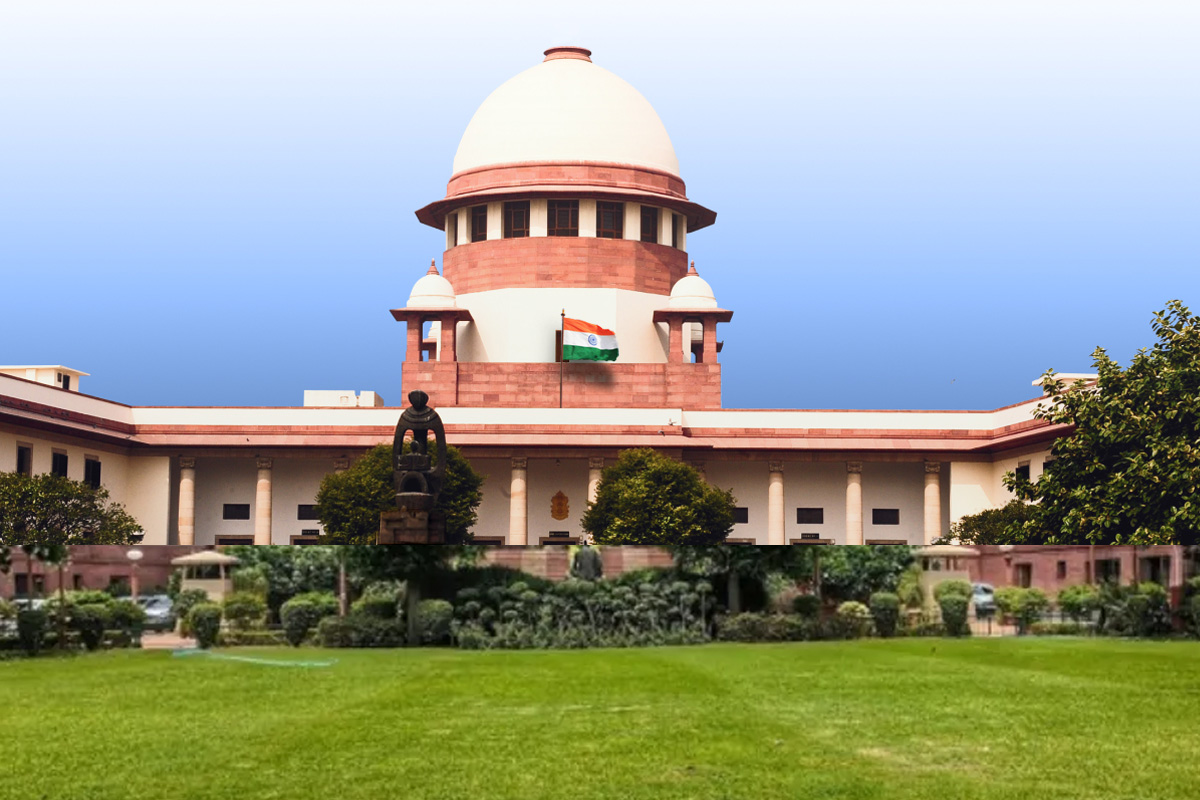
Supreme court of India

Synopsis: Increasing the Supreme Court’s judge strength is a mere palliative for the mounting number of cases, 92,101 as on January 1, 2026. To ensure timely, accessible justice, India must establish regional National Courts of Appeal, leaving the apex bench free to fulfill its true constitutional mandate…
The Supreme Court (Number of Judges) Amendment Bill, 2026, that has been passed on August 3, marks yet another attempt by Parliament to arrest the sharply rising backlog of cases in India’s highest tribunal. The Bill seeks to increase the court’s sanctioned judicial strength from 33 to 37, excluding the Chief Justice of India.
The Statement of Objects and Reasons accompanying the legislation paints a grim statistical landscape. As of January 1, 2026, the pendency in the Supreme Court reached an alarming 92,101 cases. Even while operating at a near-full capacity of 34 judges since 2019, the apex court recorded the institution of 75,410 fresh cases in 2025 against a disposal of 65,615 cases. More worryingly, the persistent gap between when a case starts and when it ends continues to widen, particularly in relation to those requiring adjudication by larger Benches. To paraphrase Dickens, the wheels of justice are grinding slowly indeed.
On paper, adding four judges appears to be an immediate and pragmatically viable remedy, but in reality they are merely palliative measures that treat the superficial symptoms rather than the underlying disease. The persistent imbalance between a case starting and it ending highlights a deeper, structural crisis within our legal architecture.
The Indian judiciary is burdened by an unmanageable influx of routine litigation and risks becoming what Percy Bysshe Shelley famously described in another context: “a beautiful and ineffectual angel, beating in the void his luminous wings in vain.” When justice is delayed to the point of structural paralysis, law becomes divorced from life, and rights are reduced to parchment promises. What the Indian judicial system urgently requires is not merely numerical augmentation, but a fundamental structural overhaul.
The core problem confronting the Indian judicial system lies in the historical transformation of the Supreme Court of India from a pure constitutional court into a routine court of appeal. Designed by the framers of the Constitution as a solemn guardian of fundamental rights, an arbiter of inter-governmental disputes, and a tribunal for resolving substantial questions of law of nationwide importance, the apex court has gradually transformed into a court of general error correction.
As detailed in the court’s own administrative manuals, the Supreme Court currently entertains roughly 45 distinct categories of cases—ranging from complex constitutional challenges to routine landlord-tenant disputes, service matters, matrimonial conflicts, and motor accident claims. An overwhelming proportion of its judicial energies are consumed by statutory appeals and Special Leave Petitions (SLPs) filed under Article 136 of the Constitution.
Article 136 was originally conceived as an extraordinary, discretionary, and residual power to be exercised sparingly in exceptional instances of grave injustice. In practice, however, it has morphed into a regular avenue of appeal. For example, approximately three-fourths of all case dockets pending from states like Kerala before the Supreme Court consist of routine Special Leave Petitions.
Consequently, the core mandate of constitutional adjudication has taken a back seat. Empirical studies analysing long-term Supreme Court data reveal a striking trend: matters decided by Constitution Benches have steadily declined over the decades. In the late 2000s, Constitution Benches heard an average of just 6.4 matters per year—the lowest level in the court’s history. When routine appellate matters crowd out foundational constitutional questions, the jurisprudence of rights suffers, leaving crucial constitutional interpretations hanging in suspense for years.
This docket congestion stands in stark contrast to the functional models of apex courts across the democratic world. Constitutional tribunals globally preserve their institutional authority by exercising strict docket control, limiting their intervention to matters of high public and constitutional import.
In its 2023 Term, the United States Supreme Court (SCOTUS) issued final decisions in just 69 argued cases, with 64 disposed of through signed opinions. According to its 2024–25 Annual Report, the United Kingdom Supreme Court (UKSC) heard 61 appeals and delivered 43 judgments.
By attempting to function as a Supreme Court of error correction across dozens of legal fields, India’s apex court operates as a “Jack of all trades,” compromising its primary role as the guardian of the Constitution and Lady Justice.
Beyond the issue of delay, the present centralised structure of the Supreme Court generates severe geographic inequality, undermining the constitutional promise of equal access to justice. Located exclusively in New Delhi, the apex court remains geographically and financially out of reach for a vast majority of litigants residing in southern, western, and north-eastern parts of the country.
Empirical research on docket origin reveals a stark regional disparity. States geographically contiguous to the National Capital Region—such as Punjab, Haryana, and Uttarakhand—account for a disproportionately high percentage of the Supreme Court’s pending dockets relative to their population. Conversely, distant but highly populous states like Tamil Nadu and Karnataka account for a fraction of the court’s filings.
For a common litigant in Kochi, Chennai, or Guwahati, bringing a matter to the Supreme Court requires engaging regional counsel, travelling to New Delhi, and hiring senior advocates at exorbitant fees. Justice, in effect, becomes a privilege dependent on proximity and financial capacity.
To resolve this crisis, India must separate constitutional adjudication from routine appellate litigation by creating intermediate National Courts of Appeal. This proposal is neither novel nor radical; it has been repeatedly endorsed by legal luminaries, jurists, and official bodies.
In 1982, Justice KK Mathew contemplated appellate courts to relieve the apex court’s burden. In Bihar Legal Support Authority v. Chief Justice of India (1986), Justice PN Bhagwati observed that the Supreme Court was never intended to function as a regular court of appeal against High Court orders. Subsequently, the Law Commission of India, in its 229th Report (2009), formally recommended dividing the court into a Constitution Bench at Delhi and Cassation Benches in four regional zones. Former Attorney General KK Venugopal similarly advocated for regional Courts of Appeal located in the North, South, East, and West.
Under this restructured model, the Supreme Court of India would be restored as a dedicated, pure Constitutional Court. It would handle matters involving substantial questions of constitutional interpretation, federal disputes between the Centre and the States, Presidential references under Article 143, and issues of national legal importance under Articles 131 and 132.
The Regional National Courts of Appeal would sit in four zonal centres (e.g., Delhi, Chennai/Hyderabad, Kolkata, and Mumbai). They would absorb routine statutory, civil, criminal, labour, matrimonial, and land acquisition appeals arising from High Courts under Articles 132, 133, 134, and Article 136. Their decisions on these routine categories would be final, eliminating the need for further appeals to the Supreme Court.
This regional arrangement finds explicit constitutional backing in Article 130, which provides that the Supreme Court shall sit in Delhi or in such other place or places as the Chief Justice of India, with the approval of the President, may appoint. Implementing this division would make justice decentralised, affordable, and swift for the common citizen while unburdening the apex court.
Increasing the Supreme Court’s judicial strength from 33 to 37 is a well-intentioned stopgap, but pure arithmetic expansion cannot fix systemic docket overload. Adding a few judges to an overburdened framework without altering its underlying architecture will only result in more benches creating divergent precedents, further accelerating the volume of appeals.
If India is to ensure meaningful, accessible, and timely justice for its 1.4 billion citizens, it must look beyond numerical adjustments. By establishing regional National Courts of Appeal to absorb routine appellate dockets, the nation can unburden the Supreme Court and restore it to its pristine glory as a true constitutional and federal court. Only through structural reform can the judiciary fulfil its founding mandate and safeguard the constitutional promise of justice for all.
Also Read:
The Supreme Court keeps clarifying obscenity. Nobody is listening
The Supreme Court’s onerous gift to the Bar: Autonomy with accountability
People as ‘ants’ no more: SC judge Ujjal Bhuyan demands transparency in judicial appointments
(Faisal CK is a Deputy Secretary in the Law Department, Government of Kerala. Views expressed are personal. Edited by R Rajesh Kumar.)



