

Published Aug 01, 2026 | 6:37 PM ⚊ Updated Aug 01, 2026 | 6:37 PM

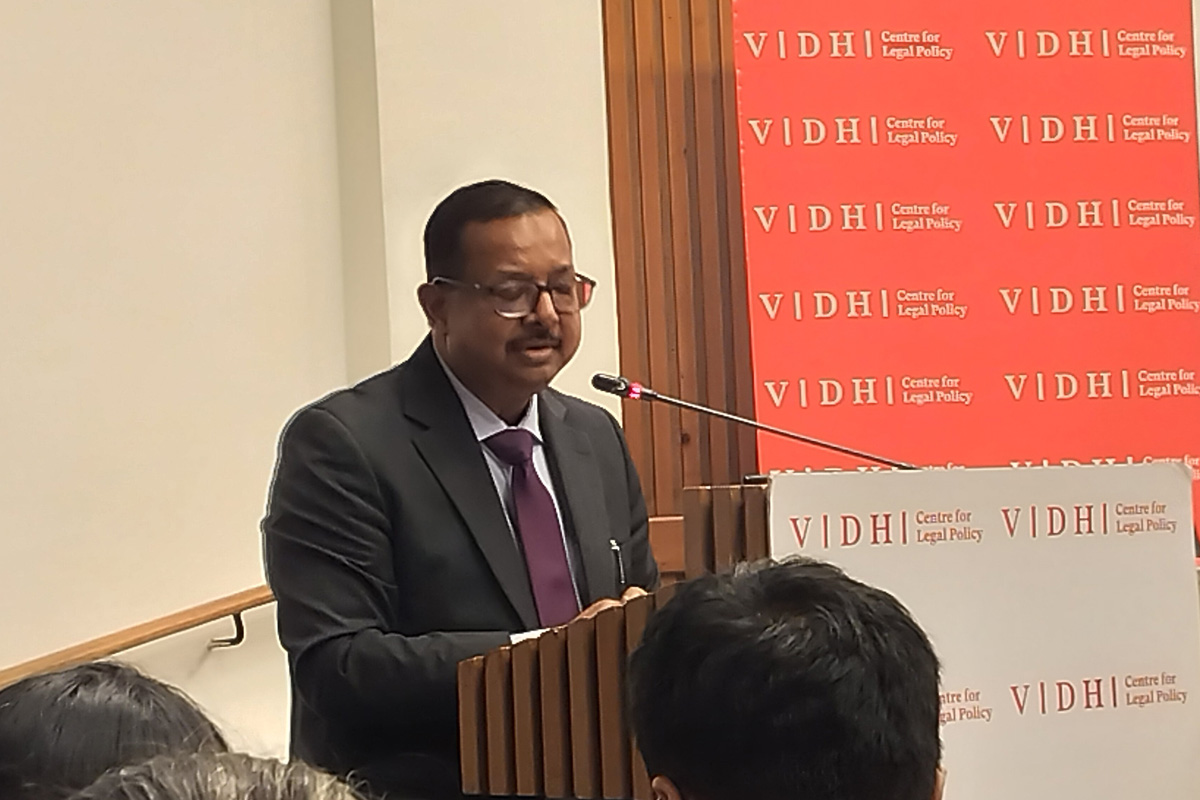
Justice Ujjal Bhuyan, one of the straightest bats in the Supreme Court. (Special Arrangement)

Synopsis: Sitting Supreme Court judge Ujjal Bhuyan said that “deliberations over the elevation and transfer of judges” must not be kept confidential as they have been recently. He had spoken out against the “criminalisation of even normal activities” a few days ago.
Supreme Court Justice Ujjal Bhuyan, known for his candour and forthrightness, has slammed the Supreme Court Collegium’s recent refusals to state the reasons behind their choice of judges, stating that this could allow individuals who may later call people ‘ants’ to enter the judiciary.
“I have noticed that the last three collegium resolutions for recommending elevations, including the latest one in 2025, contain no reasons whatsoever,” Justice Bhuyan was quoted as saying on August 1.
“By not giving reasons, the institution actually does a disservice to many judges who are genuinely outstanding and have done tremendous work.
“Conversely, by withholding reasons, we also create space for individuals to enter the judiciary who may later describe groups of people as ‘ants’ and make other remarks that are wholly unconstitutional and contrary to the values of the Constitution,” Justice Bhuyan went on to note.
His remarks came during a panel discussion at the launch of The Judicial Transparency Index: Assessing Disclosure of Information by the Supreme Court and the High Courts by legal think-tank Vidhi’s JALDI (Justice, Access & Lowering Delays in India) initiative.
Justice Bhuyan insisted that “there should be some discussion, there should be some reasons given” when the collegium announces its decisions.
“Deliberations over the elevation and transfer of judges remain confidential. Reasons for rejecting or deferring a recommendation are rarely disclosed in full. And the criteria applied are not codified in any publicly accessible instrument comparable to the Memorandum of Procedure’s own limited disclosure,” Live Law quoted the judge as saying.
He also said that while earlier decisions were criticised as “somewhat formulaic or copy-paste in nature”, it had to be acknowledged that “at least some reasons were given to justify the recommendations.”
Several media reports interpreted Justice Bhuyan as referring to a 2024 statement by a former Allahabad High Court judge.
“In our country, we are taught not to harm even the smallest animals, not to kill ants, and this lesson is ingrained in us… But in your culture, from a long age, children are exposed to the slaughter of animals. How can you expect them to be tolerant and compassionate?” Justice Shekhar Kumar Yadav had stated.
Justice Bhuyan’s observations also come close on the heels of the Jantar Mantar protests called by the Cockroach Janta Party that was born out of a satirical response to Chief Justice of India Surya Kant’s dismissal of certain youngsters without jobs as “cockroaches”.
On July 25, Justice Bhuyan, while delivering the Justice GP Singh Memorial lecture at the National Law Institute University in Bhopal, had condemned the criminalisation of protests like the one at Jantar Mantar.
“The right to express one’s views and to demonstrate peacefully are fundamental freedoms of the citizens. Debate and dissent are the essence of democracy. Unfortunately, even normal activities are being criminalised,” he had noted.
Justice Bhuyan had also underlined the importance of protests in a democracy.
“These issues raise serious questions. Though the courts are responsive and do grant bail, many a time it is belated. But it is the restrictive conditions which are imposed while granting bail that are causing the greatest concern. By such restrictive orders, are the courts indirectly telling the citizens or discouraging the citizens from expressing their dissent?” he had said.
Also Read:
Citizens aren’t slaves, police aren’t servants of CM or PM, reminds Bombay HC’s Justice Jamdar
Lie! cry netizens as clip of Attorney General calling Ethanol Blending an experiment surfaces
(Edited by R Rajesh Kumar.)



