
Published Aug 04, 2026 | 6:17 PM ⚊ Updated Aug 04, 2026 | 6:19 PM

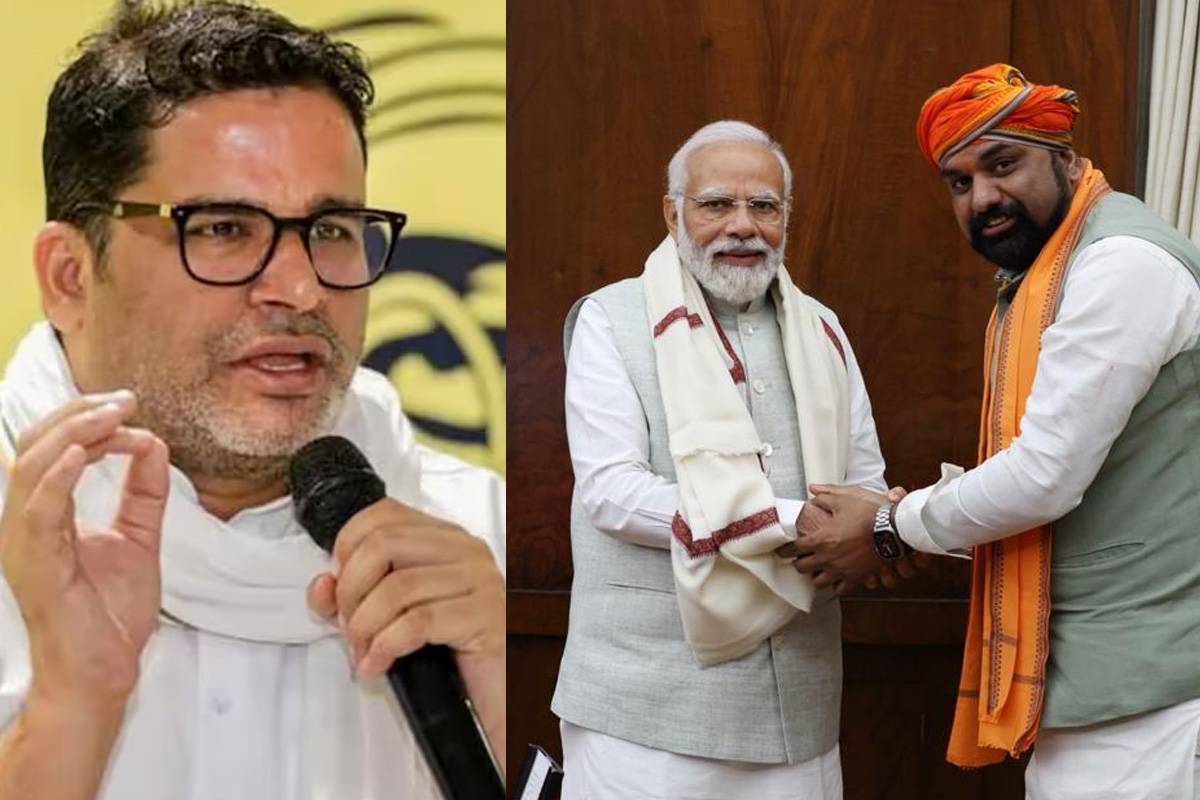
Prasant Kishor, Prime Minister Narendra Modi and Bihar Chief minister Samrat Choudhary

Synopsis: Prashant Kishor’s win in Bankipur delivers another stinging rebuke to politicians who have fallen prey to their own hubris. It also reveals the underlying frustration with a flailing Opposition that needs to reinvent itself…
Indian democracy has repeatedly demonstrated one enduring truth: no political party, however powerful, can take the electorate for granted. Governments may command impressive parliamentary majorities, dominate public discourse and appear electorally invincible, but the Indian voter has consistently shown a remarkable ability to puncture political arrogance. The recent by-election results from Bankipur in Bihar and Datia in Madhya Pradesh should therefore be viewed not merely as isolated electoral outcomes, but as important political signals.
The Bankipur by-election has drawn national attention because it was no ordinary contest. For over three decades, the constituency had remained a Bharatiya Janata Party (BJP) bastion. Since 1995, the seat and its predecessor had consistently elected BJP representatives, most recently the party’s national president Nitin Nabin, who vacated it after entering the Rajya Sabha. The victory of Jan Suraaj founder Prashant Kishor in this prestige contest therefore carries significance beyond a single assembly constituency. It marks the first major electoral breakthrough for a new political formation in one of the BJP’s strongest urban fortresses.
Equally noteworthy was the Datia by-election in Madhya Pradesh, where the Congress retained the constituency despite the BJP governing both the state and the Centre. While by-elections do not necessarily predict future general election outcomes, they often capture shifts in public mood much earlier than conventional political analysis.
The temptation is to interpret these setbacks solely as a rejection of the BJP. That would be an oversimplification. The verdict is broader than partisan politics. It reflects growing voter discomfort with excessive centralisation of power, leadership-driven politics and the perception that institutions within political parties have become increasingly irrelevant.
Over the past decade, Prime Minister Narendra Modi has emerged as India’s most dominant political leader. His electoral successes have been extraordinary, and his personal popularity remains significant. However, prolonged political dominance often creates the risk of overconfidence. Critics increasingly argue that decision-making within the BJP has become concentrated around a small leadership circle, reducing internal consultation and encouraging a style of governance perceived by sections of the electorate as excessively centralised.
This perception is reinforced by the BJP’s repeated success in engineering defections from opposition parties such as the Shiv Sena, Nationalist Congress Party and Trinamool Congress factions. While such political realignments may be constitutionally permissible and electorally advantageous, many voters increasingly view them as weakening democratic competition and reducing ideological accountability. Politics driven primarily by defections rather than persuasion inevitably raises questions about the health of representative democracy.
Yet, the lesson from Bankipur is not exclusive to the BJP. The result is equally uncomfortable for the principal opposition, the Rashtriya Janata Dal (RJD). Voting patterns indicate that both the BJP and the RJD lost significant support, creating space for an alternative political force. Jan Suraaj’s victory from the seat suggests that voters are not merely replacing one established party with another; they are increasingly willing to experiment with new political platforms when both ruling and opposition parties fail to inspire confidence.
Indian politics offers numerous reminders that hubris often precedes electoral decline. During the 2024 Lok Sabha election campaign, the BJP confidently projected the slogan “Abki baar 400 paar“. The final verdict was considerably more restrained, with the party falling well short of a majority and requiring coalition support to form the government.
Similar political patterns have unfolded across states. In Andhra Pradesh, the YSR Congress Party’s slogan “Why not 175?” projected overwhelming confidence before the 2024 Assembly elections. The electorate instead reduced the party to a marginal legislative presence. In Telangana, the Bharat Rashtra Samithi leadership spoke confidently about securing a “century” of seats before the 2023 elections. Instead, the party lost power, and later failed to secure even a single Lok Sabha seat.
These electoral reversals cannot be explained merely through campaign management or anti-incumbency. They underline a deeper democratic instinct among Indian voters. Citizens may reward strong leadership, but they seldom tolerate the perception that electoral victories have created political entitlement.
Another worrying trend extends beyond individual parties. Internal democracy within political organisations appears to be steadily weakening. Most major parties possess formal decision-making structures—Congress has its Working Committee, the BJP its Parliamentary Board and national executive, the Telugu Desam Party its Politburo, while regional parties maintain political affairs committees and executive bodies. Yet increasingly, major political decisions appear to emanate from a handful of top leaders rather than through institutional deliberation.
This concentration of authority has consequences beyond party organisation. When internal debate diminishes, policy errors become harder to correct. Leadership becomes insulated from dissent, reducing responsiveness to changing public sentiment. Democratic institutions survive not merely through elections but through continuous consultation and accountability within political parties themselves.
The recent student protests over employment, competitive examinations and educational governance further illustrate this disconnect. Young Indians increasingly expect governments to address questions of jobs, economic opportunity and institutional fairness rather than to rely primarily on political messaging. These ‘roti, kapda, makaan‘ concerns have begun influencing electoral behaviour, particularly among first-time and urban voters.
At the same time, opposition parties should resist celebrating prematurely. Their own organisational weaknesses remain substantial. Dynastic politics, fragmented leadership, inconsistent messaging and the absence of credible governance alternatives continue to limit their appeal. Bankipur demonstrates dissatisfaction with the ruling establishment, but it also exposes public frustration with traditional opposition parties that have failed to reinvent themselves.
Perhaps the most important lesson emerging from these by-elections is that Indian democracy remains remarkably self-correcting. Electoral dominance is never permanent. Political mandates are conditional, not unconditional. Voters may tolerate policy failures longer than they tolerate political arrogance.
Bankipur should therefore not be read simply as a BJP defeat or a Jan Suraaj victory. It is a reminder that democratic legitimacy must be continuously renewed through humility, performance and responsiveness. Governments that mistake electoral success for permanent public endorsement eventually discover that India’s voters remain fiercely independent.
The Indian electorate has repeatedly demonstrated that it values confidence, but rejects complacency; rewards decisive leadership, but resists concentrated power; and supports strong governments, but not political invincibility.
In India’s democracy, no fortress is impregnable, no mandate is permanent, and no leader is bigger than the voter.
Also Read:
‘It’s the economy, stupid’: The making of India’s Gen Z discontent
The Opposition’s recent aggression signals contraction, not recovery
(Edited by R Rajesh Kumar.)



