
Published Aug 01, 2026 | 5:17 PM ⚊ Updated Aug 01, 2026 | 5:17 PM

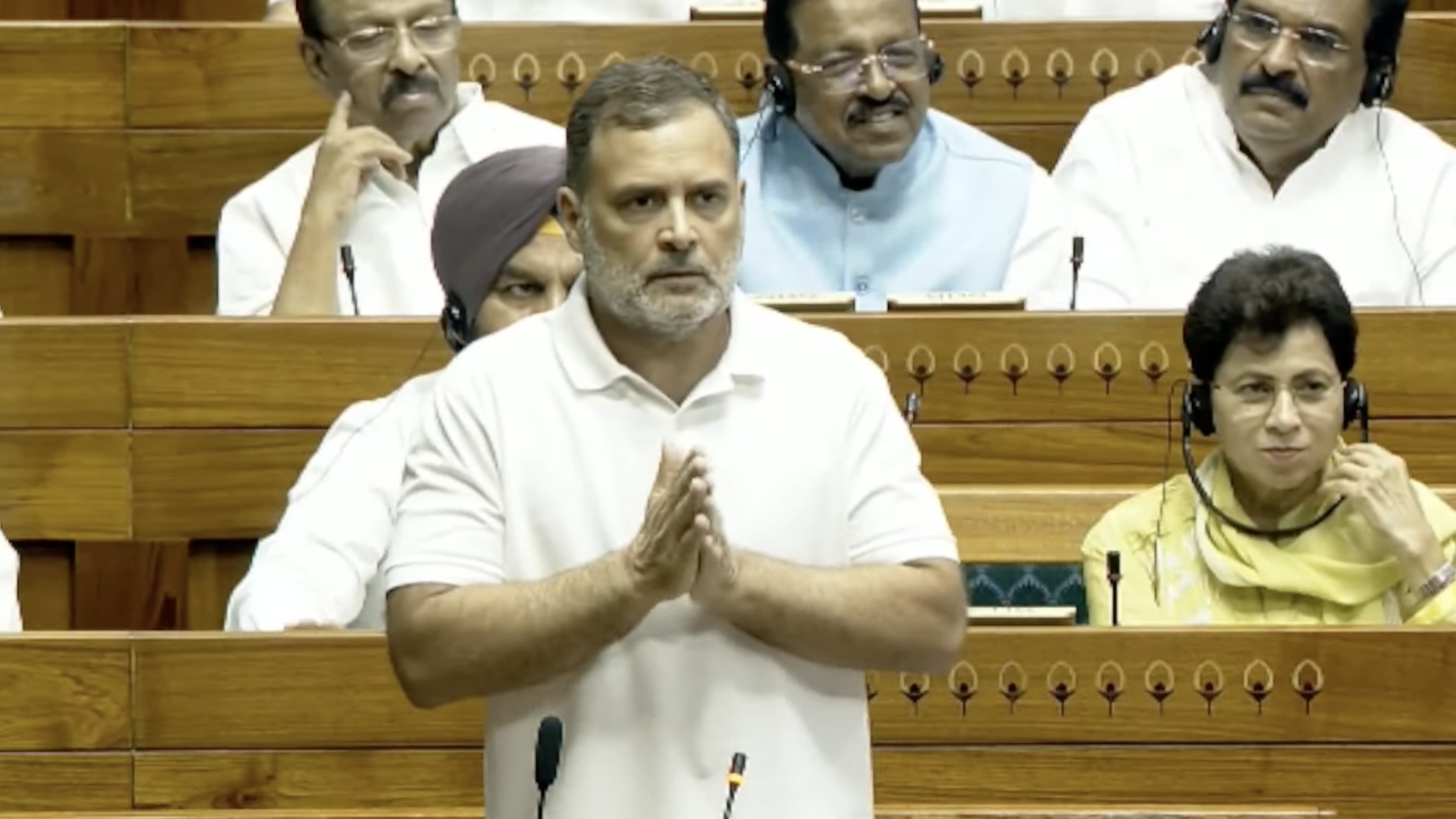
Leader of the Opposition in the Lok Sabha Rahul Gandhi.

Synopsis: The Opposition is not only making more accusations but also demanding more answers from the government. The strategy works well for them in the current atmosphere. But whether this immediate survival tactic translates to an electoral recovery remains to be seen.
The Opposition has found both its voice and a renewed sense of aggression in the immediate aftermath of the Jantar Mantar protests. But what does it signify?
It arrives at a time when the rout and the defection spree in Bengal have gutted its ranks. The Congress and the residual INDIA bloc now weaponise institutional distrust, parliamentary disruption and amplified public anger. These form their last available tools.
The May 2026 West Bengal verdict delivered a clear result. The BJP crossed 200 seats. It ended fifteen years of Trinamool rule. It left Mamata Banerjee’s party with roughly eighty seats.
Collapse struck at once. A clear majority of TMC MLAs—initially fifty-eight, later claimed to be a higher number—broke away. They installed Ritabrata Banerjee as the Leader of the Opposition. They seized the legislative party. Around twenty of the party’s twenty-eight Lok Sabha MPs merged with the obscure Nationalist Citizens Party of India. They pledged support to the NDA. Rajya Sabha members resigned. Municipal leaders exited. The haemorrhage accelerated.
Parallel pressure hit Uddhav Thackeray’s Shiv Sena. MPs crossed the two-thirds threshold. They joined the Eknath Shinde faction. Earlier, AAP exits in the Upper House had set the pattern. The ruling side now approaches the numbers needed for constitutional amendments. The non-NDA space has contracted sharply.
Yet the remainder of the opposition continues to raise its voice. It stalls the Monsoon Session repeatedly. It cites NEET paper-leak allegations. It condemns police action against student protesters. It stages black-attire protests. It holds Makar Dwar demonstrations. It files adjournment notices. It aligns with youth outrage.
These tactics have become routine. Rahul Gandhi frames the moment as pure resistance. He declares institutions are compromised. He claims agencies and media are captured. He insists continuous confrontation forms the only path. He asserts the next election is “already won” if fairness holds. The claim works as mobilisation rhetoric, not a forecast.
This aggression serves a strategy. Visibility equals survival. A quiet, diminished opposition risks vanishing.
The INDIA remnants have sought to tap into the student fury over examination integrity and the police response. They have forced their entry into a live national conversation. The BJP cannot easily dismiss this. The narrative of institutional capture carries considerable weight.
Opposition leaders brand SIR as “vote chori“. They attack selective application of anti-defection rules. They challenge the Speaker’s discretion. This narrative explains organisational losses without admitting internal failure. It also undercuts the NDA’s expanding numbers. The collapse of regional heavyweights strengthens Congress’s relative position. TMC diminishes. DMK grows estranged. Congress claims the role of necessary glue with greater credibility. Aggression projects leadership. It tests whether residual partners fall in line.
A colder calculation drives this approach. Defections accelerate when a parent party looks finished. Sustained public confrontation raises the political cost of further exits. It signals to remaining cadres that the fight continues. It also shifts focus. Opposition leaders are deploying the vocabulary of resistance, institutional takeover and suppressed popular will. Seat tallies and legislative strength have moved against them. This remains the only coherent story left.
None of this reverses the balance. Leaders continue to exploit the anti-defection law’s two-thirds merger window with clinical efficiency. The NDA has been thickening its parliamentary cushion. It is consolidating state power in Bengal.
For the Opposition, aggression buys time and oxygen. But it fails to restore organisational muscle in the lost states. It fails to solve the deeper problem. This Opposition has repeatedly failed to convert anti-incumbency into durable majorities. It has not built lasting alternatives in key states. It has not closed the organisational gap with the BJP’s machine.
The transformation is in keeping with the moment. Parties that lose the capacity to win and hold power through conventional means default to maximal confrontation. Congress and its remaining INDIA partners have chosen noise and disruption. But the quieter alternatives—rebuilding, policy differentiation, organisational discipline—continue to look even more remote after Bengal. Whether this noise converts into eventual electoral recovery remains open. What stands clear is simpler. The volume in the Opposition ranks has been rising because the ground is shrinking.
Also Read:
Withdrawing consent: Gene Sharp and the Cockroach uprising
Jantar Mantar protests mark the birth of fear among Modi and his men
(Edited by R Rajesh Kumar.)



