

Published Sep 05, 2026 | 7:00 AM ⚊ Updated Sep 05, 2026 | 7:00 AM

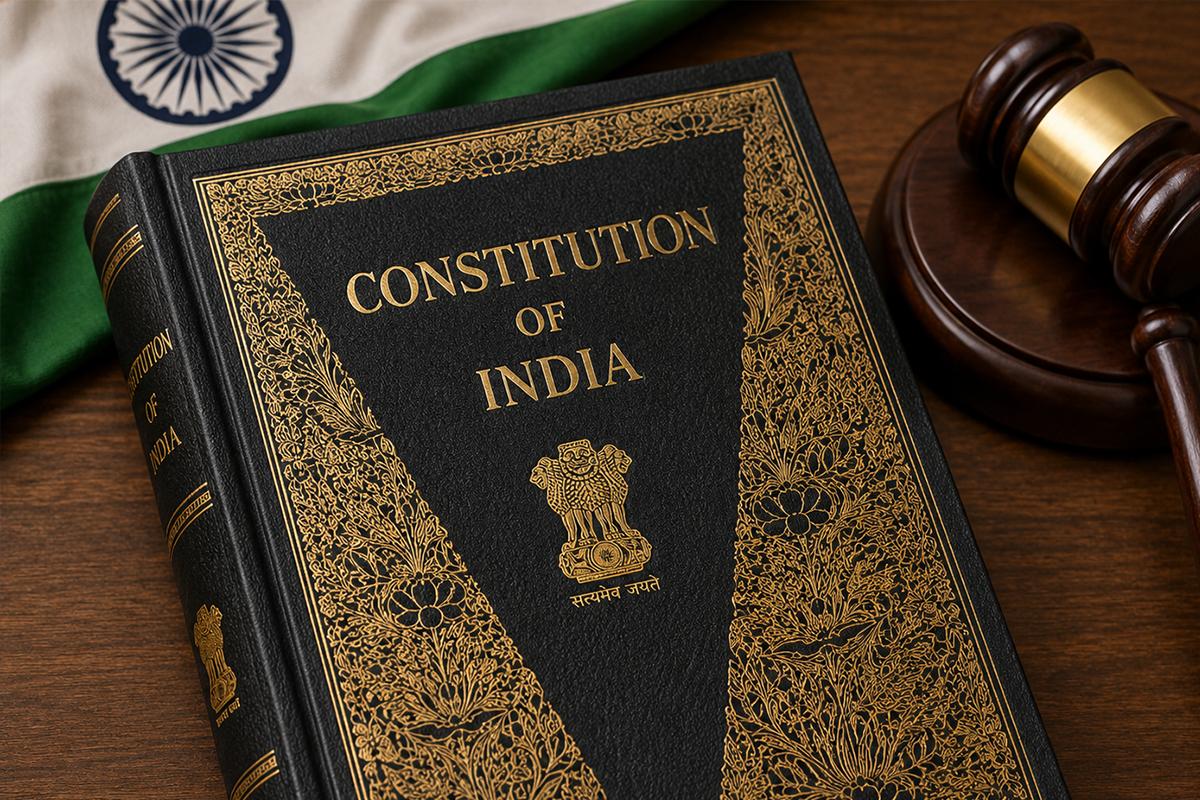
Image used for representational purpose.

Synopsis: As world leaders like Andy Burnham debate codified charters, history proves that written constitutions mean little without underlying political culture. From Britain to Israel, Nepal, and India, institutional stability relies not on parchment promises, but on a living commitment to constitutionalism.
The debate surrounding codified constitutions has resurfaced in the United Kingdom following Prime Minister Andy Burnham’s recent calls for a “new constitutional settlement” and a codified text to anchor regional devolution.
Unhappy with how Britain’s unwritten framework allows power and resources to be hoarded in Whitehall, Burnham envisions a written charter—akin to Germany’s Grundgesetz—that legally enshrines regional autonomy and guarantees “equivalent living standards” across post-industrial Britain. Unlike most modern nation-states governed by a single codified charter, Britain has famously relied on an uncodified framework: a delicate patchwork of statutes, common law precedents, conventions, and historic treaties. Burnham’s push sparks a timeless question in political philosophy: Can a written constitution, by itself, improve governance and guarantee the stability of a state?
England’s foundational gift to modern statecraft is not the administrative perfection of codified statutes, but constitutionalism itself—the principle that government authority must be bound by institutional checks and balances. Defining and limiting governmental power and proclaiming and safeguarding the rights of the citizenry is the core of constitutionalism.
Historically, Britain achieved stability through a pragmatic blend of three classic forms of government—monarchy, represented by the Crown, offered continuity and political neutrality. Aristocracy, traditionally embodied by the House of Lords, acted as a sober chamber of revision, and democracy manifested in the House of Commons, has given voice to popular sovereignty.
This tripartite architecture mirrors Aristotle’s classical ideal of the “mixed constitution.” Writing in the 4th century BCE, Aristotle posited that pure forms of government—monarchy, aristocracy, or democracy—are inherently unstable and prone to degenerate into tyranny, oligarchy, or mob rule. Stability, he argued, requires balancing competing social classes and institutions. England achieved this organic equilibrium without needing to freeze it in a rigid master code.
Rather than relying on explicit clauses, the British system functions on a constitutional social contract operating across two key dimensions, i.e., a Vertical Contract that governed the relationship between the State and its citizens, securing individual liberty against arbitrary authority and a Horizontal Contract that defined social trust and civic norms operating inter se (among citizens themselves), fostering a shared public ethos without requiring hyper-litigious codification.
Proponents of unwritten systems argue that they possess an organic adaptability—a “living tree” doctrine in action. Unburdened by rigid amendment procedures, uncodified institutions can gracefully evolve alongside changing societal norms, echoing Ronald Inglehart’s post-materialist theory that economic security gradually shifts societal values toward self-expression, pluralism, and inclusivity.
A prime contemporary illustration lies in the evolving interpretation of the British Monarch’s title as Defender of the Faith. In a modern, pluralistic society, the role has subtly shifted in practice toward defending faith generally and nurturing inclusivity across diverse religious communities. This transition demonstrates how foundational norms adapt organically without legislative friction or political deadlock.
However, the unwritten model is not without grave vulnerabilities. Israel’s historical experience offers a stark counterpoint to Britain’s evolutionary stability, illustrating what happens when an uncodified framework operates in a deeply fractured society without a shared political culture.
At its founding in 1948, Israel’s Declaration of Independence promised a formal written constitution. Yet, deep ideological and religious divisions rendered an immediate master consensus impossible. To bypass the impasse, the Knesset adopted the Harari Decision of 1950, opting to construct a constitution “chapter by chapter” through a series of Basic Laws.
For decades, these Basic Laws functioned primarily as administrative guidelines. But in 1992, the passage of basic rights legislation prompted the Supreme Court, under President Aharon Barak, to declare a “Constitutional Revolution” in the 1995 Bank Mizrahi landmark ruling—asserting that Basic Laws held constitutional supremacy and granting the judiciary the power to strike down parliamentary statutes.
Because this constitutional framework was constructed piecemeal without an explicit written social contract ratified by the public, it triggered severe failure modes. Lacking a master code with strict amendment thresholds, ruling parliamentary coalitions frequently rewrote Basic Laws by simple majorities to serve transient political interests. Moreover, without a clear horizontal consensus inter se between secular, Ultra-Orthodox, National Religious, and Arab citizens, fundamental questions of state identity were left perpetually raw. The crisis culminated in the massive political unrest of 2023 over proposed judicial reforms. Lacking a bicameral legislature, federalism, or a formal written charter, the unwritten system descended into open constitutional brinkmanship between the executive and the judiciary.
Israel demonstrates that unwritten constitutionalism requires an extraordinary degree of underlying civic consensus; without it, an uncodified framework becomes an arena for constant majoritarian instability.
Conversely, the global historical record demonstrates that formal codification is equally no panacea. Across the Global South and authoritarian regimes worldwide, history is littered with “Zombie Constitutions”—texts that boast comprehensive bills of rights, flawless separation-of-powers provisions, and lofty democratic promises on paper, yet remain entirely dead in practice.
Nepal’s post-monarchical constitutional journey offers a stark modern example. Between 1948 and 2015, Nepal promulgated seven different constitutions. Its 2015 charter—born out of a decade-long insurgency and drafted by an elected Constituent Assembly—was hailed as a progressive breakthrough, establishing a secular, federal democratic republic with dedicated commissions for marginalised groups. Yet, fast-tracked through political expediency, it failed to build a genuine horizontal social contract with key ethnic communities like the Madhesis in the southern Terai.
Despite statutory safeguards engineered to prevent executive instability, Nepal’s political elites repeatedly exploited procedural loopholes, resulting in over 13 governments since 2008 and frequent arbitrary dissolutions of Parliament. In Gramscian terms, Nepal’s charter collapsed into façade constitutionalism because elite patronage networks hijacked the formal rules, proving that new parchment cannot substitute for enduring civic consensus.
Even when a written constitution achieves long-term democratic endurance, its formal guarantees remain vulnerable to shifts in political culture. The Indian experience under the Narendra Modi administration provides a compelling case study on how a written framework’s latent unitary biases can be mobilised for executive centralisation.
India’s Constitution was explicitly engineered as a “quasi-federal” system—what Professor KC Wheare described as a unitary state with subsidiary federal features. To guard against post-Partition Balkanization, the framers embedded centralising mechanisms into the text, such as Article 1 (an indissoluble “Union of States”), central control over residuary powers, and discretionary gubernatorial authority under Articles 200 and 356.
During the coalition era (1989–2014), regional political bargaining offset these unitary provisions, allowing federalism to flourish. However, the emergence of a single-party majority since 2014 reactivated the text’s centralising levers. The Goods and Services Tax (GST) architecture subsumed state indirect taxation powers, while centrally sponsored schemes increasingly reduced states to implementation arms. Governors in opposition-ruled states have routinely withheld assent on state bills or stalled executive appointments, creating institutional gridlock. The push for “One Nation, One Election” risks submerging distinct regional political cultures beneath single national narratives.
The Indian trajectory demonstrates that a written constitution’s structural federal checks are rarely sufficient on their own to prevent centralisation when a dominant political party commands a strong national mandate. A constitution that is federal in form can function as a centralised hegemony in practice if the political culture moves toward majoritarian nationalism.
This dynamic brings us back to Aristotle’s core insight: a constitution (politeia) is not merely a legal document, but “the way of life chosen by the state.” It is an expression of a society’s paideia—its moral education and political habits. Laws are ineffective if the political culture does not habituate citizens and leaders toward justice and self-restraint.
Modern political science frameworks reinforce this classical wisdom. Gabriel Almond and Sidney Verba pointed out that a stable constitutional order requires a delicate balance of participant enthusiasm and respect for institutional rules. Furthermore, vibrant horizontal networks among citizens (inter se) generate the civic trust required to hold constitutional actors accountable. When a constitution aligns with a nation’s civic ethos, governance thrives. When a deep disconnect exists, the formal text becomes a decorative parchment.
As nations debate the mechanics of statecraft, modern democracies would do well to recall Dr BR Ambedkar’s germinal closing address to the Indian Constituent Assembly on November 25, 1949:
“However good a constitution may be, it is sure to turn out bad because those who are called to work it happen to be a bad lot. However bad a constitution may be, it may turn out to be good if those who are called to work it happen to be a good lot.”
Ambedkar’s plea for “constitutional morality”—the cultivated habit of abiding by institutional limits and respecting democratic forms—is the modern equivalent of Aristotle’s paideia. Whether a state relies on centuries of unwritten conventions, piecemeal Basic Laws, or a meticulously drafted master code, ink and parchment can only provide a scaffold. Inking the text is merely the beginning; the survival of a state ultimately depends on living the constitutionalism through a sustained, shared political ethos.
Also Read:
Beyond numbers: Why the Supreme Court needs structural reform, not more judges
The Supreme Court’s onerous gift to the Bar: Autonomy with accountability
Beyond oil and ports: The civilisational logic of India’s Shia soft power



