

Published Oct 25, 2026 | 4:30 PM ⚊ Updated Oct 25, 2026 | 4:30 PM

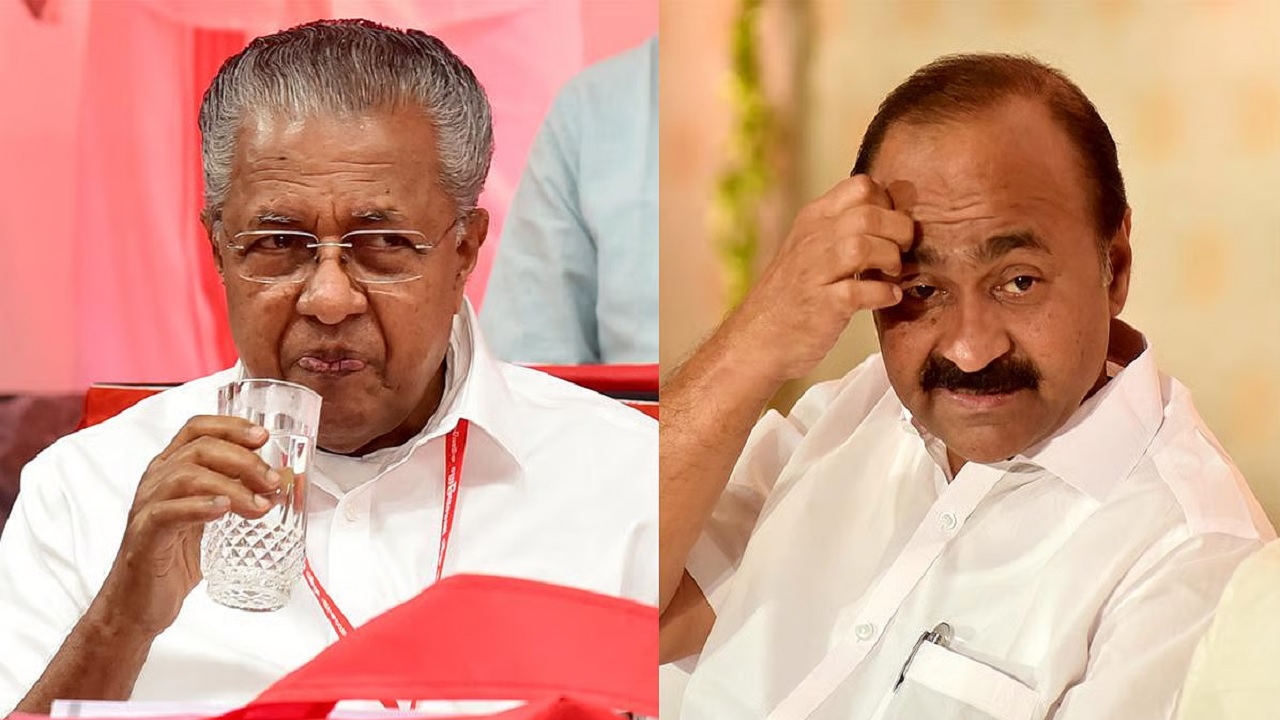
Pinarayi Vijayan and VD Satheesan

Synopsis: The Enforcement Directorate’s report recommending cases against former Keralam Chief Minister Pinarayi Vijayan and his family in the CMRL-Exalogic case has put the Congress-led UDF government in a difficult position. If the UDF government acts immediately on the ED’s recommendation, it risks being accused of endorsing the very agency the Congress has consistently criticised at the national level. But if it delays action or declines to act without convincing legal grounds, it risks alienating its own ranks and inviting accusations of shielding its opponents in the State.
The Congress has long accused the BJP-led Union government of using central investigative agencies such as the Enforcement Directorate (ED) as political instruments to intimidate opposition leaders, settle political scores or tarnish their reputations.
The party has consistently accused the ED, Income Tax Department and the Central Bureau of Investigation (CBI) of selectively targeting those outside the ruling dispensation while showing undue leniency towards those who join or support the BJP or the NDA.
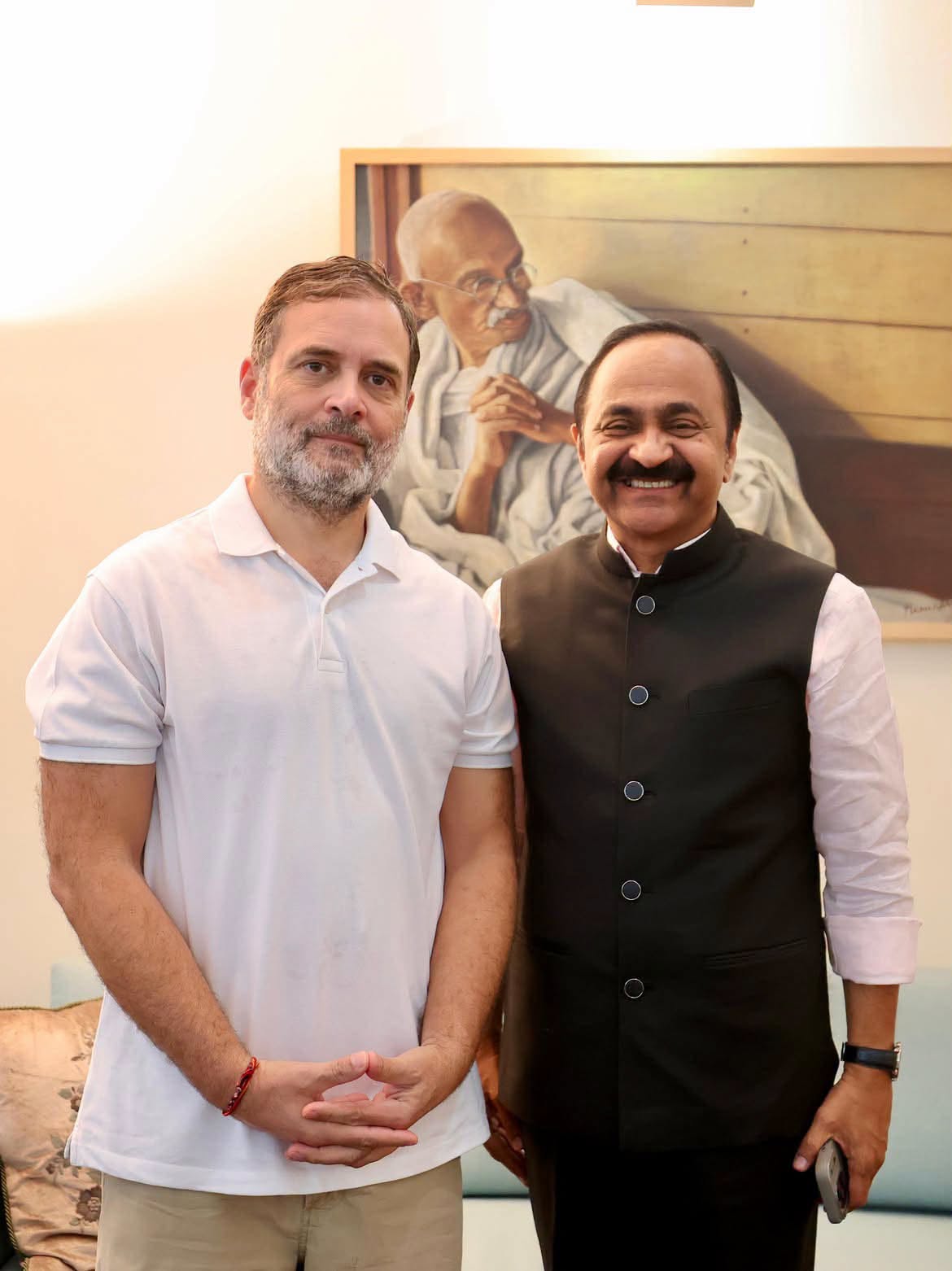
VD Satheesan with Leader of the Opposition in the Lok Sabha Rahul Gandhi.
In Keralam, where the Congress-led UDF is now in power, the prospect of an ED probe against former Chief Minister and Leader of the Opposition Pinarayi Vijayan has put the party in uncomfortable waters.
In September, the agency sent a report to State Police Chief Ravada A Chandrasekhar recommending the registration of cases under the Prevention of Corruption Act, 1988, against Vijayan, his daughter, T Veena, and his son-in-law, former Minister PA Mohamed Riyas, in connection with the CMRL-Exalogic case. The report also alleges money laundering and hawala transactions involving Riyas.
The question before the UDF government is whether the material supplied by the ED warrants further criminal proceedings and, if so, what action the law requires.
The CPI(M) has alleged that the probe amounts to political persecution.
If the UDF government acts immediately on the ED’s recommendation, it risks being accused of endorsing the very agency the Congress has consistently criticised at the national level. But if it delays action or declines to act without convincing legal grounds, it risks alienating its own ranks and inviting accusations of shielding its opponents in the State.
For now, the Congress leadership has opted for caution. KPCC president Sunny Joseph said the government would decide only after obtaining comprehensive legal advice.
Chief Minister VD Satheesan has maintained that the Home and Law departments must examine the allegations before the government decides on its next step.
He has rejected the suggestion that this approach contradicts the Congress’s national position, pointing to the cooperation extended by Sonia and Rahul Gandhi during ED questioning.
Satheesan has also drawn a distinction between opposing the misuse of investigative agencies and resisting lawful investigation. He has said the law must take its course and that the government will not use its authority to settle political scores.
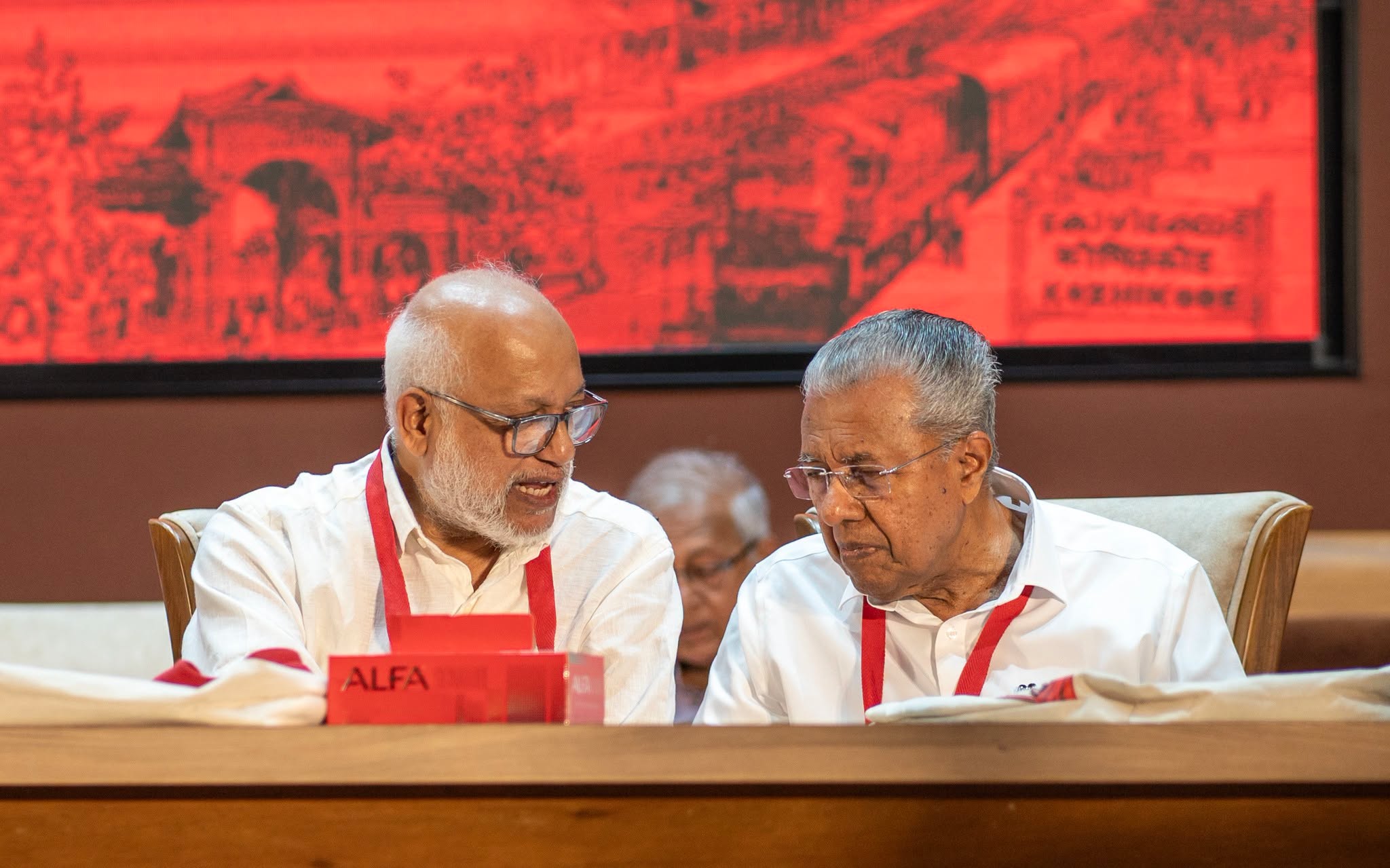
Leader of the Opposition Pinarayi Vijayan and CPI(M) general secretary MA Baby.
The proposed course of action, however, has drawn criticism from within the Congress.
Muvattupuzha MLA Mathew Kuzhalnadan, who has consistently raised the CMRL-Exalogic issue, has questioned the need for further preliminary scrutiny given the information supplied by the ED and the observations made in related court proceedings.
He has also asked why Vijayan should be treated differently from former Chief Minister Oommen Chandy, who faced investigations under the previous LDF government.
Others, such as Jinto John and K Sudhakaran, see the approach as overly cautious. Sunny Joseph, meanwhile, has urged party leaders against airing their differences in public, asking them to raise their concerns within party forums instead.
A KPCC office-bearer told South First that the ED’s past conduct and the merits of the allegations in this case are separate questions.
“Genuine financial irregularities, if supported by evidence, must be examined on their merits. The party’s criticism of the Centre cannot become a reason to avoid accountability in Keralam. Nor should the UDF government treat the ED’s recommendation as conclusive merely because it concerns a prominent leader from the rival front,” they said.
“If legal scrutiny points to the need for an FIR, proceeding with it would not amount to an endorsement of every ED action elsewhere. If the material does not meet the required threshold, the reasons for withholding action must be equally clear and defensible.”
Also Read: Crying wolf over Kashi, Jinnah and beef: North Indian vlogger angers Keralam with Fort Kochi video
The Satheesan government’s actions also have implications for the Congress-led INDIA bloc at the national level.
The CPI(M), a key INDIA bloc ally, has accused the Congress leadership in Keralam of supporting the ED’s demand for a case against Vijayan.
The party’s central committee has accused KPCC president Sunny Joseph of double standards, pointing to the Congress’s protests against ED action nationally against its own leaders, including Rahul Gandhi, and its support for the agency when its target is a Left leader.
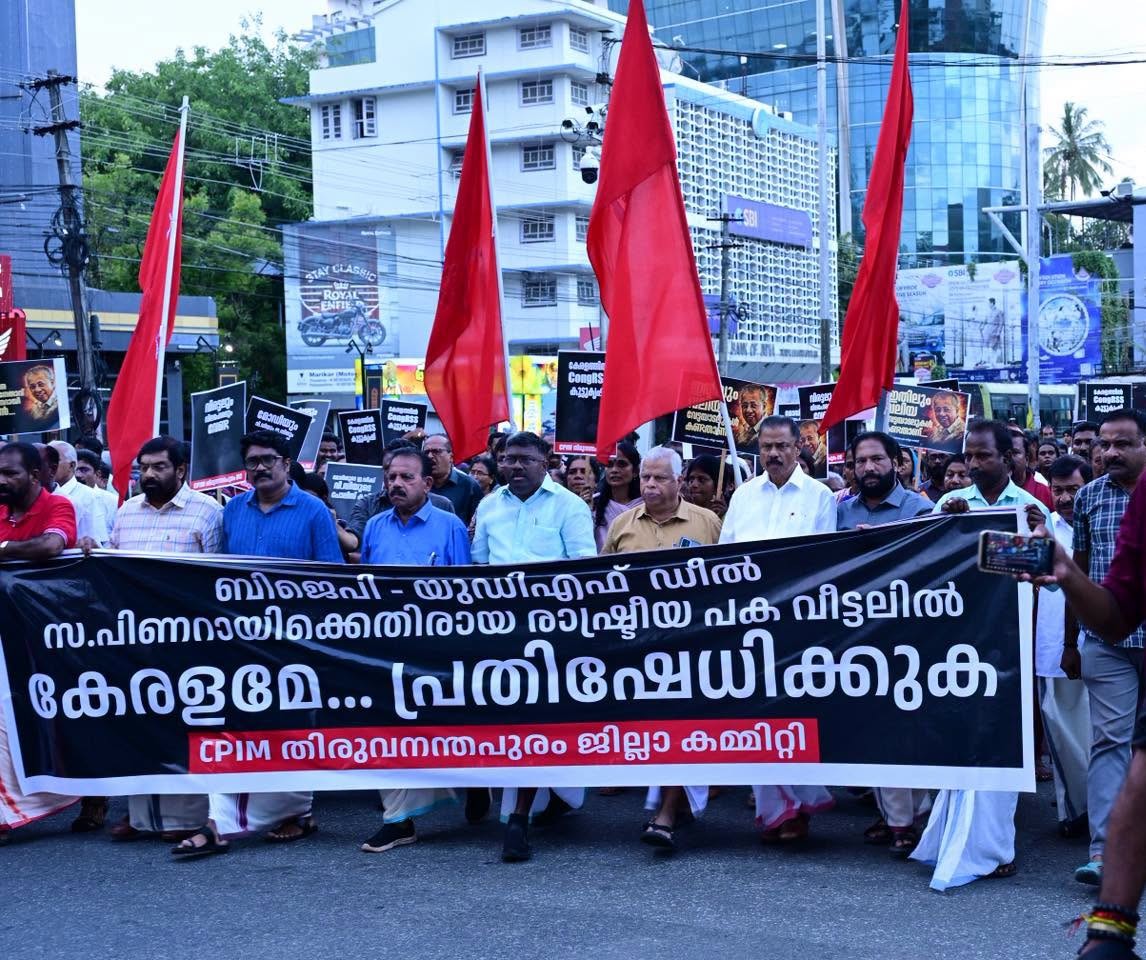
CPI(M)’s Thiruvananthapuram district committee members take out a protest march against the ED’s action against Pinarayi Vijayan.
It warned the Satheesan government against acting at the agency’s behest and vowed to fight the move through political and legal means.
“The Congress cannot claim that the ED is being used as a political weapon by the BJP at the national level and then endorse its actions in Keralam. This is not merely a question about Pinarayi Vijayan; it is about whether the opposition at the Centre can take a consistent stand against the misuse of central agencies,” a CPI(M) leader told South First.
“If every party changes its stand depending on who is being targeted, what credibility will the opposition have when it speaks of political vendetta? The credibility of a political party is tested not when it defends its own leaders, but when it has to apply the same principles to its opponents. If the Congress believes that the ED is being misused nationally, it must explain why the agency’s actions should be viewed differently in Keralam.”
Political analyst Joseph C Mathew told South First that the UDF government’s response would be closely watched as it must show that its decisions rest on legal advice and the available evidence, not hostility towards the LDF or fear of political repercussions.
“The Congress is caught in a political quandary, and there is an element of duplicity in its position. It has repeatedly accused the BJP-led Centre of turning central agencies into instruments of political intimidation. But when the ED’s actions touch its principal political rival in Keralam, the Congress finds itself on the horns of a dilemma — whether to question the agency’s motives or to go along with its move,” he said.
“If a complaint raises questions of wrongdoing, should it not be investigated simply because the person concerned belongs to the opposition? The crucial issue is whether there is credible material to justify an investigation and whether the process is conducted fairly, without political interference. An allegation is not proof of guilt, but neither should political position become a shield against scrutiny.”
He added that the ED’s track record and the merits of a particular complaint must be judged separately.
“The agency cannot be presumed right merely because it has made a recommendation, nor can its findings be dismissed outright because it has faced allegations of political bias elsewhere. The law must determine what happens next, not the political convenience of either front.”
(Edited by Dese Gowda)



