

Published Oct 25, 2026 | 7:00 AM ⚊ Updated Oct 25, 2026 | 7:00 AM

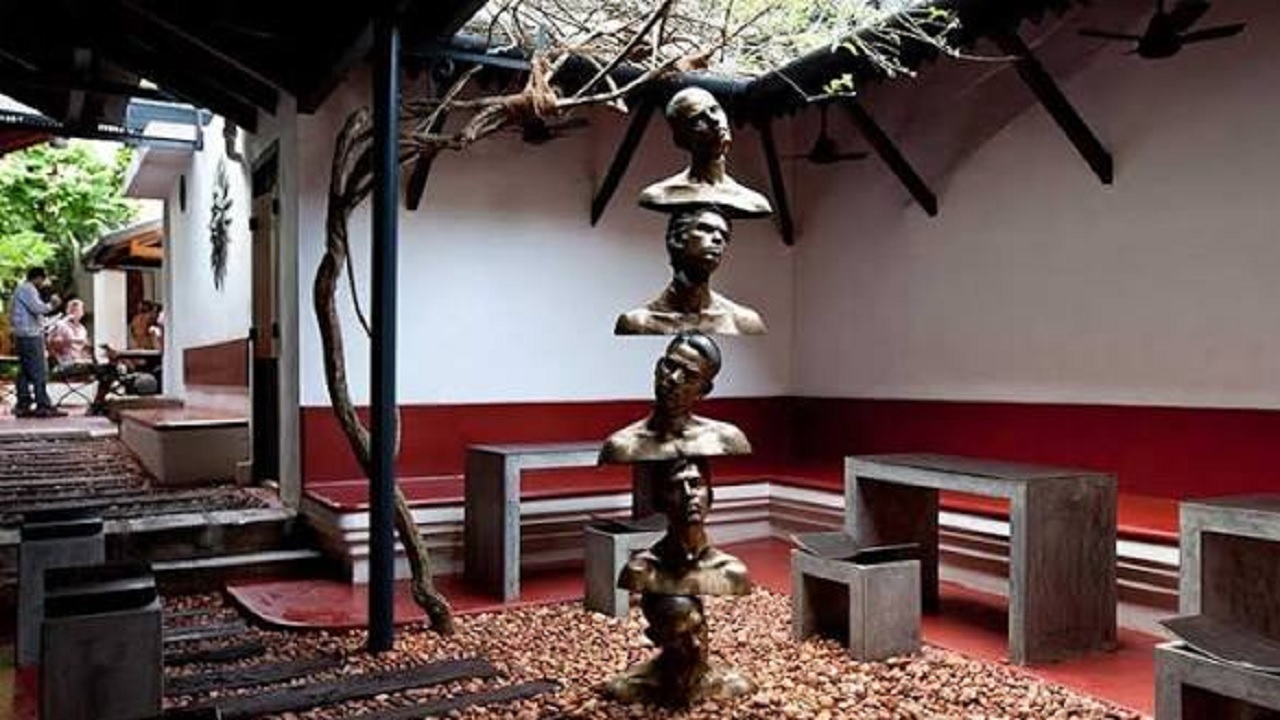
Kashi Art Cafe in Fort Kochi.

Synopsis: A North Indian content creator’s vlog on Fort Kochi sparked a controversy after he clashed with an artwork featuring Muhammad Ali Jinnah at a prominent cafe. He linked the area’s Muslim population to his divisive narratives and frowned at Kerala’s culinary culture that included beef. Artists and journalists, however, pointed to Fort Kochi’s rich history of cultural coexistence and the role of spaces such as the Kashi Art Cafe in nurturing contemporary art. They questioned attempts to portray its pluralistic identity as a threat. Fort Kochi police have registered a case against the vlogger.
Kashi in Keralam’s Fort Kochi has no connection to Varanasi, the spiritual city on the banks of the Ganges. Instead, it is a sweet, artsy, cosy cafe where time pauses as patrons enjoy coffee or a bite and discuss art, culture, and society.
A few metres from Kashi Art Cafe is Vasco da Gama Square, where local fishermen often invite tourists — foreign and domestic — to pull up the Chinese nets that dot the coastline. For many, their “pulling song” — hi Jalala, hala, hey jala — may sound incomprehensible, but the rhythmic coordination is never missed.
This rhythmic coordination is in the heart of Fort Kochi—inclusive, tolerant, and empathetic. Some miss this core, woven into the place’s social fabric.
Now, Kashi has found itself at the centre of a controversy after a North Indian vlogger took umbrage at the cafe, which he claimed was named after a holy city, and said it indulged in “unholy” acts to appease a particular section of society.
Little did he realise the cafe’s name is Japanese and carries an entirely different connotation—like Kochi, a namesake city on Shikoku Island in Japan.
Also Read: Kerala has sensible reasons for its subdued Deepavali celebration
A walk through Fort Kochi’s streets is an experience in itself. The muezzin’s call floats over the swaying coconut palms and out to the Arabian Sea; the tolling church bells make a serene jugalbandi with the jaya dhwani of the ghanta — the temple bell — while the sudden, sharp blasts of ship whistles jolt the tourist back to reality.
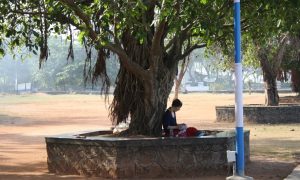
Fort Kochi has made coexistence a way of life, shaped by trade, migration, and cultural exchange. (South First)
Synagogues and gurudwaras, too, are part of the region’s broader cultural landscape.
Malayalam, Tamil, Kannada, Gujarati, Konkani, English and French mingle in its streets. Christmas, Onam, Navaratri, Pongal, Holi, Eid and festivals from other cultures make life vibrant in this Kochi neighbourhood, where Portuguese, Dutch, and British colonial architecture and godowns add an old-world charm.
The sea’s briny smell mingles with the aroma of frying beef, the pungency of pork vindaloo, the smokiness of Malabar tamarind in fish curries, and the sharp scent of spices in cooking chicken.
Fort Kochi’s irresistible diversity appeals to all senses.
This enclave, Fort Kochi, has made coexistence a way of life, shaped by trade, migration, and cultural exchange. Different faiths, food habits, languages, and political beliefs have found room to exist without erasing one another. Diversity and harmony are a shared inheritance, a lived reality in Fort Kochi.
Today, it is being questioned.
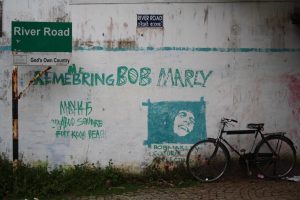
Diversity is a shared inheritance, a lived reality in Fort Kochi. (South First)
A short video has probed Fort Kochi’s spirit of harmony and coexistence after a content creator decided to have a beef with Keralam’s culture and traditions, rooted in the pluralistic principles that make the state God’s Own Country.
It began with Uttar Pradesh resident Amrit Singh Darren’s visit to Fort Kochi. He uploaded a short video to his Instagram handle, ‘littichokha_up‘, claiming that Fort Kochi is “full of Muslims”. He said Keralam is in danger and called for the Union government to intervene.
He also questioned Kashi — despite having a “holy” name — serving beef.
Kashi serves beef dishes, but it is not connected to Varanasi, Prime Minister Narendra Modi’s Lok Sabha constituency. And it is not the Muslim population that made the cafe serve beef, as he claimed.
The North Indian vlogger, claiming to be currently residing in Fort Kochi, released the video on Friday, 24 October, with a caveat: the government of Keralam will be responsible if anything happens to him.
Also Read: Why BJP has stepped away from food politics in Kerala
Darren’s Fort Kochi vlog is riddled with factual errors, particularly about Kashi Art Cafe and a work of art displayed during his visit.
Kashi
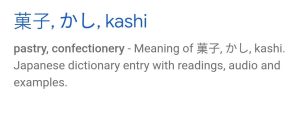
Contrary to his assumption that Kashi refers to Varanasi, the cafe’s name draws inspiration from the Japanese word kashi, 菓子, meaning sweets or confectionery.
Located in a restored Dutch-style house on Burgher Street, the cafe has been an integral part of Fort Kochi’s art landscape since 1997.
Founded by Anoop Skaria and his wife Dorrie Younger, it was conceived as both a cafe and an art gallery. It hosted exhibitions during the inaugural Kochi-Muziris Biennale in 2012.
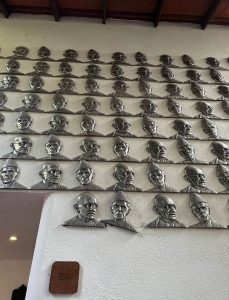
Blood Brothers: Two Fathers from Gujarat
Darren also questioned the presence of an artwork by multimedia artist and curator Riyas Komu at Kashi, titled Blood Brothers: Two Fathers from Gujarat, featuring Mahatma Gandhi and Muhammad Ali Jinnah.
Komu’s work, featuring repeated and alternating aluminium reliefs of Gandhiji and Jinnah, is a powerful, reflective exploration of shared history, identity, conflict, and the deep-seated divisions left behind by Partition.
The repetition of the reliefs creates a powerful visual of duality, rivalry, brotherhood, and the lasting consequences of their decision — and the human cost of Partition.
Darren, however, missed the point and saw only the obvious. Apparently, ultranationalism kicked in, and he understood only Jinnah and “Pakistan”. Kashi’s patrons saw a puissant work of art.
For many social media users in Keralam, Darren’s fear seemed unfounded, innate, immature and irresponsible.
Also Read: Milk needs a ‘ghar wapsi’ to ‘not vegetarian’ food status
Speaking to South First, Jude Vipin, manager of Kashi Art Cafe, explained that the space regularly hosts exhibitions, with most artworks rotated every three to four months to accommodate new artists. The cafe’s current owner, Edgar Pinto, echoed this, underscoring the space’s artistic character.
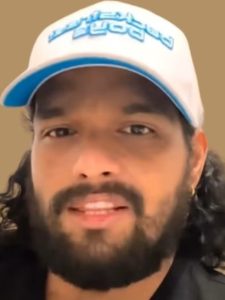
Vlogger Amrit Singh Darren.
Artist Jalaja PS, who had held a show at Kashi Art Cafe in 2013, said the space was much more than a cafe. She recalled its role in nurturing young contemporary artists in Kochi.
”Kashi is not just a cafe. Spaces like Draavidia Art House, Chaithanya Art Gallery and Gallery OED also played a significant role in encouraging young contemporary artists in Kochi. Anoop Skaria and Dorrie started Kashi not for commercial gain, but as a space for collectives where friends could gather over coffee and have conversations about art and culture,” she said.
Jalaja said spaces to exhibit the works of budding artists are few in Kochi.
“Artists such as Komu and Bose Krishnamachari contributed to Keralam’s cultural landscape long before the Kochi-Muziris Biennale. Their efforts go back many years. At the time, young artists like us had very few spaces to exhibit our work, and we couldn’t afford to use many existing spaces. It was in this context that places like Kashi emerged, providing a platform to showcase and celebrate visual artists.” she said.
Kashi’s walls have hosted works by notable contemporary Indian artists, including Krishnamachari, Murali Cheroth, Pradip Naik, and Vivek Vilasini, as well as international artists such as Christine Mamakos and Sri Lankan artist Sampath Amunugama.
Sculptures by KS Radhakrishnan and installations by Marc Delrome have further enriched its artistic landscape.
Over the years, Kashi has remained part of Fort Kochi’s cultural fabric, providing a space for contemporary art and conversations long before the Kochi-Muziris Biennale brought international attention to the city’s art scene.
Jalaja also spoke about exhibitions such as Double Enders and Bombay Boys, which had created a buzz in Kochi even before the Biennale.
She also recalled a painting exhibited at Kashi Art Cafe that depicted social reformer Sree Narayana Guru draped in a saree. The artwork infuriated many, and members of the prominent Ezhava community issued threats, prompting a police probe.
Also Read: History, pluralism, and food culture beyond polemics
Jalaja said Fort Kochi’s cultural and historical richness, coupled with its popularity as a tourist destination, has helped artists connect with the world and build global roots. She noted that Edgar Pinto was among the few who continued to encourage emerging artists by giving them spaces to showcase their work.
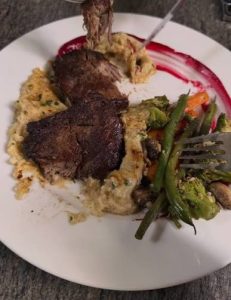
Beef steak at Kashi
She said visual artists from Keralam have historically faced challenges, with many migrating in search of better opportunities. She noted the trend dates back to Raja Ravi Varma’s era. Cities such as Mumbai, Delhi, Madras, and Calcutta celebrated their artists and provided greater financial stability, while Keralam continued to lag in offering similar support.
In this context, she underscored the need for spaces like Kashi Art Cafe for Keralam’s visual arts fraternity, giving emerging artists opportunities to exhibit their work and reach a wider audience.
Meanwhile, Jinnah was not the only one that got Darren’s goat. He also criticised beef dishes on Kashi’s menu and questioned Keralam’s beef consumption.
Vipin said the cafe served carabeef (buffalo meat), pork, chicken and fish, alongside seasonal catches and the chef’s specials.
”Kashi’s chocolate cake is the most moving item. Roast chicken, Thai beef, grilled fish, lamb keema, Lebanese duck and seafood are also on our menu,” he said.
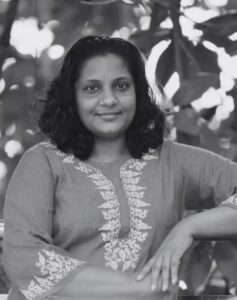
Visual artist Jalaja
Vipin also noted that most tourists visiting Kashi are domestic travellers from North India. While the arrival of foreign tourists varies depending on the season, domestic tourist footfall remains high.
Like many other claims in Darren’s video, the narrative about Muslim dominance in Fort Kochi is also misleading.
The Christian community, particularly Latin Catholics, has a significant presence in the region. They are the largest Christian denomination in the Ernakulam parliamentary constituency, accounting for nearly 45% of its population.
Also Read: Art takes a backseat as netizens have a beef with food served at Kerala school fest
Speaking to South First, Delhi-based senior journalist and author Ullekh NP described such content as a continuation of what he called the Sangh Parivar’s hate propaganda against Keralam.
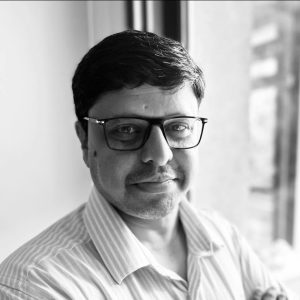
Journalist and author Ullekh NP.
”When Modi came to power, there was an atrocious campaign specifically targeting my native place, Kannur. The claim was that Marxists were carrying out a Hindu genocide. We knew that was false, but for ordinary people in North India, such campaigns painted a picture of Keralam that was far removed from reality,” Ullekh, the author of Kannur: Inside India’s Bloodiest Revenge Politics, said.
He recalled meeting people who firmly believed that Keralam has a larger Christian population because Vasco da Gama had arrived in the state. Such narratives, he said, were part of sustained attempts to malign Keralam.
He also pointed out that historical accounts showed that even Brahmins consumed non-vegetarian food, including beef. He challenged attempts to present dietary practices as uniform across communities and periods.
For Ullekh, such controversies are not merely about a cafe’s name, its menu or an artwork. They reflected a larger attempt to portray Keralam’s cultural plurality as a threat rather than as a defining feature of its society.
Fort Kochi is not merely a destination. Its languages, cuisines, art and layered histories reflect a culture shaped by centuries of coexistence.
At a time when such diversity is increasingly subjected to divisive narratives across India, Fort Kochi — like the rest of Keralam — remains a living reminder of the pluralistic India promised by the Constitution.
Keralam finds pride in according royal treatment to its guests. It considers migrant labourers guest workers. But any attempt targeting its secular fabric is seen as an affront to the entire Malayali community. An inclusive society will not tolerate such attempts. It has no room for hate.
In a social media post, Chief Minister VD Satheesan conveyed the state’s message clearly: Keralam will not allow anyone to threaten its communal harmony.
Also Read: In times of religious polarisation, an arch becomes a symbol of communal harmony
Satheesan on Saturday, 24 October, condemned Darren’s video that targeted Muslims and portrayed Keralam as being in danger because of its Muslim population.
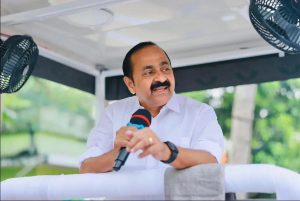
Chief Minister VD Satheesan
The chief minister said communal hatred has no place in Keralam and asserted that the state will not allow anyone to threaten its communal harmony.
Describing the video as an attempt to spread misinformation, portray Keralam in a negative light and divide communities, Satheesan said the incident was unacceptable.
A case has been registered, and the law will take its course, he said, reaffirming the UDF government’s commitment to communal harmony and justice without fear or favour.
“A new era for God’s Own Country. No room for hate. We will not allow anyone to even lay a finger on our communal harmony,” Satheesan said.
Leader of the Opposition and former Chief Minister Pinarayi Vijayan, too, came out strongly against the bid to spread hatred.
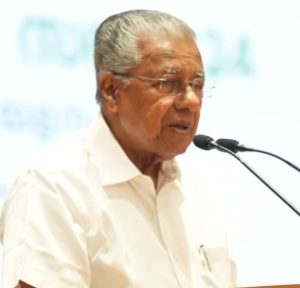
Pinarayi Vijayan
“Fort Kochi and Varkala are places where cultures meet, histories intertwine, and diversity thrives. Now, a vlogger peddling hate for profit seeks to paint these vibrant destinations in communal colours. Having failed to divide Keralam, the Sangh Parivar is outsourcing its hate campaign to online provocateurs. But Keralam’s secular spirit will not yield to their politics of hatred,” the veteran CPI(M) leader said on X.
He urged the state government to “take strict legal action against those spreading communal enmity.”
Amid the hullabaloo over the hate-mongering video, social media influencer Diya Krishna found herself at the receiving end of the state’s collective anger.
“Sad reality,” Diya, daughter of BJP leader and National Film Development Corporation of India Chairman and Director Krishna Kumar, commented under Darren’s video.
Diya later deleted the comment following a massive backlash. In a social media video, she said she had watched the part where Darren spoke about Komu’s work displayed at Kashi but had not seen the latter half, where the vlogger made disparaging comments about Fort Kochi’s Muslim population.
(Edited by Majnu Babu with inputs from Dileep V Kumar).



